[2025 Edition] How AI Agents Are Supercharging Business: A Complete Guide from Major Players' Initiatives to Use Cases (Part 3)
- We profile AI agent startups in the US, China, Europe and Japan and map the massive inflow of capital and the growth of the ecosystem, including Cognition's $175 million raise.
- Long-term memory (LangMem SDK), a common protocol (MCP) and no-code development tools are widening use in sales, customer service, hiring, legal, healthcare, logistics and more.
- Concerns remain, including vague definitions, the impact of errors and security, while regulation and support are advancing through the EU AI Act and Japan's GENIAC-PRIZE (about ¥800 million in total).
- $175M
- Series A raised by Cognition (Devin) in early 2024
- €600M
- Raised by Mistral AI from late 2023 to early 2024 (approx.)
- $3B+
- Estimated investment in the AI agent field in 2024
- ¥800M
- Total budget of METI's GENIAC-PRIZE (approx.)
Introduction
AI technology has advanced remarkably in recent years, and AI agents in particular are drawing attention across many areas of business. AI agents that handle tasks like a human operator and act on their own are opening up new possibilities, especially for startups.
In this article, we take a broad look at the latest trends in AI agents, the leading startups and concrete use cases by industry.
Key Trends Among Overseas AI Agent Startups: Innovation Led by the US
To look at overseas trends, let’s start with the United States, which leads innovation worldwide. Silicon Valley in particular remains the undisputed center of AI research, development and investment, and this is especially clear in the field of AI agents.
Why is development so active in the US? One reason is aggressive investment from world-class venture capital (VC) firms and big tech companies such as Google and Microsoft. This money gives a strong push to startups with innovative ideas. An ecosystem that attracts talented engineers and researchers is also fertile ground for one new AI agent service after another.
In the US, a wide variety of startups have emerged, from companies offering general-purpose platforms for building AI agents to solutions specialized for particular industries. They are pursuing automation and efficiency in many kinds of work, and even using AI in areas that were previously out of reach, and they are starting to have a major impact on businesses around the world.
From here, we focus on overseas startups, especially those in the US at the cutting edge of AI agents, and introduce their specific activities and services. Let’s look at what kinds of AI agents they are building and how they are transforming business.
Artisan “Ava”
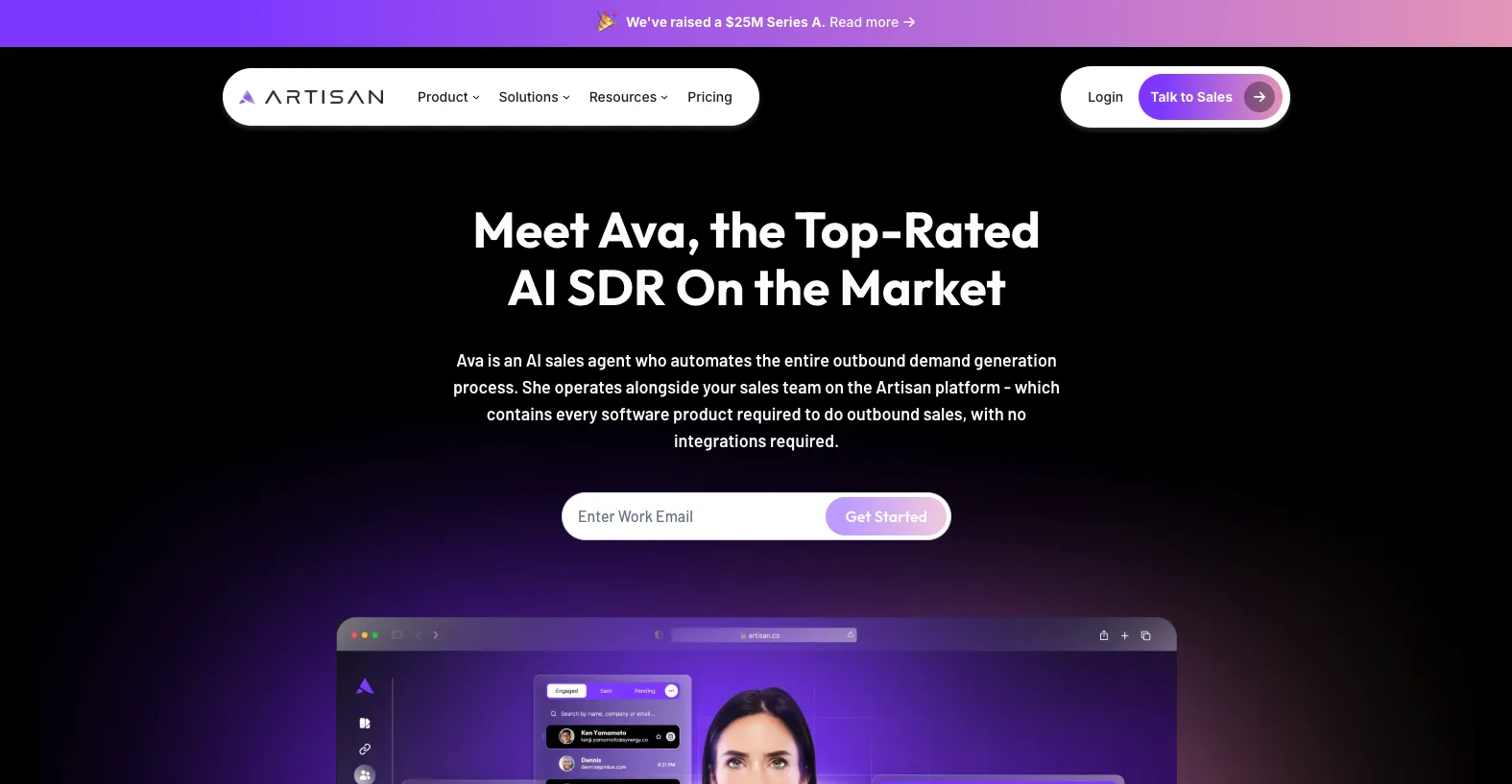
Artisan is a startup that offers Ava, an AI sales agent that uses AI to make sales work dramatically more efficient. It automates and strongly supports the work of sales development representatives (SDRs).
How the AI Sales Agent Ava Is Changing Sales
Ava uses AI to automatically handle the entire process, from identifying prospects and reaching out to them to engaging with customers (building relationships). Because the AI analyzes and acts on questions such as which customers to contact, when, and with what message, sales reps can focus on more strategic proposals and on the careful customer care that only people can provide. It looks set to save sales teams time and to directly improve their results.
Artisan raised $12 million in September 2024 and a further $25 million in Series A funding in April 2025, a sign of its growth potential and high market expectations.
Virtue AI
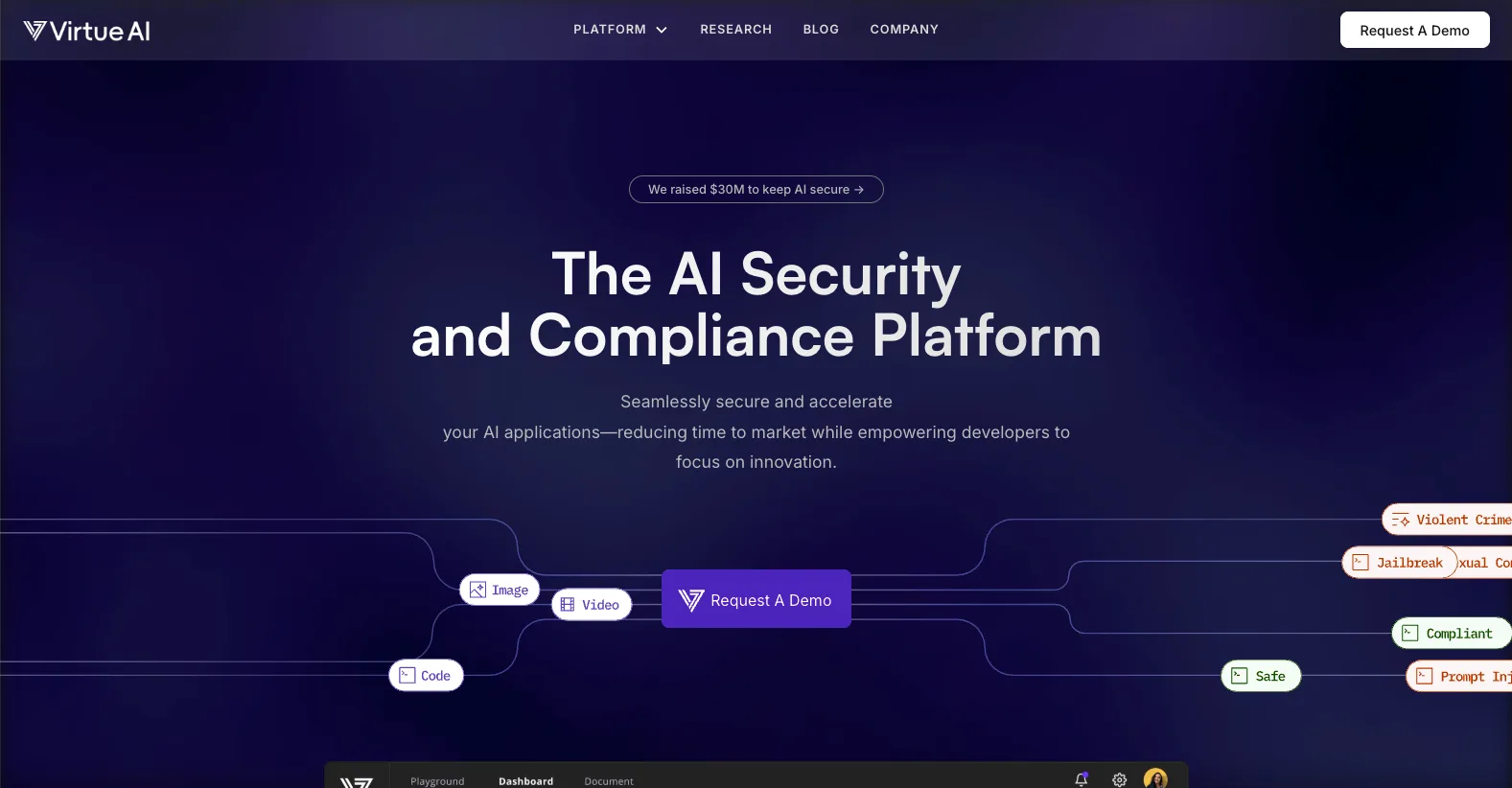
Virtue AI offers a somewhat specialized but very important platform aimed at strengthening the security of AI systems. In particular, it aims to ensure the safety, reliability and compliance of large language models (LLMs) such as ChatGPT and the applications built on them.
A Security Platform That Makes AI More Trustworthy
As AI becomes deeply embedded in our lives and businesses, how to keep it safe becomes a major challenge. There are risks, for example, that AI generates inaccurate information or makes biased decisions. Virtue AI’s platform acts like a “lookout” that prevents such AI risks before they happen and keeps AI working in a safe and trustworthy way, so companies can adopt and use AI with confidence.
It raised $30 million in a round led by the well-known venture capital firms Walden Catalyst Ventures and Lightspeed Venture Partners, which shows how strong the market’s need for AI safety is.
Breakout
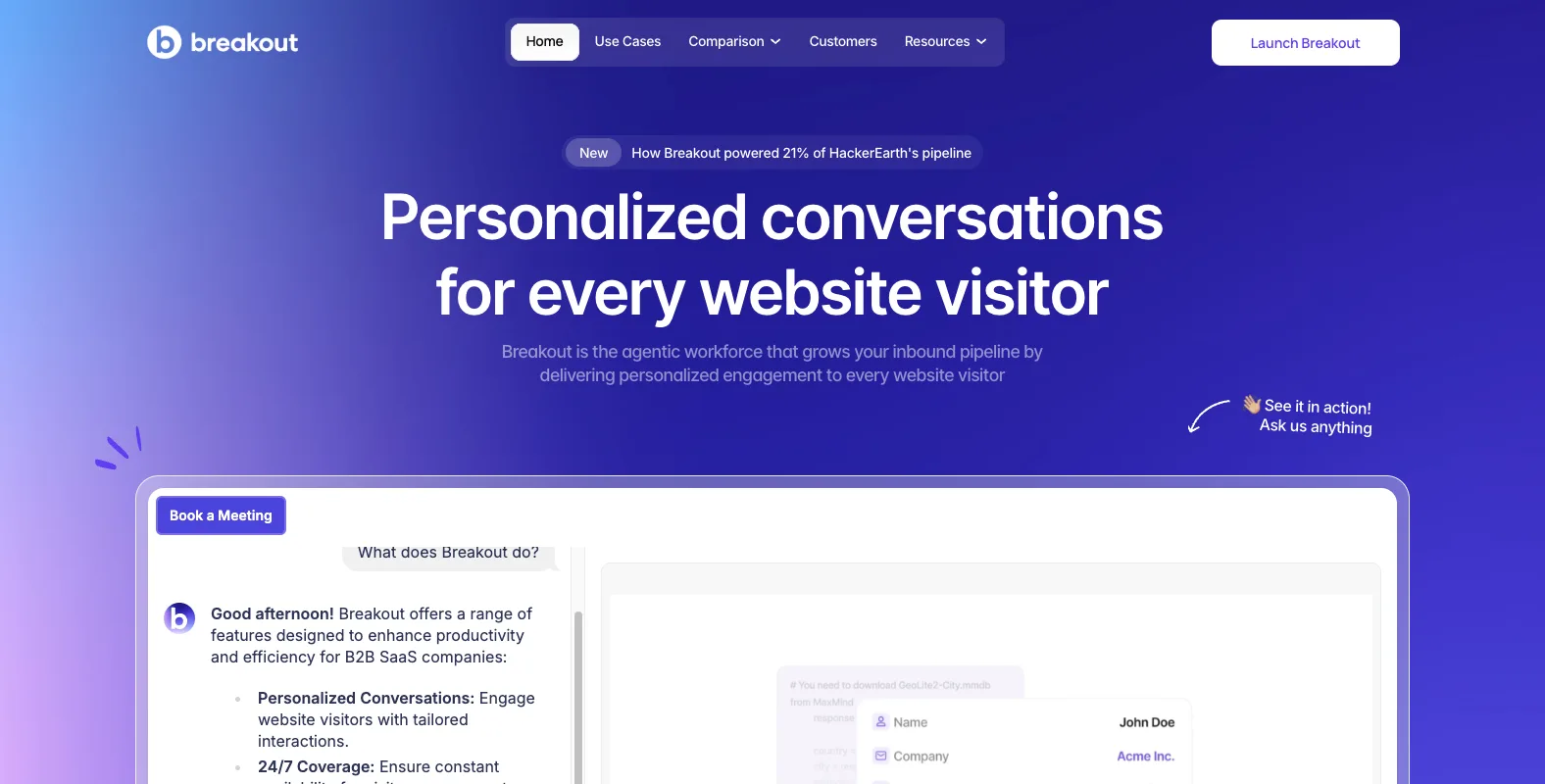
Breakout is a startup founded by former Google employees that also offers AI agents specialized for sales. Its defining feature is that it automatically handles everything from identifying leads (prospects) to optimizing concrete outreach strategies and analyzing interactions with customers.
An AI Agent That Makes Sales Smarter
Breakout’s AI agent finds the answer to the question every sales team asks: “Whom should we approach, when and how, to be most effective?” For example, it identifies, from vast amounts of data, the leads most likely to be interested in a company’s products or services, and suggests personalized messages that will resonate with them. It also analyzes customer engagement to optimize the next action. Sales reps can work more efficiently and more intelligently, so it could be a tool that dramatically raises sales productivity.
The company raised $3.25 million in seed funding in a round led by Village Global, a sign that its innovative approach is valued.
Basis
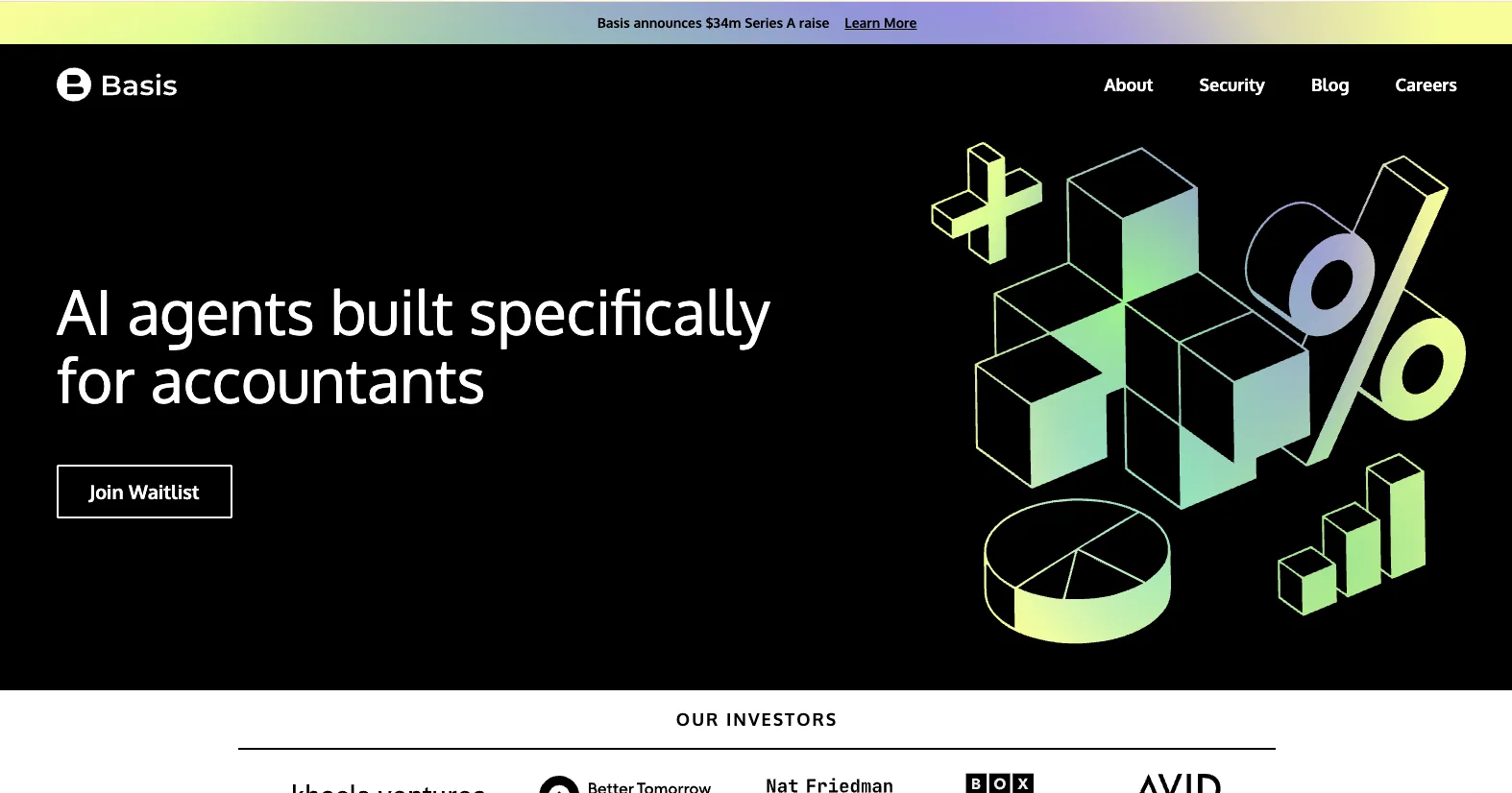
Basis is a startup that provides AI agents specialized in automating accounting and bookkeeping, work that is critical for any company. AI takes over tasks such as entering data from the invoices and receipts generated in daily operations, journal entries (recording transactions in the books) and account reconciliation (checking that the balances in the books match).
AI That Supports the Whole Accounting Function
Accounting work demands accuracy, involves a lot of manual work and takes time. Basis’s AI agent automates these routine tasks, reducing human error and saving a great deal of time. If AI reads and enters receipts on its own and makes journal entries automatically, accounting staff can focus on more important analysis and on planning business strategy. That would bring very large benefits to company management.
It raised $34 million in Series A funding in a round led by Khosla Ventures, which shows how highly its innovation is regarded.
Cognition “Devin”
Cognition is one of the most closely watched startups in AI. What it has built is remarkable: Devin, an autonomous AI software engineer. Like a human software engineer, Devin is said to be able to take a development request given in natural language (for example, “build me an app with these features”), make its own development plan, write code, find and fix bugs, and use the necessary tools to complete a software development project.
Toward an Era When AI Develops Software on Its Own
Devin’s arrival could revolutionize the world of software development. If AI can autonomously handle coding and debugging that used to take people hours, development speed should rise dramatically and more complex, sophisticated software can be produced efficiently.
Cognition raised a huge $175 million Series A from Founders Fund and others in early 2024, and its valuation reportedly reached a remarkable $2 billion. That shows just how high market expectations are.
11x “Alice” and “Jordan”
11x, a startup based in San Francisco, offers two autonomous digital workers: Alice, which takes over sales development (SDR) work, and Julian, which handles inbound and outbound phone calls.
Digital Workers on the Front Line of Sales
The AI agent Alice finds potential customers, automatically writes and sends messages that resonate with them, manages the progress of deals and even schedules meetings. Jordan, meanwhile, takes over phone work entirely: responding to prospects’ inquiries in real time, listening to their needs, scheduling by phone and automatically updating the customer relationship management (CRM) system. With these AI agents working in place of people, sales teams can focus on more creative work, such as building customer relationships and making proposals. Sales automation is a truly efficient and groundbreaking initiative.
In 2024, 11x completed a $24 million (about ¥3.5 billion) Series A led by Benchmark, and its potential was highly regarded. However, it has also been reported that behind its splashy demonstrations, many problems surfaced in actual product operation and the business stalled rapidly. This may show how hard it is to bring cutting-edge AI technology into the real world.
Writer “AI Studio”
Writer is a startup that offers a multifunctional suite of AI tools called AI Studio. It quickly handles the “chores” on which companies spend a lot of time and money in their daily work, such as writing descriptions of products and services, creating customer support FAQs and coming up with ad copy.
AI Studio Transforms Corporate Content Creation
AI Studio instantly generates high-quality text, as if you had your own dedicated content creator. With it, marketing and customer support staff can greatly reduce the time spent writing and focus on more strategic work and creative activities. Well-known companies count among its customers, including the cosmetics giant L’Oréal, the ride-hailing service Uber and the business software leader Salesforce, which speaks to its capabilities.
Writer has raised a total of $320 million (about ¥46 billion) to date and has become a “unicorn” (an unlisted company valued at more than $1 billion) with a valuation of $1.9 billion (about ¥270 billion). Its net revenue retention (NRR) is also very high at 160%, and the fact that many customers expand their contracts backs up its credibility.
Decagon
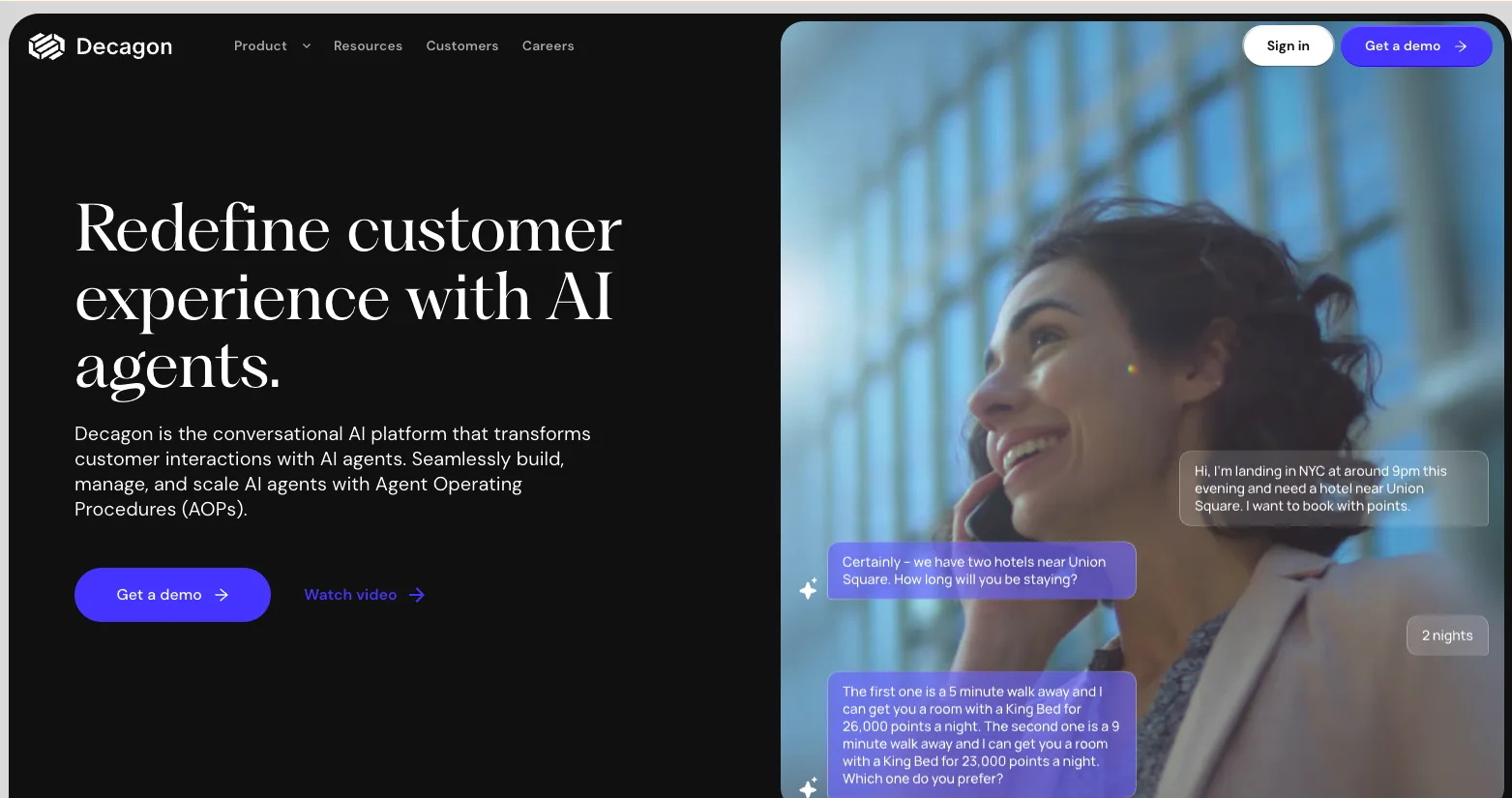
Decagon is a startup that offers services specialized in AI agents for corporate customer support. It develops systems in which chatbots and AI agents automatically handle all kinds of customer inquiries, such as answering questions about how to use an app, processing refunds and canceling subscriptions.
AI Agents Are Shaping the Future of Customer Support
Customer support is important work that greatly affects customer satisfaction, but it also requires a great deal of resources. Decagon’s AI agents take over routine inquiries and procedures, so customers can solve problems smoothly without waiting and companies can greatly reduce the burden on their support teams. Some adopters have even been able to shrink their support teams or substantially cut projected costs.
The company’s annual recurring revenue (ARR) is expected to exceed $10 million (about ¥1.4 billion), and talks are reportedly under way to raise a new $100 million (about ¥14 billion) at a valuation of $1.5 billion (about ¥215 billion), which shows the expectations for its growth. Its AI agents are built on cutting-edge large language models from OpenAI, Anthropic and Cohere, and their high performance and flexibility are another strength.
Martin
Martin is a very young but much-watched startup led by Dawson Chen and Ethan Hou, both 19, who reportedly dropped out of Yale and UC Berkeley. They are building a “personal AI assistant” that supports our individual daily tasks much like a secretary.
An AI Assistant That Acts as Your Second Brain
What is impressive about Martin’s AI assistant is that it does more than just follow instructions: it has its own technology, a “custom memory architecture,” that deepens its understanding of the user’s preferences and situation (context) over time. With this technology, it supports you with a good understanding of who you are, like a long-time partner.
It reportedly works across many communication tools, including phone, text messages, email and the business chat tool Slack, and can carry out a wide range of tasks, from managing your calendar, replying to email and managing to-do lists to making calls and sending messages. This looks likely to make daily work dramatically more efficient.
In January 2025, Martin completed a $2 million seed round with backing from Y Combinator, the well-known startup accelerator, and expectations for its future are high.
Hakimo
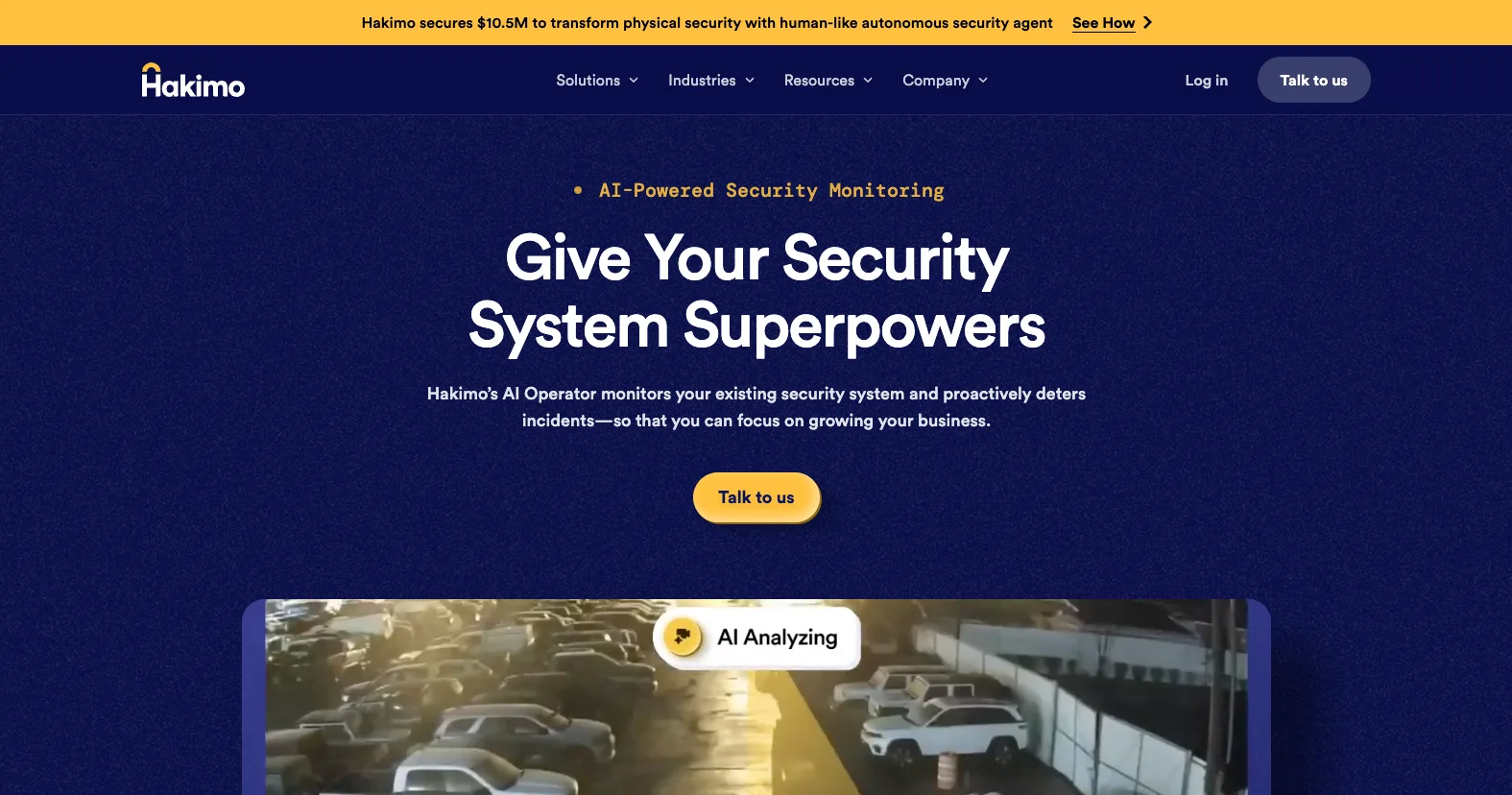
Hakimo is a startup that provides an “AI security guard” that works with surveillance cameras. It is hard for human guards to keep watch around the clock, but an AI agent can.
An AI Security Guard That Keeps You Safe 24/7
Hakimo’s AI security guard monitors footage from every installed camera at the same time and automatically detects intruders and other suspicious activity, in other words, “threats.” If it detects an anomaly, it follows preset rules to issue voice warnings, automatically notify the security company and, in some cases, even call emergency services (police, fire, etc.).
This makes it possible to achieve advanced 24-hour security without the labor costs. The company reportedly aims to provide security on par with human guards at a lower cost. That makes it a very reassuring presence for strengthening security in places such as buildings, factories and warehouses.
Hakimo has newly raised $10.5 million (about ¥1.57 billion), bringing its total funding to ¥3.1 billion, a sign that its technology and business model are valued.
Mercor
Mercor is a startup that offers a hiring platform that makes full use of generative AI. Job seekers only need to do an interview of about 20 minutes with an AI, and the AI then moves the rest of the process forward automatically.
AI Interviewers Are Transforming Hiring
What is impressive about Mercor is that its AI interviewer uses natural language processing (NLP) and speech recognition to automatically handle everything from reviewing résumés and conducting first-round interviews to matching each person with the right job. Companies can efficiently find the best people among huge numbers of applicants, and job seekers can more easily find jobs that fit their skills and experience.
Mercor started out matching engineers in India with startups in the US, and within just a few months it grew to annual revenue of about $1 million (about ¥143 million). It reportedly kept growing at an astonishing 50% per month and is already profitable. Its $7.5 million Series B round also shows its momentum.
Boardy
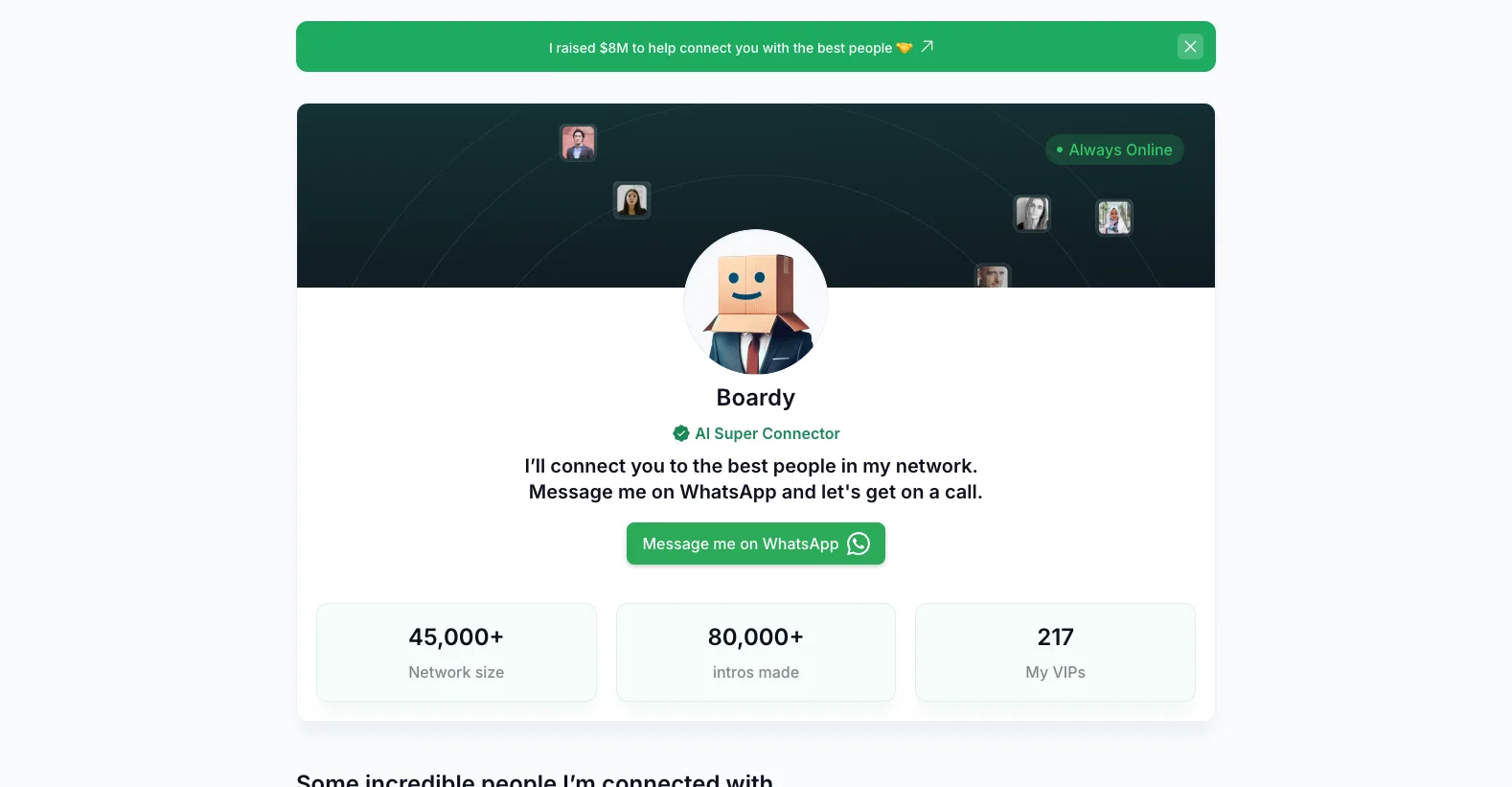
Boardy is a startup that offers an unprecedented business matching platform powered by a voice AI assistant.
A Voice AI Assistant That Makes Business Connections
At the core of Boardy is a voice AI assistant of the same name, Boardy. This AI assistant automatically matches users with the best business partners and collaborators based on information such as their career, goals, interests and personality. What stands out is that it also brings the nuance and emotion conveyed by the voice into its analysis, achieving sophisticated matching that creates deeper, more human connections.
Another surprising thing about Boardy is the story that, in its seed round, the founding team was not involved at all, and the negotiations took place entirely between the well-known VC firm Creandum and the AI assistant Boardy. An AI raising money for itself feels like science fiction come true.
Key Trends Among Overseas AI Agent Startups: China Accelerates AI Innovation and Competition
The next region to watch for overseas AI agent trends is China. Interest in AI agent technology, and the investment that comes with it, is rising rapidly there too. So why is AI agent development so active in China?
Several factors lie behind it. First, there is a strong push from the Chinese government’s policies to grow the AI industry. AI agent development is being promoted as a national strategy, with generous policy support. Second, domestic tech giants such as Alibaba, Tencent and ByteDance are investing heavily and developing actively in order to build AI agents into their own services. Their vast data and financial strength are powerfully driving the growth of startups.
Even more important is the intensifying race to develop large language models (LLMs), known as the “War of a Hundred Models.” In this fierce competition, one high-performance foundation model after another is emerging, and these powerful models serve as the “foundation” for building AI agents. It is precisely because excellent foundation models exist that it has become possible to create AI agents capable of more advanced and complex tasks. In short, the fusion of national-level AI strategy with the strength of private companies, with technological competition accelerating innovation, is powerfully driving China’s AI agent market.
Let’s look at concrete examples of startups to see what kinds of AI agents are being created in China and in which fields they are being used.
Moonshot AI “Kimi”
Moonshot AI (Yuezhi Anmian) is a startup developing Kimi, a large language model that is exceptionally strong at processing long contexts.
An AI Model That Easily Understands Long Texts
Keeping an accurate understanding of long texts and conversations is actually a very difficult technical challenge for AI models. Kimi has outstanding ability in “long-context processing”. Being able to process long contexts means AI can handle tasks such as reading huge volumes of documents or understanding the history of complex discussions more accurately and efficiently. It has the potential to be useful in a wide range of fields, from scrutinizing business contracts to summarizing research papers.
In early 2024, Moonshot AI raised more than $1 billion (about ¥150 billion) from Alibaba and others, an amount truly worthy of the word “huge.” It is proof of how highly the market values its technology.
Baichuan AI
Baichuan AI is a startup founded by the former CEO of Sogou, a major Chinese search engine, and it offers large language models (LLMs) as both open source and closed source.
A Diversified AI Model Strategy for a Wide Range of Needs
Open-source LLMs have the advantage that anyone can freely use and modify them, which makes it easy for many developers to build new applications on top of them. Closed-source LLMs, on the other hand, have the strength that companies can use their own technology and data to deliver higher-performance, more secure services. Baichuan AI is trying to meet the needs of many different companies by taking both approaches. Having a wide range of options is welcome for users.
In the second half of 2023, the company raised about $300 million (about ¥45 billion) from leading Chinese tech companies such as Alibaba, Tencent and Xiaomi. This also shows the high expectations from China’s IT industry as a whole.
Zhipu AI

Zhipu AI is an AI startup spun out of Tsinghua University, one of China’s top universities. It develops large language models known as the GLM series.
Advanced AI Models Packed with Academic Knowledge
As a university spin-off, Zhipu AI is notable for applying cutting-edge research to LLM development. The GLM series is backed by advanced technology and an academic foundation, and is said to deliver high performance across a variety of tasks. This should help companies build smarter AI agents and optimize their business processes. It is a great example of academic strength bearing fruit.
From 2023 to 2024, Zhipu AI raised more than 2.5 billion yuan (about ¥50 billion) in total over several rounds, again from many major companies including Alibaba, Tencent, Meituan and Xiaomi. This is proof that its technology and future potential are highly valued, and it shows that the company has established itself as a key player in China’s AI industry.
MiniMax
MiniMax is a startup developing “multimodal” foundation models that can process many forms of information, including not just text but also voice and visuals. It is also actively pursuing applications in gaming.
Multimodal AI That Understands Text, Voice and Images
Multimodal AI means that, just as people perceive the world through their five senses, AI can gather and understand information from multiple sources (for example, text, sound and images). This ability lets MiniMax’s AI make more complex judgments about situations and interact naturally with people. Its range of applications is limitless, from AI characters in games reacting more realistically to integrating diverse information to find the best answer.
Around March 2024, MiniMax raised at least $600 million (about ¥90 billion) in a round led by Alibaba. The size of the round reflects the high expectations for multimodal AI.
Lingyi Wanwu “Yi”
Lingyi Wanwu is a startup founded by Kai-Fu Lee, a “legend” of the AI industry who once headed Microsoft Research Asia and also led Google China. It develops the Yi series of open-source large language models.
Open-Source LLMs from an AI Industry Legend
Because these AI models come from a figure as prominent as Kai-Fu Lee, their technology is attracting a great deal of attention. The Yi series is open source, so developers around the world can freely use and improve it. As a result, the knowledge and effort of the whole community can come together, and faster innovation is expected.
Lingyi Wanwu received investment from Alibaba Cloud and others in the second half of 2023, which points to a stable development setup.
Monica “Manus”
Manus is a highly advanced autonomous general-purpose AI agent released in March 2025 by the Chinese startup Monica.
An Autonomous AI Agent That Completes Tasks from a Single Instruction
Manus’s biggest feature is that from a single instruction, the AI can handle the entire process automatically: it interprets the request on its own, plans the task, carries it out and even checks the results. This high level of autonomy and its ability to carry out complex tasks drew attention around the world. An AI that does its own research, makes a plan and executes it to turn your idea into reality is amazing technological progress.
In fact, Manus ranked near the top of search keyword rankings in 34 countries and regions, showing how widely its innovation has been recognized. It also offers features such as asynchronous background processing, which lets work proceed efficiently behind the scenes, a sign of its technical strength.
DeepSeek
DeepSeek is a relatively new startup founded in China in May 2023. In January 2025, it released DeepSeek-R1, a very high-performance large language model, which became a major topic of conversation.
Captivating the World with High-Performance, Low-Cost AI Models
What draws particular attention to DeepSeek is that it offers AI models at a low cost despite their high performance. This is a very important factor because it widens the range of companies and developers that can use AI. The astonishing speed of its development also symbolizes its momentum. Achieving this much in such a short time is truly impressive.
This cost-performance and development speed made headlines, and DeepSeek has drawn global attention, appearing in search keyword rankings in 24 countries and regions.
Key Trends Among Overseas AI Agent Startups: Europe Leads in Ethical AI and Specialized Innovation
Next, we turn to Europe. There may be fewer headlines about huge funding rounds on the scale of the US or China, but Europe has a vibrant AI ecosystem with its own strengths. France, Germany and the UK in particular are hubs for AI research, development and startup creation, and they are evolving in their own way.
So why is Europe taking its own path in AI agent development? Let’s explain some of its features and background. First, as the EU AI Act shows, awareness of AI safety, ethics and privacy protection is very high. This reflects a distinctly European stance of carefully considering AI’s impact on society and trying to build trustworthy AI systems. As a result, AI agent development there also tends to emphasize compliance with this regulatory environment and ethical considerations.
European startups are also characterized by strengths in specific areas, such as B2B solutions (services for businesses), industrial AI and privacy-preserving technology. This is thought to stem from a culture that values solving the problems of particular industries and respecting data sovereignty. Beyond general-purpose AI, there is an active push to bring more practical and highly reliable AI agents into society.
Let’s look at concrete startup examples to see what kinds of AI agents are being created in Europe and in which fields they are active.
Mistral AI
Mistral AI, based in France, develops large language models (LLMs) with a distinctive open-source strategy.
Expanding AI’s Possibilities Through Open Source
Mistral AI’s strength lies in releasing the LLMs it develops as open source. This means anyone can freely use its models, improve them or build them into new applications. This approach makes AI technology easier for developers and companies around the world to use and speeds up the growth of the entire AI ecosystem. Growing AI through the power of the community is a very attractive approach.
From late 2023 to early 2024, it raised a huge sum of about €600 million (about ¥96 billion) in rounds led by well-known venture capital firms such as Andreessen Horowitz (a16z) and Lightspeed Venture Partners, with participation from major companies such as Microsoft and NVIDIA. This is proof that the potential of open-source LLMs and Mistral AI’s technology are highly valued worldwide.
Aleph Alpha

Aleph Alpha, based in Germany, is a startup developing large language models (LLMs) with a particular emphasis on AI “explainability,” “reliability” and “data sovereignty.” In particular, it is building models designed for use by companies and government agencies.
“Responsible AI” That Pursues Reliability and Transparency
As AI becomes deeply embedded in society, it becomes very important to explain “why the AI made that decision” and to guarantee that AI always works in a trustworthy way. Aleph Alpha puts this “explainability” and “reliability” at the core of its AI models. By also emphasizing “data sovereignty,” meaning control over how and where data is managed, it provides an environment in which companies and government agencies handling highly sensitive information can use AI with confidence. This is a very important perspective when thinking about the future of AI.
In November 2023, it announced a $500 million (about ¥75 billion) Series B round from investors including the auto parts giant Bosch, the software giant SAP and Schwarz Group, Germany’s largest retail group. This shows that its “responsible AI” approach has strong support from industry.
Helsing

Helsing, based in Germany, is a startup with a very unusual position: it is a military AI company specializing in defense and security.
Bringing the Power of AI Agents to Defense
Helsing uses advanced AI technology (including AI agent technology) for tasks such as real-time data analysis, awareness of constantly changing situations and rapid decision support, with the aim of improving national defense capabilities. For example, AI instantly analyzes information from a wide area, organizes complex situations into a form people can easily understand and suggests the best course of action. This shows that AI could make a very large contribution to defense, a field that demands deep expertise and quick judgment.
The company raised €209 million (about ¥33 billion) in its Series B round. This large raise reflects the importance of AI technology in defense and the value placed on Helsing’s technology.
Maki People
Maki People, from France, is a startup that provides a “conversational HR agent” specialized in talent acquisition. It streamlines the hiring process with AI-powered skills tests and unbiased data analysis tools.
AI That Becomes Your Hiring Pro
Maki People’s AI agent works across many stages of hiring, much like an excellent HR professional. For example, the AI tests candidates’ skills, and when analyzing information from résumés and interviews it removes unconscious human bias to support fair evaluation. Remarkably, this support reportedly automates 80% of HR staff’s work. Another strength is that it is “multimodal,” handling formats such as voice, video and text, and it reportedly cut hiring time to one-third of what it was and reduced post-hire turnover by 20%.
Maki People has raised $38 million, which shows that its innovation and results are valued.
Spleenlab

Spleenlab, from Germany, is a startup developing “AI perception software” for all kinds of mobility, from semi-autonomous to fully autonomous. It helps vehicles such as autonomous drones, cars and even aircraft navigate safely.
AI Software That Serves as the “Eyes” of Autonomous Driving
Spleenlab’s technology acts like the “eyes” and “brain” of autonomous systems. By having AI accurately perceive the surrounding environment, avoid obstacles and determine safe routes, it becomes possible for drones to deliver packages, self-driving cars to drive through cities and, in the future, flying cars to operate safely. It looks set to support how we get around in the future.
Cognigy
Cognigy, from Germany, is a startup that provides an AI platform that lets companies build and manage advanced AI agents for customer service.
An AI Platform That Smartly Automates Customer Support
With Cognigy’s platform, companies can easily create AI agents tailored to their needs, as if they had their own “team of AI experts.” These AI agents combine conversational AI and generative AI, and their defining feature is that they can smoothly handle large volumes of customer requests. For example, they answer frequently asked questions instantly and understand complex inquiries to route them to the right department, achieving major efficiency gains without lowering the quality of customer support.
DeepOpinion
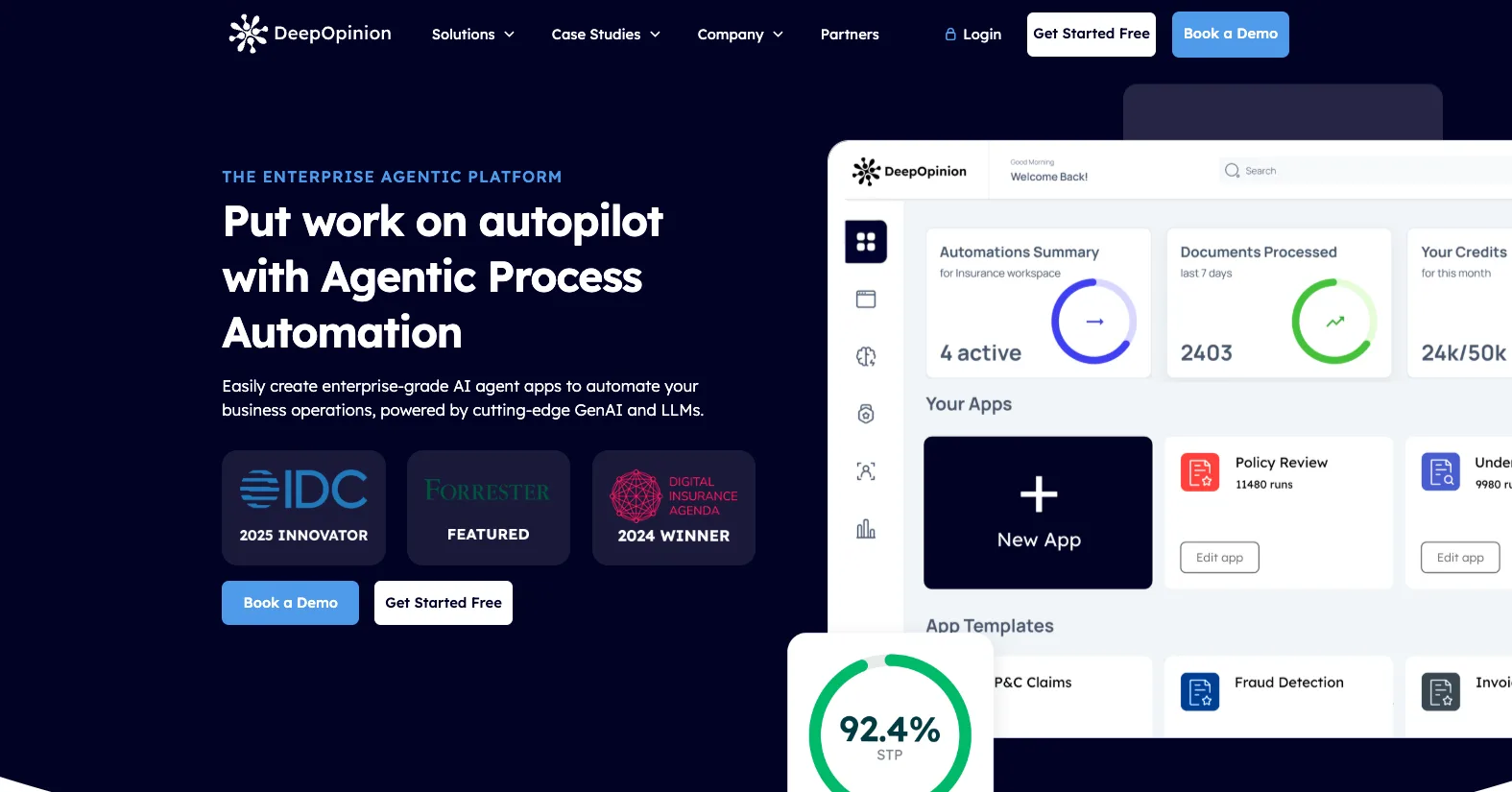
DeepOpinion, from Austria, is a startup that uses AI agents to automate complex business processes. Its AI does more than just automate: it has the ability to learn and adapt to changing situations. This makes it possible to automate, more efficiently and effectively, work that used to be difficult without human expertise.
An Era When Specialized Work Can Be Entrusted to AI
DeepOpinion’s AI agents do more than just complete assigned tasks: they get smarter with experience. For example, they can handle work that requires sophisticated judgment, such as checking the fine print of contracts or analyzing market trends to propose the best strategy. This should not only lead to large savings in time and cost for companies but also help improve the quality of their work. It is truly impressive that AI can complement and even enhance human expertise.
Unique
Unique, from Switzerland, is a startup that deploys AI agents specialized for financial services. They take on specialized, time-consuming tasks such as due diligence (researching investment targets), summarizing policies, IT support and contract analysis.
A “Smart Assistant” for Financial Work
Work in the financial industry is highly complex and requires specialized knowledge. Unique’s AI agents use AI to automate these advanced tasks and make them more efficient. For example, by instantly analyzing thick contracts to pull out the key points or automatically answering customers’ IT questions, they let financial professionals focus on more strategic work. This could be a very powerful ally for the financial industry, where accuracy and speed are essential.
Lovable “GPT Engineer”
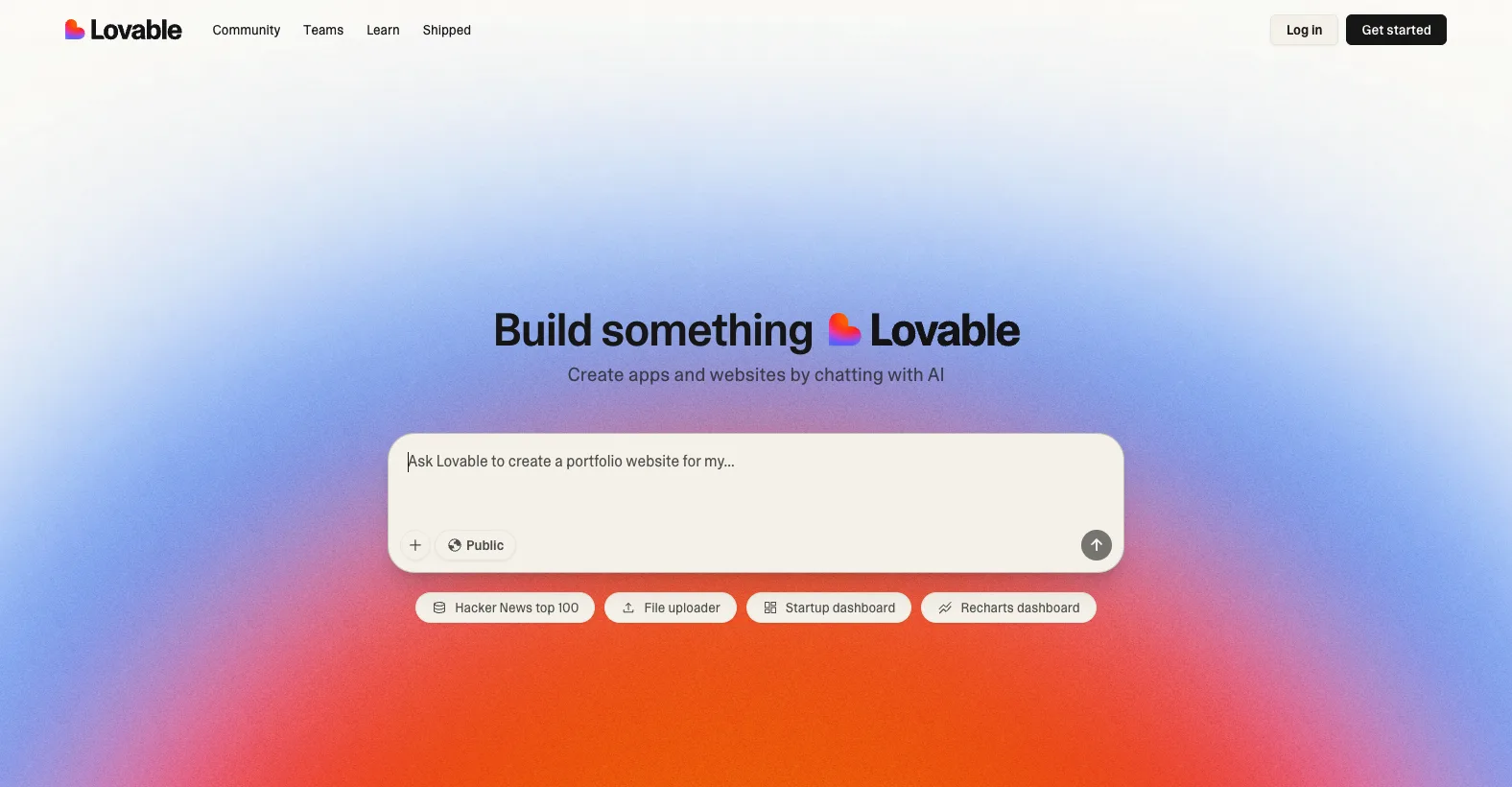
Lovable, based in Sweden, is a startup building a platform that lets users create and improve interactive web applications using everyday language (natural language). Its flagship product is called GPT Engineer.
A Revolutionary Tool That Builds Web Apps “Just by Talking”
GPT Engineer generates working code just from users saying in natural language, “I want a website like this” or “I want to add this feature.” This lets people without programming expertise build websites and web applications easily and quickly. It is a truly revolutionary tool that greatly lowers the barrier to turning ideas into reality.
Parloa
Parloa, from Germany, is a startup developing an AI-driven voice and chat automation platform for customer service operations. It aims to make call centers more efficient by combining conversational AI with natural, human-like interaction.
Human-Sounding AI Is Changing Call Centers
On Parloa’s platform, AI agents respond to customer inquiries through very natural voice and chat, as if a person were speaking. As a result, call centers can handle large volumes of inquiries quickly and consistently and greatly reduce the burden on operators. Customers can solve problems smoothly without waiting, and companies can cut costs while maintaining service quality, making it a truly ideal solution.
Synthesia
Synthesia, from the UK, is a startup developing AI-powered tools that generate high-quality synthetic video content using lifelike avatars and voices.
AI-Made “Talking Videos” That Look Like the Real Thing
With Synthesia’s tools, just entering text automatically generates a video of an AI avatar speaking expressively, as if a real person were talking. Its uses range widely, from corporate training materials and marketing promotional videos to localizing content for different language markets. Not only does it greatly cut the effort and cost of filming, but being able to create videos with whatever content you need, whenever you want, has an impact big enough to overturn the conventions of content production.
ElevenLabs
ElevenLabs, based in the UK and the US, is a startup developing cutting-edge AI speech synthesis technology that enables ultra-realistic, highly expressive voice generation.
AI That Breathes Life into Voices
ElevenLabs’ technology does more than read text aloud: it can generate natural speech filled with emotion and nuance, as if a person were speaking. It is used in a wide range of fields, including audiobook narration, game character voices, virtual assistant voices and even automatically generated podcasts. It is truly amazing that AI can generate voices this realistic.
In January 2025, it raised a huge $180 million in its Series C round, which shows its technical strength and the market’s high expectations.
Nevermined
Nevermined, from Switzerland, is a startup with a unique concept: “PayPal for AI.” It provides a decentralized AI payment protocol and aims to let AI agents make payments themselves.
A Future Payment System in Which AI Agents Transact on Their Own
It would be very convenient if AI agents could negotiate autonomously and even pay on the spot, without human involvement. Nevermined’s technology aims to make exactly that happen. For example, when one AI agent buys data or services from another AI agent, it could pay automatically. As AI takes on increasingly complex tasks and participates in economic activity, this will become very important infrastructure.
Juna.ai
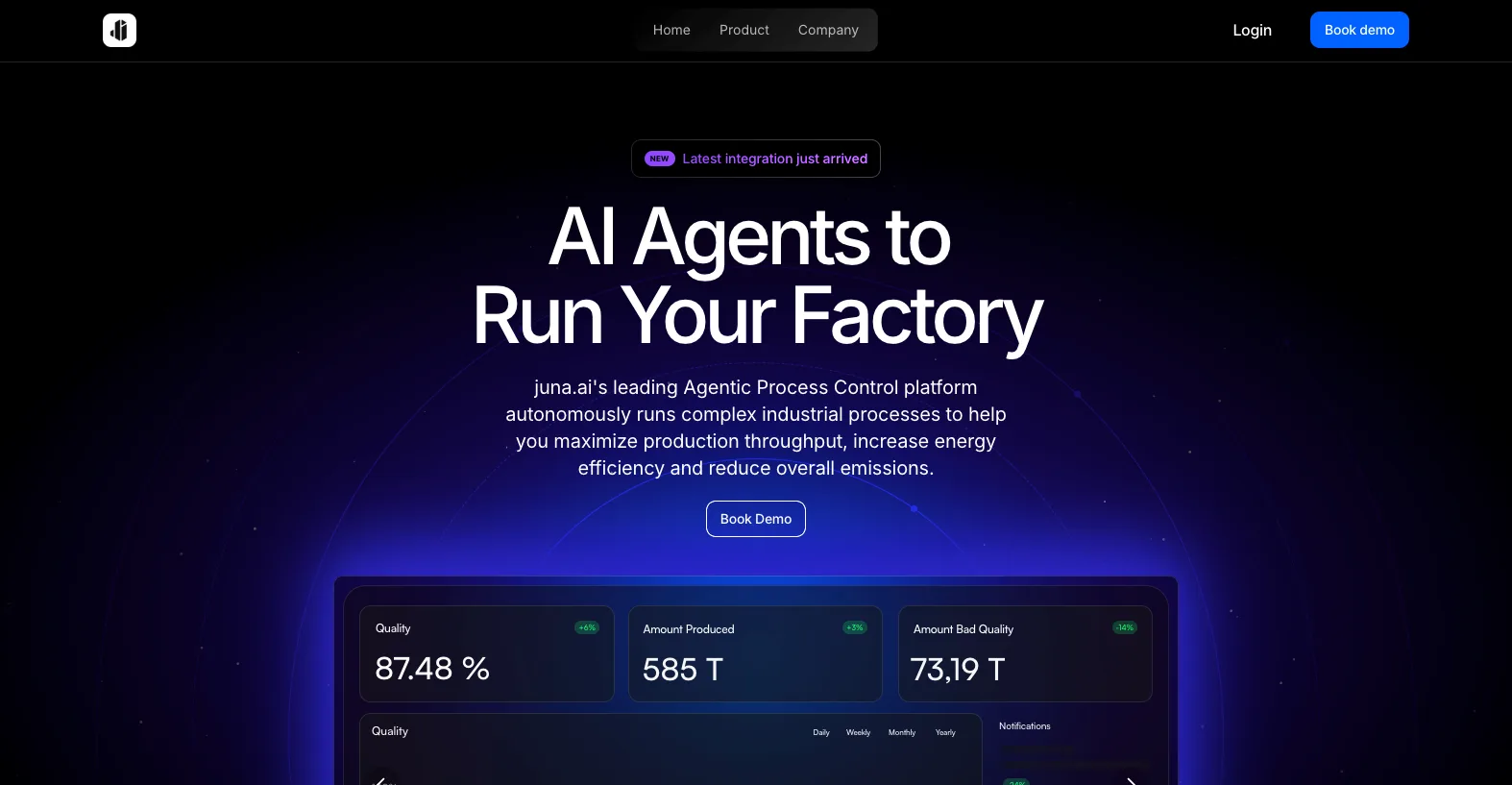
Juna.ai, from Germany, is a startup focused on using autonomous AI agents to optimize industrial manufacturing processes. In managing industrial plants, it deploys agents that interact directly with physical processes by understanding real-time sensor data and past production records and making quick decisions.
AI Agents That Act as the Factory’s Brain
On the manufacturing floor, sensors constantly send in large amounts of data. Juna.ai’s AI agents instantly analyze this vast data and automatically make decisions to optimize how the factory runs. For example, they predict machine failures and order maintenance in advance, or find bottlenecks in production lines and suggest improvements, working as if the AI were a seasoned plant manager. Beyond raising production efficiency and cutting costs, they look likely to help improve product quality as well.
GetVocal AI
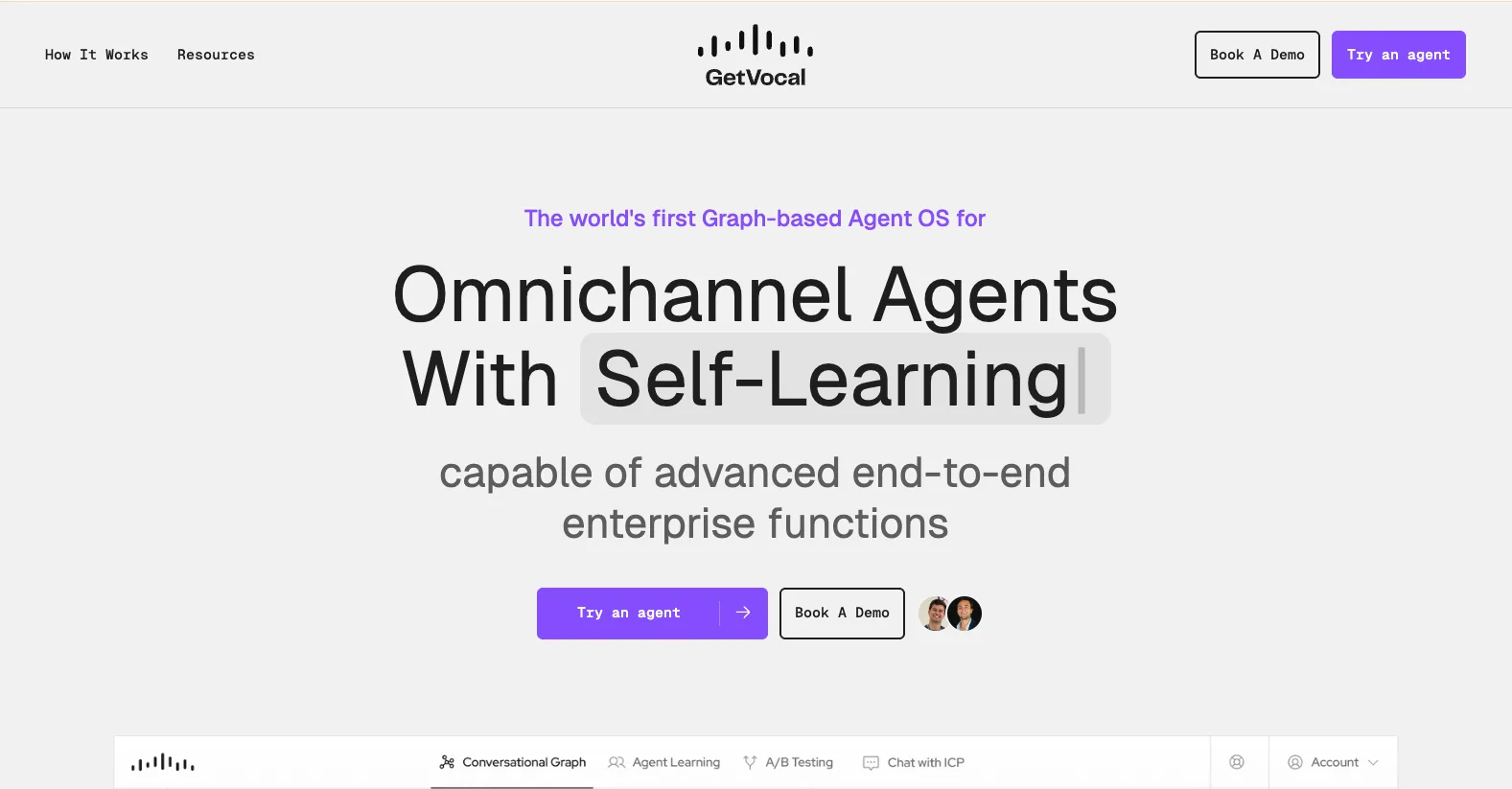
GetVocal AI, from France, is a startup that provides conversational AI agents specialized in customer touchpoints (the customer journey). It is built on its own technology, “Conversational Maps,” which learns from a company’s internal documents, call records and history of customer inquiries (knowledge base).
AI That Learns and Optimizes Customer Conversations
How a company engages with its customers is directly tied to business success. GetVocal AI’s AI agents learn in depth what information customers care about and what wording they prefer, and automatically hold the best conversations based on that. Its Conversational Maps technology enables smooth responses, as if it could read customers’ minds in advance. As a result, it has a track record of increasing lead (prospect) acquisition by 43%, saving 22 hours of work per week and cutting customer contact costs by 79%.
The company completed a €2.7 million funding round in January 2025, and expectations for its growth are high.
Key Points: Overseas Startup Trends
- Massive capital inflows and large-scale ecosystem expansion: In the US, huge funding rounds worth hundreds of millions of dollars keep coming, and in China, government backing and investment by tech giants are accelerating the “War of a Hundred Models.” Large rounds are also seen in Europe, and massive capital inflows into the AI agent market and the expansion of its ecosystem are under way worldwide.
- Specialization and autonomy of AI agents across diverse business areas: AI agents are evolving to specialize in each area of work, from sales, marketing, accounting, legal, HR, customer support, software development, security and industrial manufacturing to personal assistants, and to carry out specific complex tasks on their own.
- The evolution of large language models (LLMs) and diversification of foundation models: Led mainly by Chinese players, competition among diverse large language models (LLMs) is intensifying, including Kimi, which excels at long-text processing, and the high-performance, low-cost DeepSeek.
- The rise and expanding applications of multimodal AI agents: With the rise of multimodal AI agents, expressiveness and the range of applications are expanding dramatically, from realistic voice generation, synthetic video content and AI avatars to AI robots that take over physical work.
- High awareness of AI safety, reliability and ethics, and moves toward regulation: Risk-based regulation, typified by the EU AI Act, is accelerating in many countries, with a clear push to secure the reliability and social acceptance of AI systems.
Technological Innovation in AI Agents and Related Tools
As AI agents become ever more deeply embedded in our lives and businesses, their capabilities are evolving remarkably. AI that thinks, acts on its own and supports us, as if it had stepped out of science fiction, is truly the fruit of technological innovation. What makes this evolution possible is nothing less than a dramatic improvement in the core technologies that serve as the AI agent’s “brain.” Particularly noteworthy are the evolution of “long-term memory,” which lets AI keep learning without forgetting past experiences; the establishment of “common protocols” that let different AI agents work together smoothly; and the arrival of “no-code development tools” that let anyone build AI agents without specialized knowledge. How will these technologies expand the possibilities of AI agents and shape our future? Here we take a detailed look at the latest technology trends and the specific tools that support them.
Long-Term Memory for AI Agents
For AI agents to behave as intelligently and naturally as people, they need “memory” that lets them remember past conversations and experiences. Until now, AI agents have had “short-term memory,” which remembers conversations only within a session, and “long-term memory,” which records things like user preferences and basic information. But earlier long-term memory had a problem: once something was recorded, it was not very flexible, which made it hard to respond dynamically to the situation.
LangMem SDK: Managing Memory to Optimize Behavior
What changed this situation significantly was a tool called LangMem SDK, announced in February 2025. It was developed by LangChain, known for its AI agent framework. Thanks to this tool, AI agents can extract important information from conversations and use it to optimize their own behavior. In addition, they can now reliably retain long-term memories of facts and past events. AI that learns from the past and acts more intelligently is truly remarkable progress.
In addition, a research team from Rutgers University, Ant Group and Salesforce developed a new memory system, A-MEM, inspired by the Zettelkasten, an efficient note-taking method proposed by the German sociologist Niklas Luhmann (a way of building knowledge by summarizing information on cards and linking them together). By building a network of knowledge, it achieves more flexible, context-aware memory management. It is amazing that AI can connect and understand knowledge much like a person.
However, AI memory also has its challenges. It is not enough to simply have AI remember lots of information; design decisions about what to remember and what to forget become very important. It is an interesting challenge: AI also needs the ability to “forget wisely.”
MCP: A Common Protocol for AI Agents
For AI agents to handle a variety of tasks, multiple AI agents need to cooperate with each other and connect with external services and data. What emerged to make this cooperation smooth is MCP (Model Context Protocol), a common protocol (communication standard) for AI agents.
How AI Agents “Talk” to Each Other Smoothly
With the arrival of MCP, different AI agents and systems can easily exchange information and work together, as if they spoke a common language. This makes it easier for AI agents to divide up and carry out more complex tasks, or to work with other AI services to deliver more advanced solutions.
For example, CData Software released a free beta of CData MCP Servers, an MCP Server implementation that supports more than 400 APIs (interfaces that connect applications with external services). This allows AI agents to connect securely and bidirectionally to SaaS (software as a service) commonly used in business, such as Salesforce, Jira and kintone, as well as to a variety of databases.
With this MCP technology, AI agents can convert the data stored in these services and databases into a tabular, SQL-based model and work with it. In other words, AI agents can autonomously explore data, search for information (run queries), write, update and delete data, and even perform complex database operations (run stored procedures), just as a person would operating the systems directly.
No-Code Development Tools
Building and running AI agents used to be considered difficult for anyone other than specialists with programming knowledge. Recently, however, “no-code development tools” that let you build AI agents like assembling blocks, without any complex coding, have been appearing one after another. As a result, anyone, not just IT specialists, can easily bring AI agents into their business, and the range of uses is expanding greatly.
Allganize “Agent Builder”
When companies use AI agents, their biggest concern is probably security. Allganize’s Agent Builder gives companies features to easily build and run AI agents without code, while paying thorough attention to security.
Building and running AI agents securely
Agent Builder’s biggest feature is that it can fully isolate the environment in which AI agents run by restricting external networks and data access. This minimizes the risk of a company’s important information assets leaking outside, so AI agents can be used with confidence. It also supports “on-premises environments,” in which companies run systems on their own servers, a major advantage that makes it easy to adopt even for companies with stricter security requirements.
A Tool from DNP and BIPROGY
Dai Nippon Printing (DNP) and BIPROGY are jointly developing a tool that lets users build and run avatars equipped with AI agents, remarkably, without any code.
AI avatars at work everywhere
With this tool, avatars with AI agent capabilities can be deployed without specialized knowledge, not only as AI avatars that serve customers on websites but also in many other places, such as digital signage in stores and the much-discussed metaverse. Being able to easily create a “face” for AI looks set to make corporate communication more fun.
Support from No-Code Research Institute Inc.
No-Code Research Institute Inc. supports the no-code development of AI agents that keep acting and learning on their own, addressing common problems faced especially by small and medium-sized businesses, such as “labor shortages” and “dependence on specific individuals” (situations in which only certain employees can do certain tasks).
AI that solves SMBs’ problems
With this support, small and medium-sized businesses can automate many kinds of work. For example, AI can automate manual data entry from paper forms, automatically generate invoices and quotes, and make it easy to build Q&A chatbots based on internal manuals or multilingual chatbots. Freed from routine work that used to depend on people, employees can focus on more creative, higher-value work.
New Possibilities Opened Up by AI Agents: A Wide Range of Use Cases
Technological innovation in AI agents is bringing new possibilities to many industries and kinds of work. AI agents are no longer just automation tools; they have evolved into something that assesses situations like a person and carries out tasks on its own, helping cut labor and outsourcing costs, greatly improve efficiency and dramatically raise productivity.
Here we look at how AI agents are transforming business, by use case and by the companies specializing in each. From software development to sales, customer service, hiring, healthcare, logistics, security and even multimodal domains, the places where AI agents are at work keep expanding.
For Engineers and Development Teams
In software development, there are a great many tasks beyond writing code, such as testing, preparing infrastructure, quality control and even paying down past technical debt. AI agents strongly support the workflow across the entire software development life cycle and lighten engineers’ load.
AI assistants that make development smarter
AI agents make the whole development process more efficient, for example by helping generate code automatically, running end-to-end tests to check that the software works correctly, and automatically provisioning infrastructure such as servers. Cognition’s Devin, introduced earlier, is a leading example of an AI software engineer drawing attention in exactly this field.
For Sales and Marketing
In sales and marketing, what matters is how efficiently you find prospects, deliver messages that resonate with customers and ultimately turn them into revenue. AI agents strongly support these activities aimed at maximizing revenue.
AI sales and marketing that boost revenue
AI agents can automate the prospecting process, automatically create and deliver content personalized for each customer (for example, emails and ad copy), and forecast and analyze future sales from past data. AI agents such as Artisan’s Ava and 11x’s Alice are leading examples of dramatically more efficient sales in this field.
For Customer Service
Customer support is important work that represents the face of a company, but it faces many challenges, such as round-the-clock coverage, multilingual support and instant responses. AI agents solve these challenges, improving the quality of customer service while easing the burden of hiring, training and retaining staff.
Running 24 hours a day: AI that keeps customers smiling
AI agents can respond instantly to customer inquiries across time and language barriers, so customers can get the information they need at any time and companies can provide high-quality support while keeping labor costs down. Decagon, Cognigy and Parloa, introduced earlier, are among the main players in this field.
In addition, Tomorrow Net offers the CAT.AI multi-AI agent, in which multiple AI agents work together to automate complex inquiries. Multiple AI agents divide up and process in parallel a series of steps, such as gathering information, assessing the situation and choosing the best response, which lets it answer a wider range of questions accurately and further improves efficiency.
For Recruiting
In recruiting, there is a great deal of manual work, from writing job descriptions and searching for candidates to sending scout emails, scheduling interviews and following up after interviews. AI agents automate this work and also standardize evaluation criteria and keep evaluations consistent, supporting more efficient and fairer hiring.
AI that finds the right people
AI agents greatly reduce recruiters’ workload by efficiently finding people with the skills and experience a company needs among large numbers of résumés and candidate data, and by automatically writing and sending scout emails tailored to each candidate. They even schedule interviews and follow up with candidates automatically. Maki People and Mercor, mentioned earlier, are leading companies transforming hiring in this field. It is a real help to have AI make hiring more efficient.
For Legal and Compliance
Legal and compliance work requires determining accurate information from vast amounts of legal documents, laws and case law, and is said to be an excellent fit for AI agents.
AI as the company’s “guardian of the law”
AI agents are expected to play a role in advanced legal work, such as automating legal research, checking (reviewing) contracts, supporting litigation strategy and helping with client communication. Genie AI and Unique, mentioned earlier, offer innovative services in this field.
In addition, Horizing in the UK is focused on building AI agents for compliance, with a particular emphasis on quickly understanding how regulatory changes affect a business. AI that always keeps track of the latest regulations and tells you how they affect your business is very reassuring for business leaders.
For Healthcare
In healthcare, there are many tasks that weigh heavily on medical professionals, such as managing medical billing, supporting diagnosis and automating medical record entry. By supporting this work, AI agents help make healthcare more efficient and deliver higher-quality care.
AI that supports the medical front line
AI agents save medical professionals time and effort by automatically managing patients’ medical billing, presenting relevant information from vast medical data to support doctors’ diagnoses, and automatically entering consultation details into medical records.
ModAstera, selected for the Qualcomm AI Program for Innovators 2025, offers a medical AI engineering agent that aims to shorten AI development time from several months to just a few days. Biorithm combines digital health, advanced sensors and data science to improve maternal and child health.

For Logistics and Supply Chain Management
Logistics and supply chain management are characterized by a very large amount of back-office work involving repetitive exchanges of large volumes of documents, such as requests for quotes, invoice matching, progress checks, communication with suppliers and payments. AI agents are a strong driver for automating this work.
AI that smooths the behind-the-scenes work of logistics
AI agents make a whole series of back-office tasks more efficient, for example by automatically matching quotes against invoices, contacting suppliers to check the status of orders and processing payments automatically. This is expected to reduce human error and speed up work. Having AI smooth the flow of the entire supply chain is a big advantage for companies.
For Security and Risk Management
As the use of AI agents spreads, security and risk management become more important. The IBM X-Force Threat Intelligence Index 2025 points out that problems such as remote code execution vulnerabilities (security weaknesses) in frameworks for building AI agents may occur even more frequently in the future.
Security that protects AI
It warns that as AI adoption advances further in 2025, the incentive to develop attack toolkits that specifically target AI itself will also grow, so companies need to be more vigilant than ever about the risk of their AI systems being targeted. That makes it essential for companies to firmly protect the AI pipeline, meaning the entire flow from AI data collection to development and operation, from a security standpoint. To use AI safely, security for AI is just as important as the AI itself.
Multimodal AI Agents
One of the most advanced technologies in AI agents is the “multimodal AI agent.” This is AI that processes different types of input at the same time, such as text, voice, images, video and sensor data, and understands them as a whole to make more sophisticated judgments and outputs possible.
AI that understands and acts on diverse information
Just as people perceive the world with their eyes, ears and other senses, AI can handle more complex, more real-world tasks by gathering information from multiple sources.
In the voice domain, multimodal AI agents are mainly used in use cases centered on “conversations” with customers, such as customer service and sales. The field of “enterprise AI calling,” in which AI automatically handles incoming and outgoing calls while working with existing systems across multiple departments, is especially active. For example, ElevenLabs, mentioned earlier, offers high-performance voice generation tools for developers.
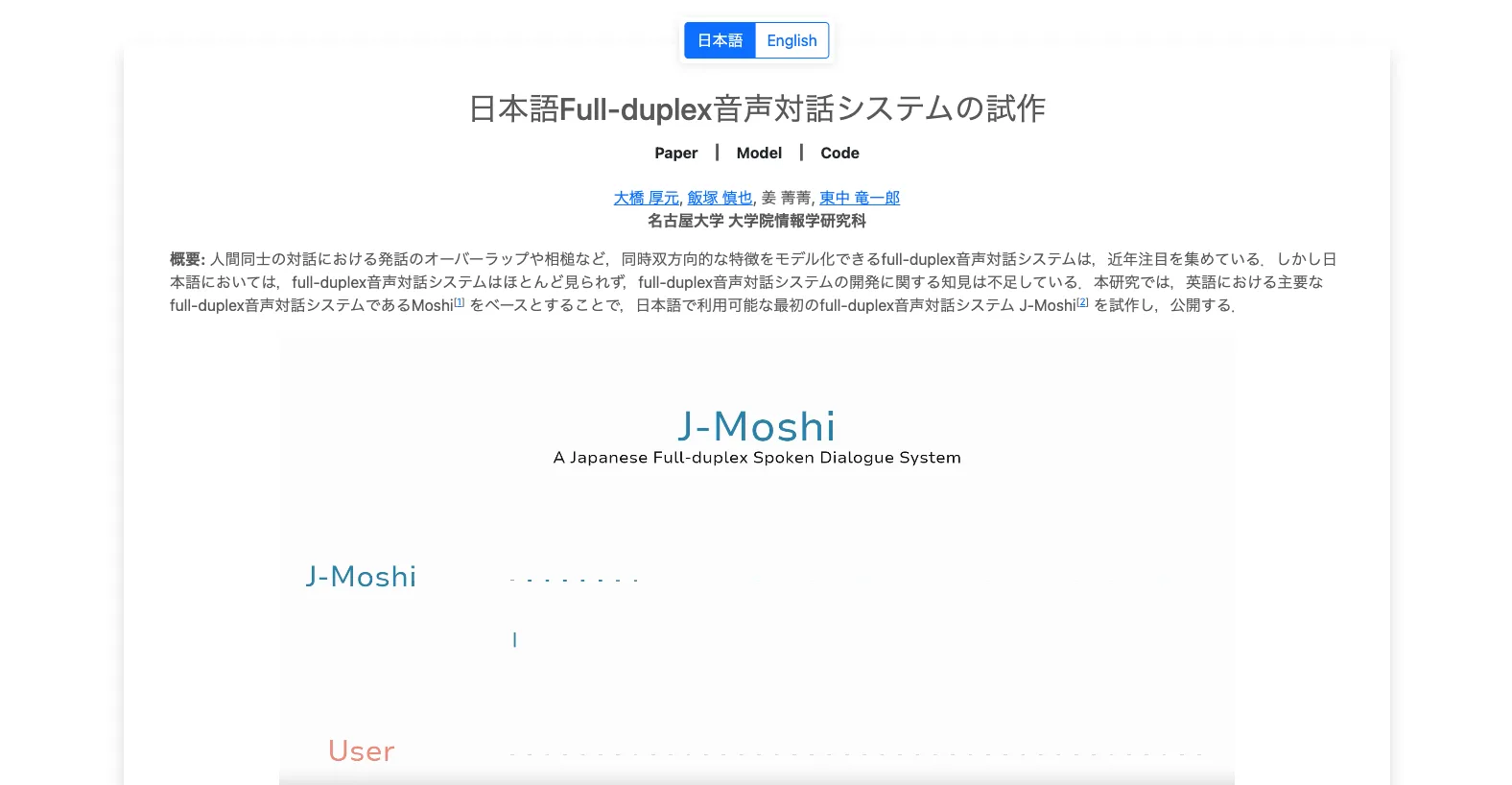
J-Moshi, a real-time spoken dialogue model specialized for Japanese and developed by Nagoya University in Japan, is attracting a lot of attention because its backchanneling during conversation and its “speech overlap,” starting to speak at the same time as the other person, are very natural. AI that feels like talking to a real person will greatly change the future of communication.
In the video and image domain, multimodal AI agents combine natural language processing with ingested image information, and services in which AI creates an “avatar” to hold conversations or outputs professional-quality video are growing. They are used in situations where visual communication matters, such as marketing, customer support and internal training.
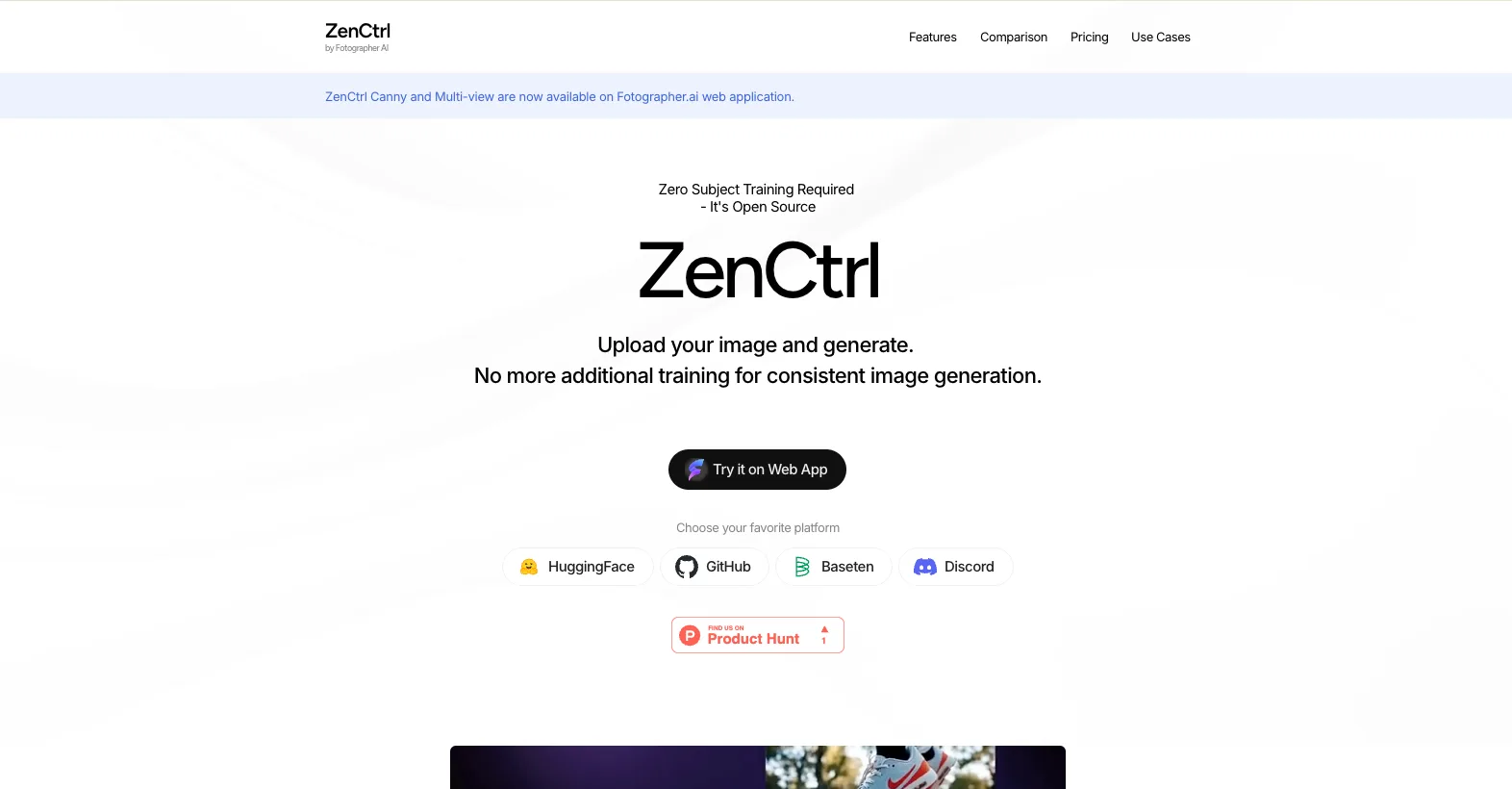
Fotographer AI released ZenCtrl as open source, a toolkit for controlling image-generation AI that can produce high-resolution images of multiple viewpoints and varied scenes from just a single image. It is a great tool that greatly expands the possibilities of creative expression.
AI robots, which are expected to take over physical work and to make judgments and act on diverse data, are drawing attention because they are a very good fit with multimodal AI. Startups like Figure AI, which develops humanoid robots together with AI, have emerged, as have startups specializing in use cases with a lot of repetitive physical work, such as warehouses and factories.
AMATAMA, selected for the Qualcomm AI Program for Innovators 2025, is focused on developing a platform to realize next-generation humanoid technology. A future in which AI robots work in our lives and workplaces seems to be just around the corner.

The AI agent market is still in its early days, with specific areas and some startups growing and raising funds rapidly.
Key Points: Trends in AI Agent Technology and Use Cases
- Improved capabilities and broader versatility of AI agents: Advances in long-term memory technology (such as LangMem SDK) and common protocols between AI agents (MCP) are improving AI agents’ capabilities. This is accelerating their use across many business areas, from software development to sales, customer service, hiring, legal, healthcare, logistics and security.
- Contribution to efficiency and productivity: In every field, AI agents help raise company-wide productivity by automating routine work and reducing the human burden, through code generation, automated lead generation, 24-hour customer support, interview scheduling, legal research, medical billing management and more.
- No-code development driving adoption: No-code development tools that require no complex coding have arrived, making it easy even for companies without specialized knowledge to build and run AI agents.
- The evolution and expanding applications of multimodal AI: With the rise of multimodal AI agents, AI’s expressiveness and its range of real-world applications are expanding greatly, from more natural spoken dialogue models to synthetic video generation and AI robots that take over physical work.
- The importance of ensuring security and reliability: As the use of AI agents spreads, security risks are increasing. In response, protecting the entire AI pipeline and complying with international regulations (such as the EU AI Act) are recognized as urgent issues.
Trends Among AI Agent Startups in Japan
Now let’s turn to AI agent startups in Japan, which are closer to home for us. Funding rounds for AI agent startups in the Japanese market still tend to be small compared with other countries such as the US and China. However, we are seeing practical AI agent technology evolve with a focus on solving social issues specific to Japan, such as labor shortages caused by an aging, shrinking population. Government support for AI development and policies promoting digital transformation (DX) are also encouraging investment in and development of related technologies.
In the Japanese market, progress also tends to come less from independent AI agent startups repeatedly raising large rounds and more from large companies developing agent features as applications within their own services or partnering with startups. This may be a distinctive path of evolution that reflects Japan’s industrial structure and the character of its companies.
Even so, expectations for AI agents are very high: in the “Technology Future Investment Index” published by Nikkei xTECH, “AI agents” ranked first overall, a sign of how much attention they are getting. The momentum of capital inflows is also striking, with more than $3 billion estimated to have been invested in this field in 2024, and further growth is expected.
Below are specific AI agent startups in Japan and their initiatives.
Sakana AI
Sakana AI is a Japanese startup attracting attention at home and abroad for developing CycleQD, a new technique for creating populations of large language model (LLM) agents.
A New Technique That Makes AI Smarter as a “School”
Sakana AI’s CycleQD can be pictured as multiple AI agents working together, like a school of fish, learning from one another to achieve one big goal. By combining the abilities of individual AI agents, it can tackle complex problems that no single agent could solve alone. It could be called a groundbreaking technique that draws out AI’s ability to cooperate and achieves more advanced intelligence.
In January 2024, the company completed a Series A round of $30 million (about ¥4.5 billion), a notably large raise for Japan, and has already become a unicorn (an unlisted company valued at more than $1 billion), so expectations for its growth are immense. It has also received investment from major Japanese companies such as NTT, KDDI and Sony Group, and it is drawing attention as a “rising star” in Japan’s AI field.
Zaimo.ai
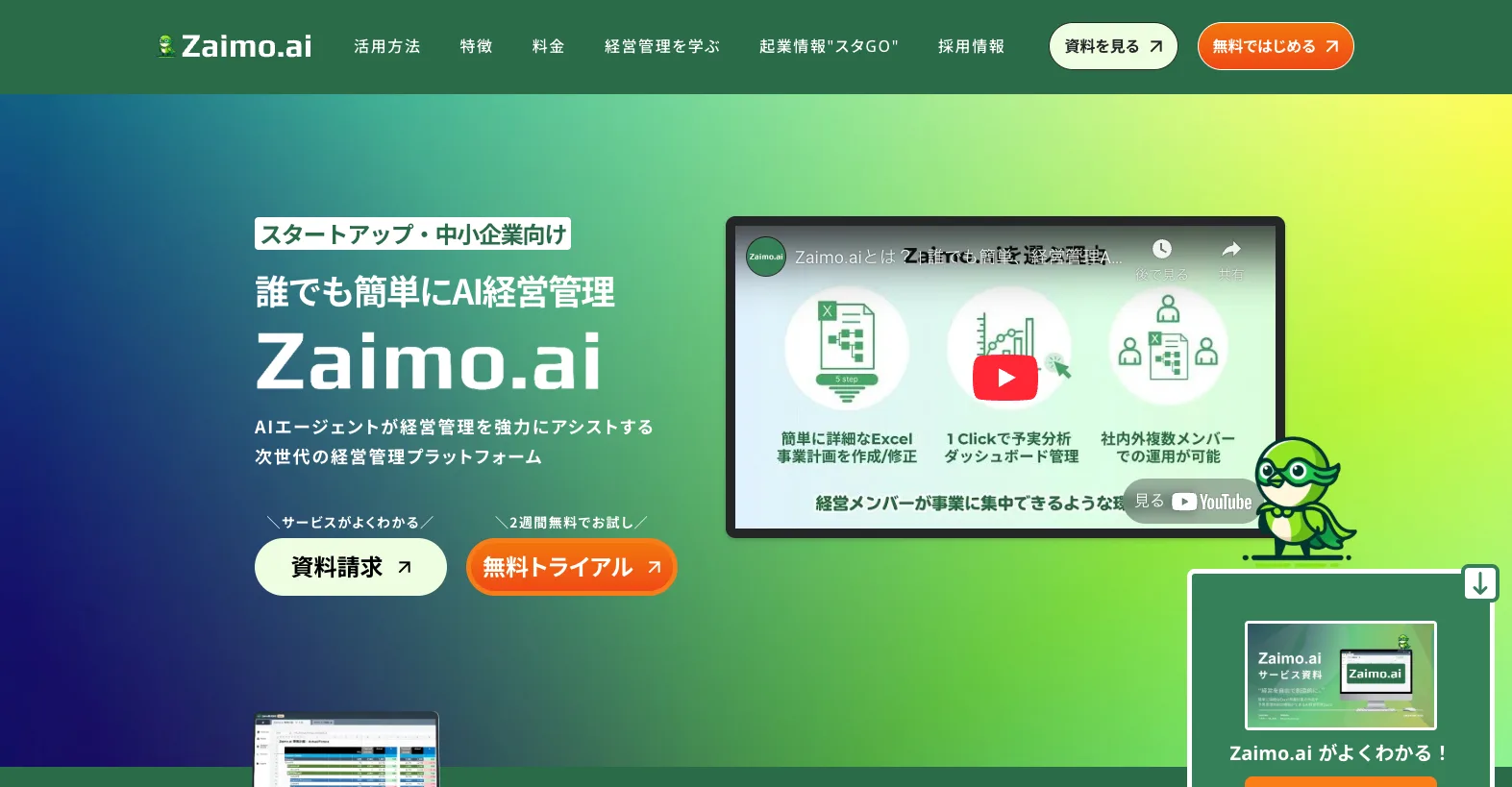
Zaimo Inc. is a startup offering Zaimo.ai, an AI agent that uses AI to make management administration smarter. AI simplifies work that is essential to running a business, such as creating business plans, managing budgets against actual results (budget-vs-actual management) and sharing information within the company.
AI That Makes Management Visible
For executives, accurately understanding the state of the business and planning for the future are very important, but they take a great deal of time and effort. Zaimo.ai automates this management work and organizes the data in an easy-to-understand way, so executives can make faster and more accurate decisions. For example, it might automatically suggest future business plans based on past sales data, or instantly analyze gaps between budget and actual results and explain the causes. Having AI make management “visible” is truly reassuring.
The company raised about ¥100 million in its seed round, and its future growth as a Japanese startup is anticipated.
VARIETAS

VARIETAS is a startup aiming to raise productivity across society by having an AI interviewer agent take over document screening and first-round interviews in hiring, using new mechanisms and technology.
AI Interviewers Are Transforming Hiring
Hiring is important for companies, but it takes a lot of time and effort. The AI interviewer agent developed by VARIETAS has AI handle everything from screening application documents to first-round interviews, greatly reducing the burden on recruiters. Because AI evaluates candidates against fair criteria, it not only makes the selection process more efficient but may also reduce unconscious bias in hiring and uncover a more diverse range of talent. It is a promising initiative that looks set to deliver smoother, fairer hiring for both companies and job seekers.
The company raised ¥600 million in its Series A, which shows that its technology and business model are valued.
AGEST
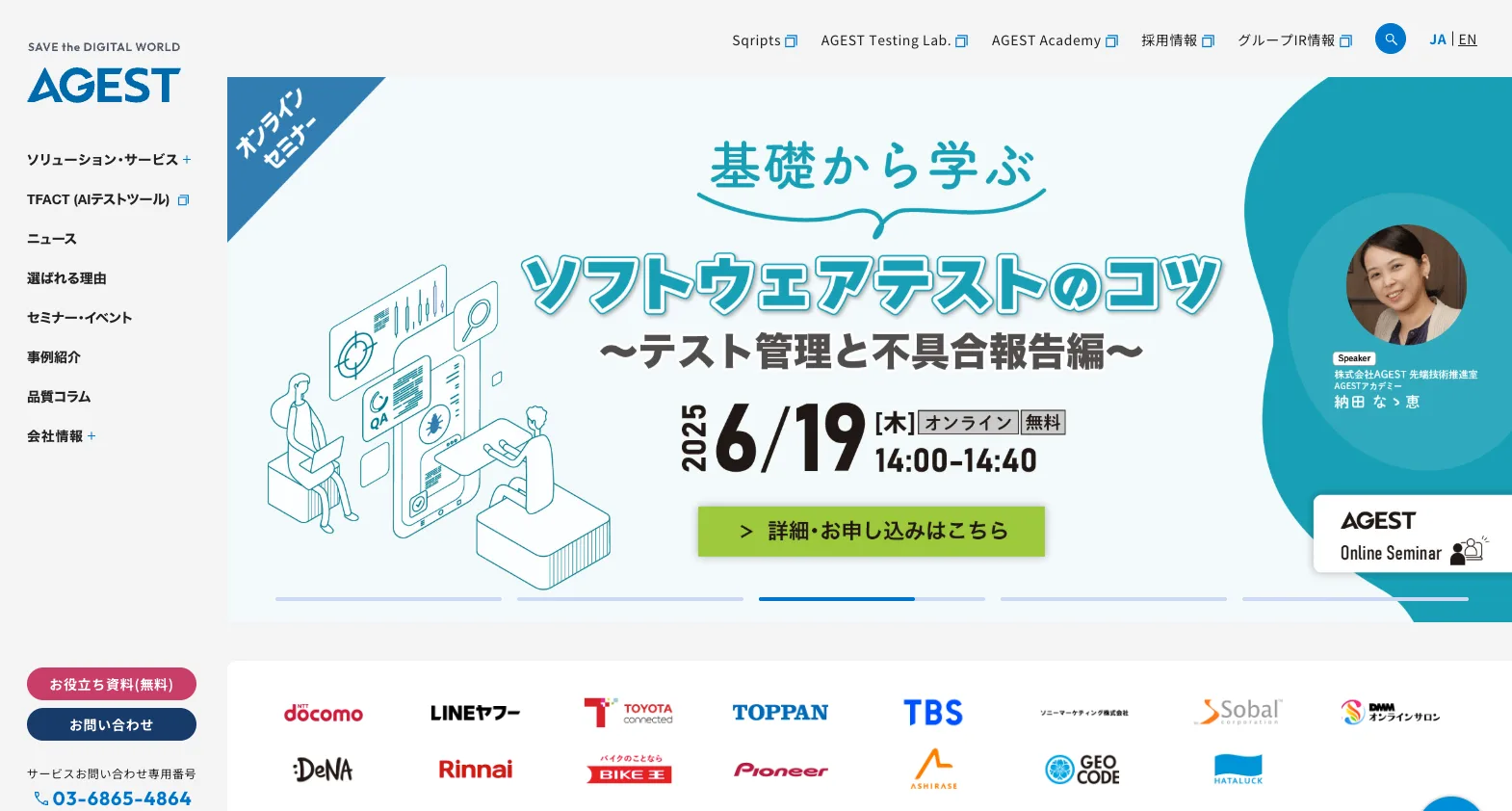
AGEST is a Japanese startup that has filed a patent for an innovative AI debugging technology designed to make software testing more efficient.
AI Debugging Speeds Up Development
In software development, “debugging,” finding and fixing bugs (defects), takes a great deal of time and effort. AGEST’s AI debugging technology is characterized by an autonomous AI agent quickly identifying the cause of problems detected during testing. The company claims the technology can cut the time developers spend debugging by hand by up to 52%. It could be a very important technology for achieving both speed and quality in software development.
AI-DataScience
AI-DataScience is a startup developing AI agents to solve problems in fields known for especially “grueling work,” such as healthcare, logistics and call centers.
AI That Supports “Grueling Work”
One of AI-DataScience’s main products is Curalumi, in which AI conducts the pre-diagnosis interview. It is a consultation support agent: when a patient describes their symptoms to the AI on a smartphone, the information is organized and shared with the doctor. Doctors can understand the patient’s situation in advance, which shortens consultations and makes them more efficient. In fact, a deployment at a medical institution in France reported that processing efficiency doubled.
The company has raised about ¥100 million in total and has already obtained four AI-related patents, a sign of its strong technology. It plans to accelerate its overseas expansion, and we look forward to the day Japanese AI technology surprises the world.
AuthenticAI “MaisonAI”

AuthenticAI is a startup offering MaisonAI, a generative AI platform for businesses. The platform features a variety of generative AI models as well as AI agents for many professional roles, such as designers and merchandisers (people who plan and sell products).
AI Agents That Work with Professionals
MaisonAI does more than have AI generate text and images: AI agents with knowledge of specific professional fields support work as if collaborating with human experts. For example, an AI agent for designers suggests design ideas, and an AI agent for merchandisers analyzes trends in best-selling products, helping make highly specialized work more efficient.
In fact, more than 2,900 AI agents have been created on the platform, and they are used in a wide range of areas, from improving efficiency to new business development and education.
No-Code Research Institute Inc.
No-Code Research Institute Inc. is a startup that supports the development of AI agents without code. It aims in particular to solve problems faced by small and medium-sized businesses, such as “labor shortages” and “dependence on specific individuals” (situations in which only certain employees can do certain tasks).
AI That Solves SMBs’ Headaches
With this support, small and medium-sized businesses can automate many kinds of work. For example, they can automate a wide range of tasks, including automatic data entry from paper forms through OCR (optical character recognition) integration, automatic generation of invoices and quotes, Q&A chatbots based on internal manuals and multilingual chatbots.
In fact, the company reports concrete results such as saving 40 hours of work per month on paper form processing and cutting labor costs for preparing quotes by up to 85%. With results like these, small and medium-sized businesses can adopt AI agents with confidence and greatly improve their efficiency.
DATAFLUCT “Airlake AI agents”
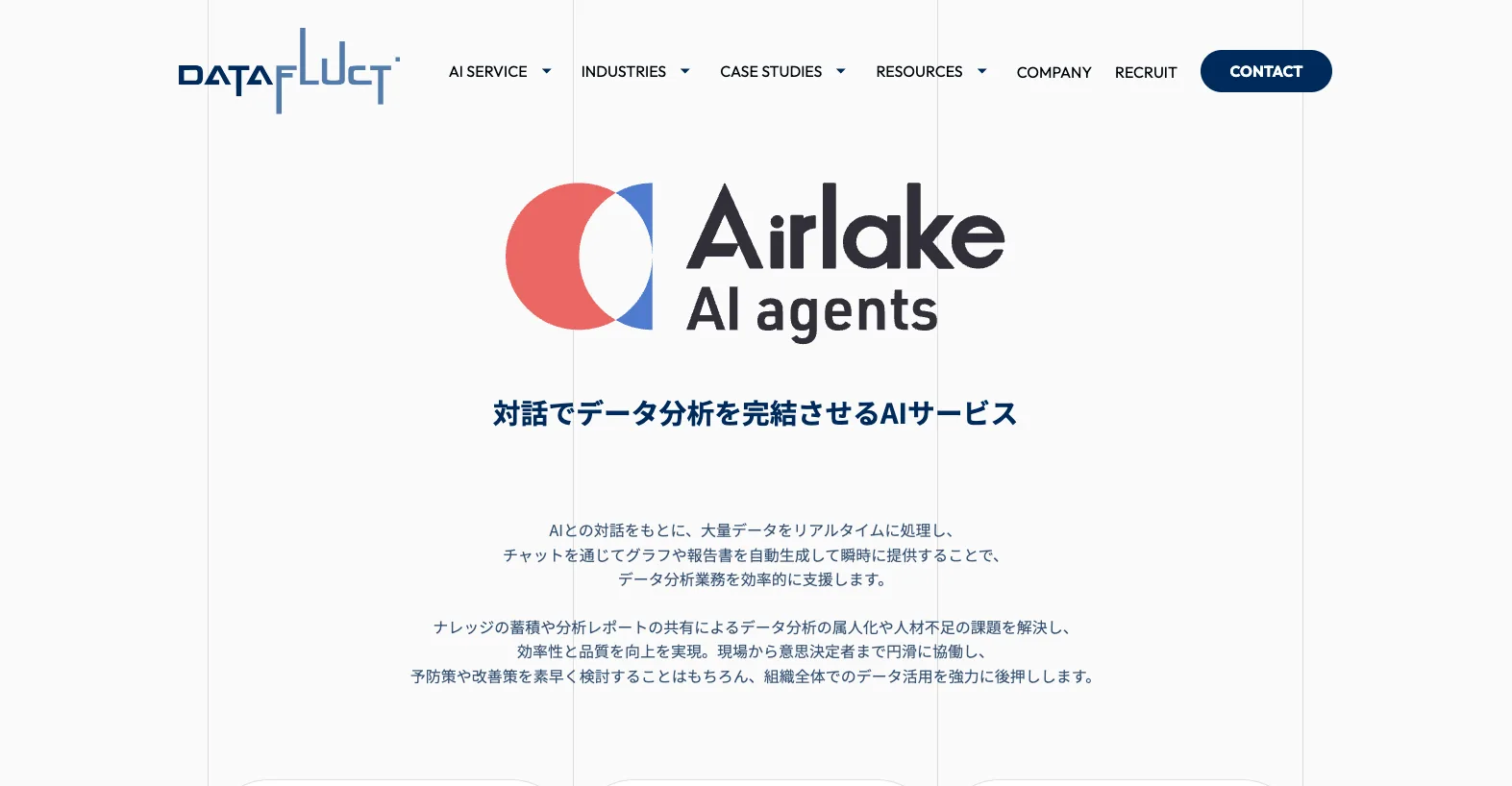
DATAFLUCT is a startup offering Airlake AI agents, a conversational AI agent. The agent features fast search of internal documents, chart generation and a new function, the Contextual Insight Engine (CIE), which automatically links numerical data to the text information behind it.
AI That Turns Data into Insights
Airlake AI agents instantly finds the information you need in a company’s vast data, turns it into charts, and reads the reasons (context) behind the numbers from text information. As a result, it not only makes reporting dramatically more efficient but also enables fast, deep, data-driven decision-making. It is expected to be used in a wide range of industries, including manufacturing, retail/e-commerce, finance and healthcare, with AI supporting business decisions.
Allganize Japan “Agent Builder”
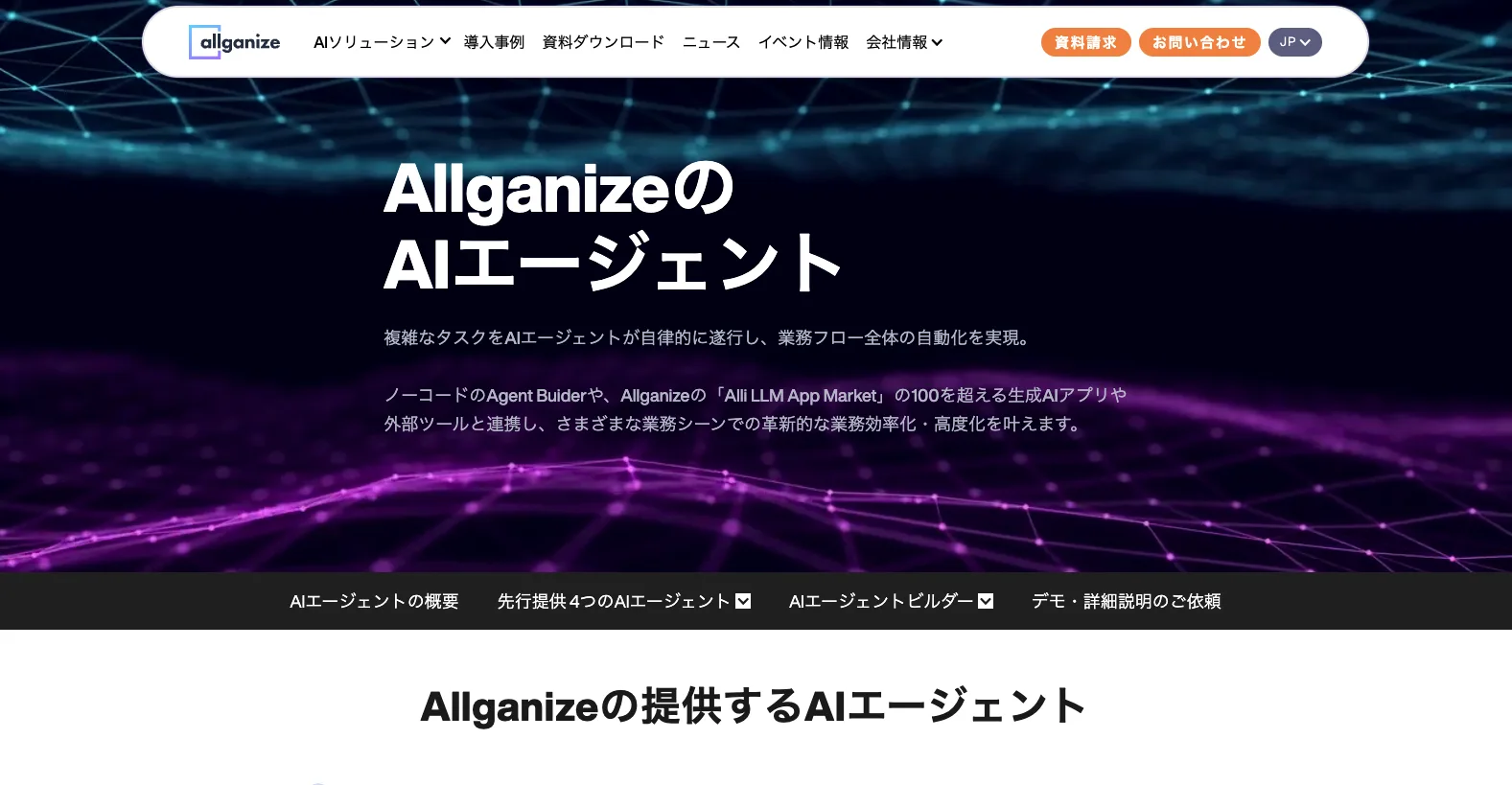
Allganize Japan is a startup offering Agent Builder, which lets companies easily create AI agents without code in a highly secure environment.
Building AI Agents in a Secure Environment
When companies adopt AI, what they care about most is data security and the risk of information leaks. Allganize Japan’s Agent Builder pays thorough attention to this point. By strictly limiting access to external networks and data and fully isolating the environment in which AI agents run, it firmly protects a company’s valuable information assets. In addition, by complying with MCP (Model Context Protocol), a common set of rules, and connecting with external systems and internal data, it makes it easy to create AI agents specialized for specific work (for example, a BI Agent, RAG Agent, Sales Agent or Legal Agent). These connections make it possible to automate not just single tasks but entire complex workflows that combine multiple steps, which is expected to greatly improve efficiency.
JAPAN AI “JAPAN AI AGENT”
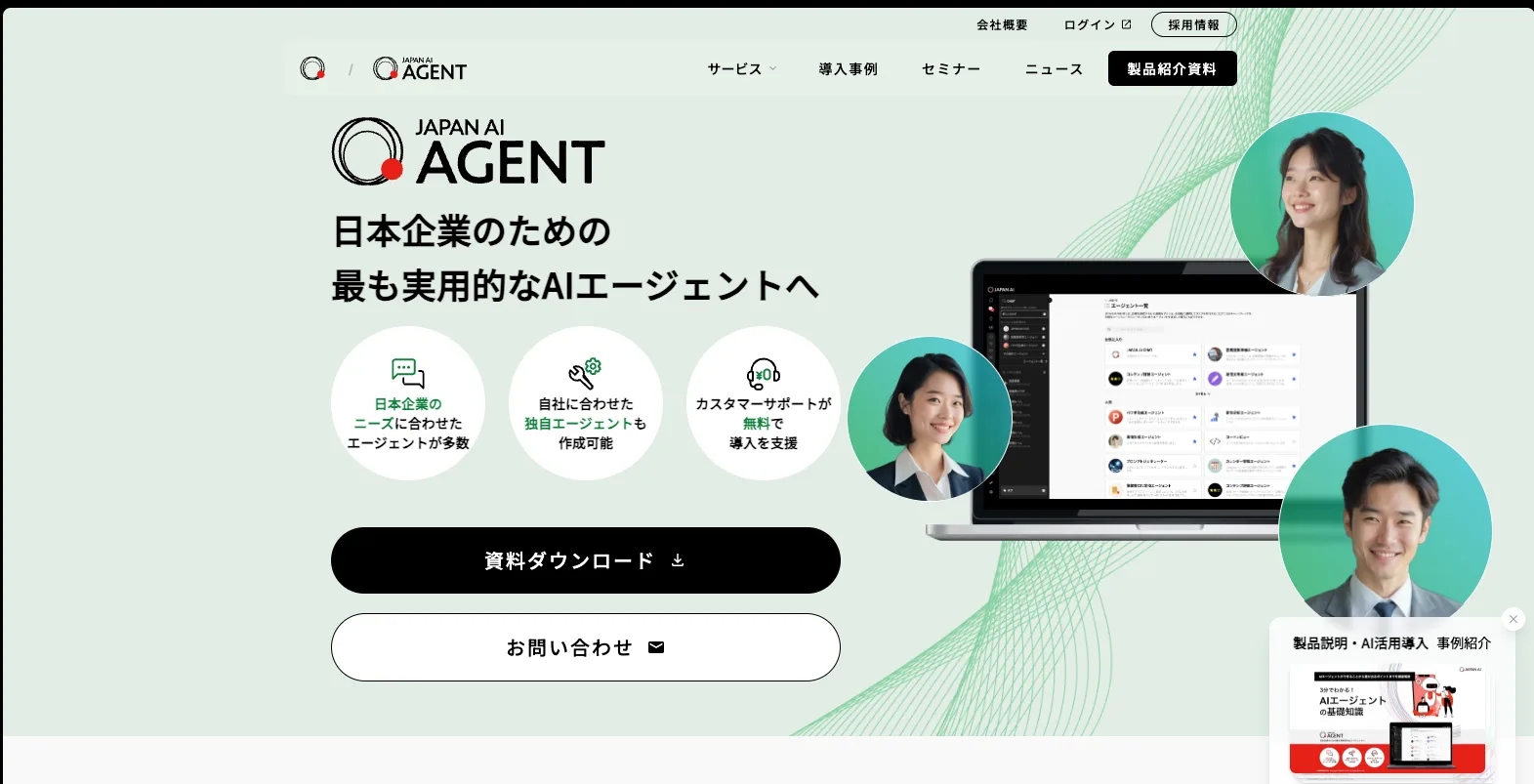
JAPAN AI (a Geniee Group company) offers JAPAN AI AGENT, an AI agent that works with kintone, a tool for building business apps without code.
Working with kintone: AI That Analyzes Business Data Intelligently
kintone, used by many companies, is a handy tool for storing business data and easily building apps. JAPAN AI AGENT is characterized by AI that automatically analyzes the vast business data stored in kintone and provides “insights” useful for management decisions and business improvement. The company cites concrete use cases across departments: for example, analyzing customer behavior patterns to suggest the next strategy in sales, helping with demand forecasting to optimize order quantities in inventory management, and providing information that helps improve employee performance in HR. It is groundbreaking that AI can create new value from everyday business data.
Tomorrow Net “CAT.AI”
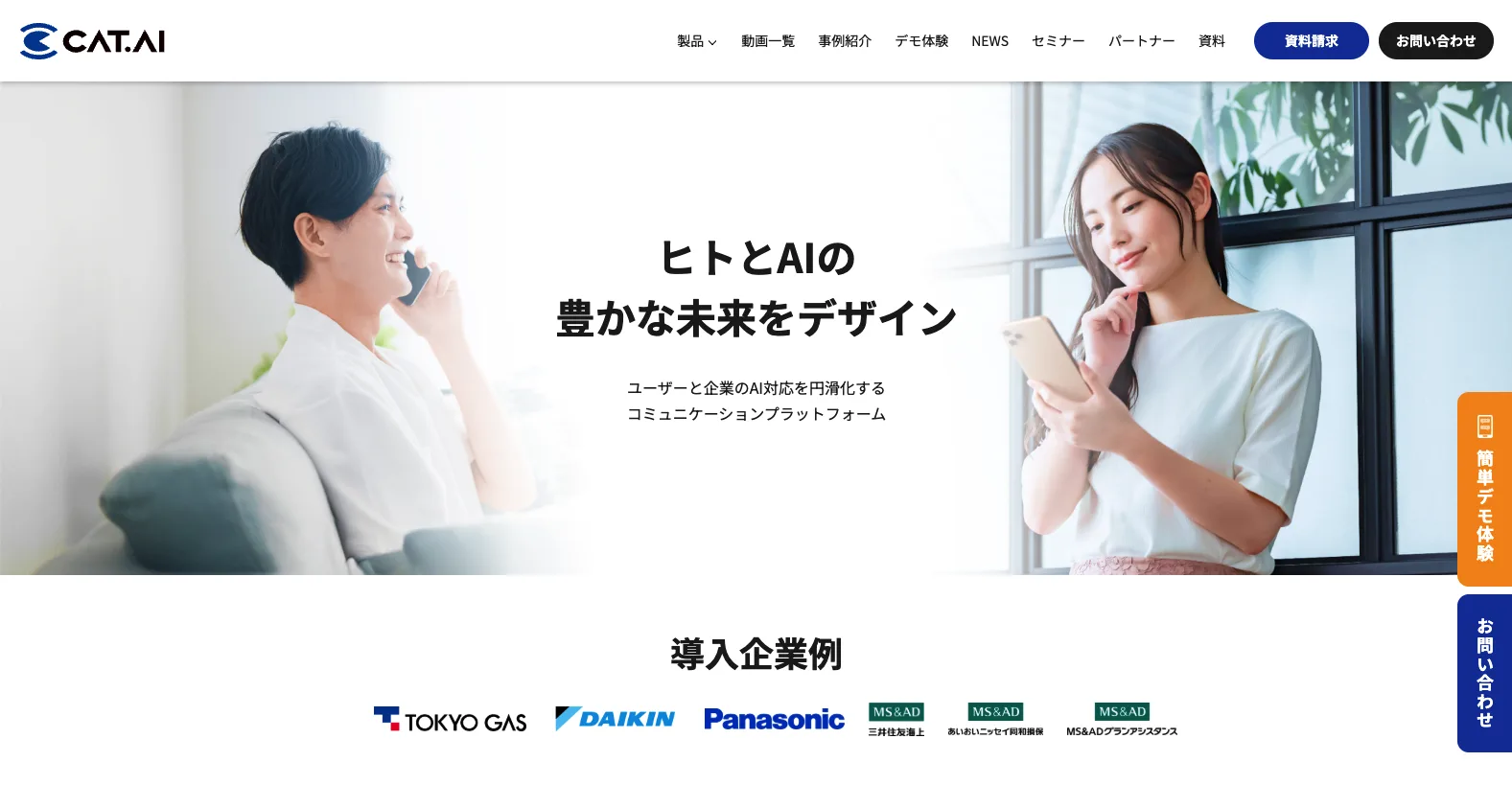
Tomorrow Net will launch CAT.AI, an AI communication platform with a “multi-AI agent function” in which multiple AI agents work together to automate tasks, in July 2025.
Multiple AIs Working Together to Resolve Even Complex Inquiries
CAT.AI’s biggest feature is that multiple specialized AI agents cooperate to automate complex inquiry handling, much as a team of people would. For example, AI agents with different roles work together: a task-executing “Operational AI,” a “Generative AI (RAG × LLM)” strong at searching and generating information, a guiding “Navigational AI,” and “Human” (staffed support), in which a person steps in when needed. Through this collaboration, customers get a smoother, stress-free (effortless) experience, and companies can greatly improve efficiency.
SparkPlus

SparkPlus is certified as a “Matsuo Lab startup” by the Matsuo-Iwasawa Laboratory at the University of Tokyo, making it a company with deep ties to the cutting edge of AI research. It currently provides solutions using cutting-edge AI technology, mainly for manufacturing.
From Manufacturing to AI Robots: Transforming Japanese Monozukuri with AI
SparkPlus uses AI to help solve problems in manufacturing. For example, it brings AI technology to the shop floor of monozukuri (craftsmanship-driven manufacturing), one of Japan’s strengths, to improve production line efficiency and quality control and drive further progress.
Going forward, it reportedly plans to expand into developing AI agents for call centers using its own speech models and into an AI robotics business that draws on its deep knowledge of hardware design.
Ecumenopolis “LANGX Speaking”
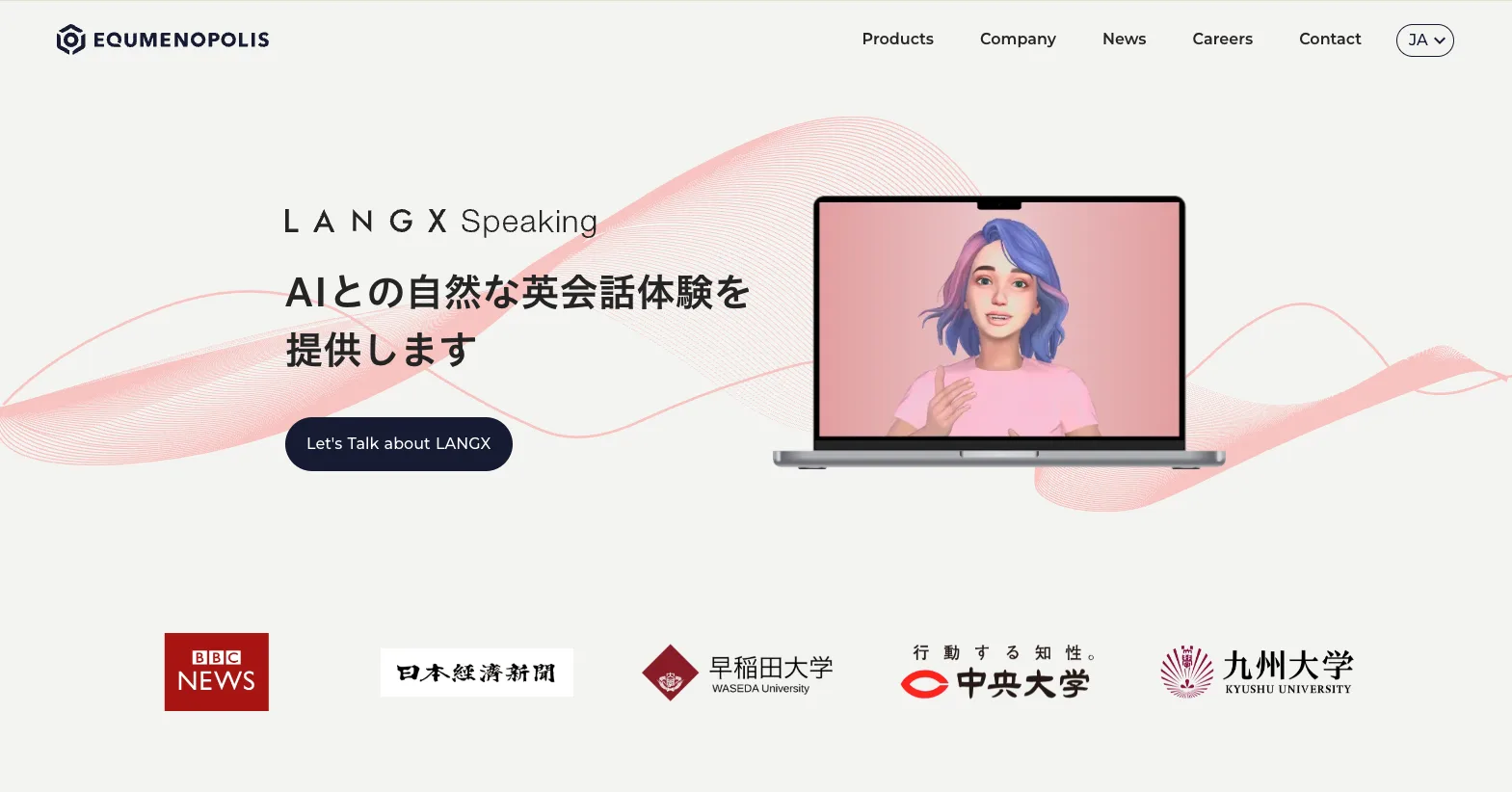
Ecumenopolis is a startup spun out of Waseda University that provides conversational AI agents as a dispatch service. Among its services, a particularly notable one is LANGX Speaking, which lets English learners have their speaking ability assessed and trained through conversations with AI.
AI That Helps You Improve Your English
LANGX Speaking makes AI your English-learning partner, as if you were talking with a native-speaking teacher. Through conversations with AI, it not only assesses your speaking ability but also supports training to overcome your weak points. It has been adopted as a regular course at Waseda University, and demonstration projects are under way in English classes at junior and senior high schools in Chiba Prefecture and Gifu City, so it is also expected to be used in education.
The company completed a Pre-A round totaling ¥250 million, which shows the high expectations for AI in education.
Banso Inc. “Banso AI”
Banso Inc. has released a beta version of Banso AI, a generative AI developed through an industry-academia partnership with Kagoshima University. It is a “walk-alongside” generative AI for business support that draws on the thinking processes of top strategy consultants to stay close to executives’ concerns, uncover issues and find the next move together with them.
“Walk-Alongside AI” That Stays Close to Executives’ Concerns
Executives face all kinds of challenges and concerns every day. Banso AI listens to executives, analyzes the situation and works out the best solutions and next actions together with them. It does not just provide information; it stays close to the executive’s thinking process and “walks alongside” them.
The company reportedly plans to add a multi-agent function that combines several specialized AIs, such as one strong in strategic planning and one well versed in finance. This means AI will be able to tackle more complex and wide-ranging management challenges as a team of experts. Having AI as a powerful business partner is truly reassuring.
Jinbay “Jinbay GenOCR” and “Jinbay Generative AI Agent”
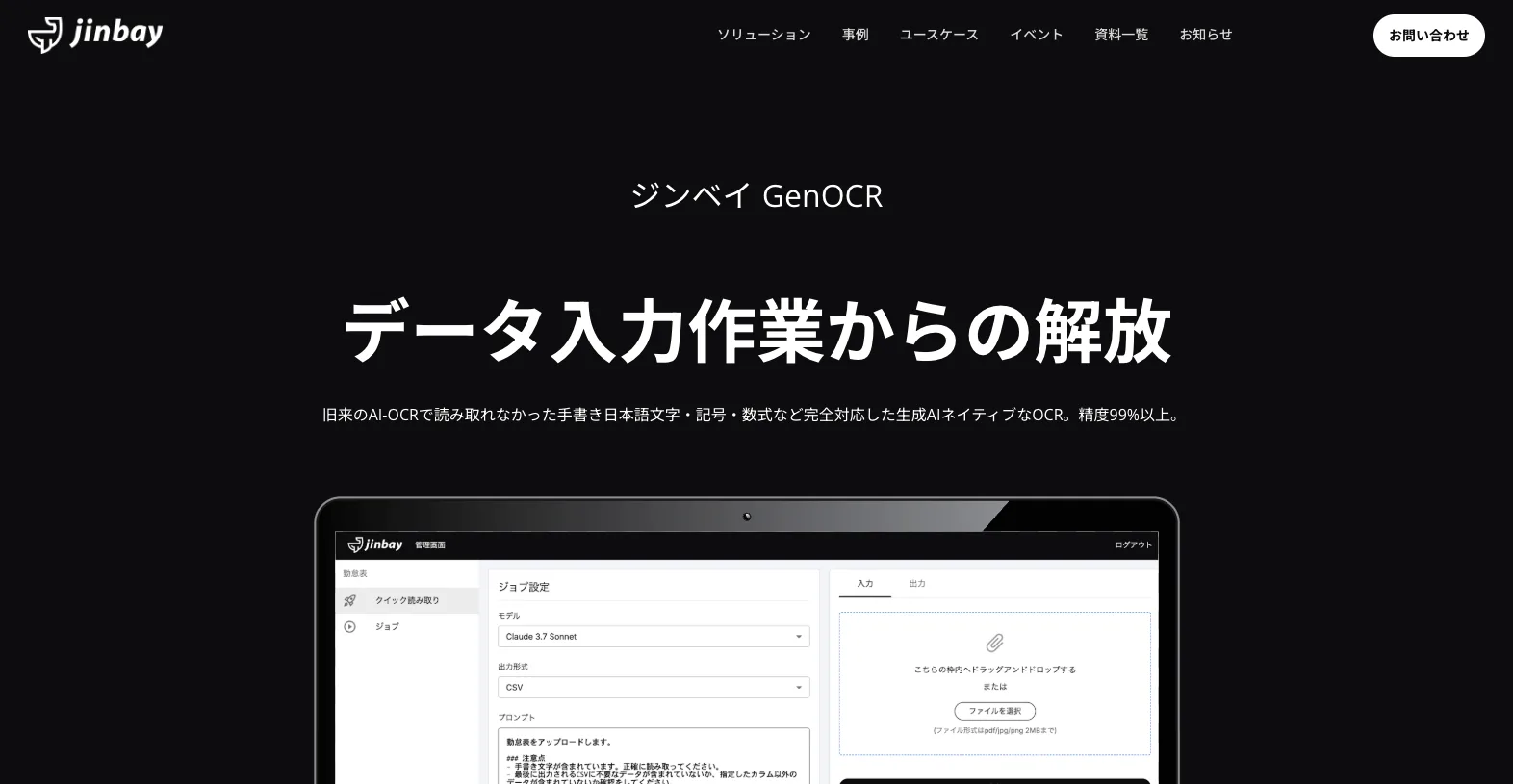
Jinbay offers Jinbay GenOCR, an OCR solution powered by generative AI, as well as the Jinbay Generative AI Agent for businesses.
Optimizing Business Processes with AI
Jinbay’s services aim to support productivity and corporate growth by digitizing each business process and making effective use of past data and internal and external communication. For example, Jinbay GenOCR uses AI to accurately read information from handwritten and paper documents, greatly reducing the effort of data entry. In addition, the Jinbay Generative AI Agent supports work by drawing the information needed from accumulated data and conversations and suggesting next actions. Even work that used to be analog can move smoothly, and company-wide productivity is expected to rise.
MagicPod
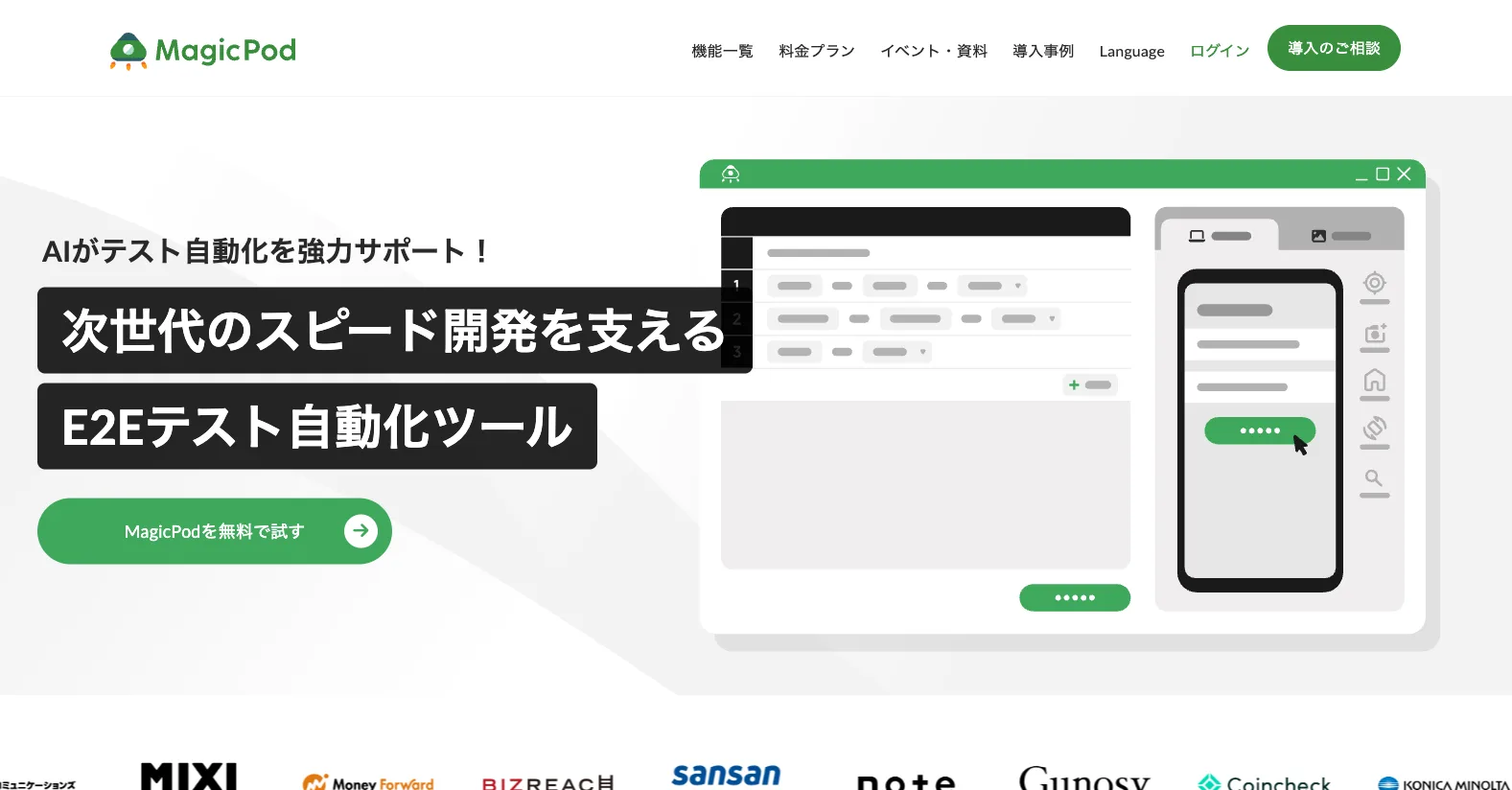
MagicPod is a Japanese startup that uses AI agent technology to take software test automation even further.
AI That Smartly Maintains Tests Automatically
In software development, testing is a very important process for ensuring quality, but it takes a lot of time and effort. MagicPod uses AI to automate testing, reducing the burden on developers and speeding up development. It is also reportedly moving ahead with plans to work with external AI agents and to build an AI agent into MagicPod itself that autonomously maintains test scripts (programs that describe test procedures). With AI managing the whole testing process, development teams look set to become even more efficient.
The company raised ¥500 million in its Series B round, which shows that its technology is highly regarded in software development.
Market Challenges and Outlook: AI Agents Opening Up Japan’s Future
Japan’s AI agent market is still in the early stages of growth. Compared with the US and China, startup funding is limited, and that challenge is real. Some also point out that the term “AI agent” is still loosely defined, and that simple automation tools are being branded as AI agents and priced higher than they should be.
Despite these challenges, Japan’s AI agent market holds immense potential. Especially given Japan’s social situation, with its aging population and worsening labor shortages, AI agents could be a very important solution. In labor-intensive industries such as manufacturing, construction, nursing care, agriculture, logistics and security, which have long needed many workers, expectations are running very high for AI agents to enable dramatic labor savings (operating with fewer people) and even unmanned operation. This could truly be a ray of hope, with AI solving Japan’s social challenges.
In addition, in industries where Japan’s distinctive “fax culture” remains deeply rooted, there is a big opportunity for multimodal AI agents using image recognition to convert paper-based information into digital data and streamline workflows. As AI agent technology matures and can offer companies more reliable solutions, it is expected to contribute greatly to digital transformation (DX) and higher productivity at Japanese companies. The real show for Japan’s AI agent market is just getting started.
Key Points: Startup Trends in Japan
- A focus on solving domestic social issues: Practical AI agent development focused on solving Japan’s own social issues, such as labor shortages caused by an aging, shrinking population, is gaining momentum.
- Partnerships with large companies at the center: Large funding rounds by independent startups are limited, and the market mainly advances through large companies developing AI agent features and partnering with startups.
- Specialization and multi-agent systems: Development is progressing on AI agents that improve efficiency in specific work, such as hiring, management administration, software testing and medical pre-consultation interviews, and on multi-agent systems in which multiple AIs work together.
- No-code development support driving adoption: Support for building AI agents with no-code tools is spreading, encouraging AI adoption and efficiency gains across a wide range of companies, including SMBs.
- Strong government support and high market expectations: Government support for AI development, DX promotion and high marks from Nikkei xTECH confirm high market expectations and capital inflows.
The Dark Side of AI Agents: Concerns to Know and Upcoming Regulation
AI agents are advancing remarkably, but every technology, however convenient, has its “dark side”: points of concern and aspects that require caution. In particular, because AI agents act autonomously, some point out that they may cause unexpected problems. Here we look at the concerns surrounding AI agents and the regulatory moves in response, from both overseas and domestic perspectives.
Concerns and Regulatory Moves Overseas
Overseas, especially in the US market, investment in AI agent startups is very active, and even newly founded companies are raising huge rounds worth hundreds of millions of dollars. Giant AI companies such as OpenAI, Google, Microsoft, Meta, NVIDIA and Anthropic are actively investing in and partnering with startups alongside their own development, greatly expanding the entire ecosystem. However, several concerns have been raised about this rapid growth.
Concerns (Overseas)
First, some point out that the term “AI agent” itself is not yet clearly defined and is used in too many different ways. As a result, some very simple chatbot-like tools are branded as “AI agents” and appear in some cases to be sold at higher prices than they are worth. Without a clear definition, it becomes hard to identify the AI agents that truly deliver value.
Precisely because AI agents can automate complex tasks involving many steps, the impact of an error could be large. For example, OpenAI’s AI agent Operator has a feature that automatically picks and orders supermarket items based on the user’s grocery list, and there is a report that, in response to the vague instruction “add some sweets,” it unexpectedly ordered smoked salmon. The CEO of Decagon, which provides AI agents for customer support, has said that an AI agent does the work of 10 human employees, but for that very reason the impact of an error could be severe. The challenge is that AI must be careful as well as smart.
In AI agent development, “delivering features as fast as possible” currently tends to take priority, and there are concerns that security is being put off until later. When AI agents access many kinds of data, such as confidential company information and customers’ personal information, a lack of proper access management could lead to security oversights and serious risks. Traditional authentication systems are not suited to AI-driven apps, and the fact that it becomes unclear who is responsible for an AI agent’s actions is also seen as a problem. There is also a risk of “excessive use of permissions,” in which AI agents connect to unauthorized APIs (interfaces that connect applications with external services) or accidentally leak confidential data. According to IBM X-Force research, no large-scale cyberattacks on AI technology were confirmed in 2024, but vulnerabilities such as “remote code execution vulnerabilities,” which allow malicious code to be run remotely, were found in frameworks for building AI agents, and vulnerabilities are expected to occur even more frequently. As AI adoption advances in 2025, the incentive to develop attack toolkits that specifically target AI will also grow, so it is essential for companies to firmly protect the entire flow from AI data collection to development and operation (the whole AI pipeline) from the earliest stages. To use AI safely, security measures matter more than anything.
Some AI agent companies, such as Parloa AI, aim to reproduce human “emotional intelligence (EQ),” but detecting and eliminating “hallucinations,” in which AI generates false information as if it were fact, remains a major challenge. In using AI, ethical considerations and legal regulation are also seen as very important, not just technical aspects. When Meta introduced AI features into its messaging app WhatsApp, users searched for ways to turn the AI features off, showing a cautious attitude toward AI features and underscoring the importance of social acceptance.
Regulatory Moves (Overseas)
In Europe, there is an active push to develop the underlying technology and guidelines for assessing and managing the risks of AI systems, with the aim of deploying AI safely in society. A leading example is the EU AI Act, scheduled to take full effect in 2026. It legally requires risk-based assessment of AI use and “conformity assessment” proving that specific standards are met, making it an important guideline for AI developers.
Countries such as the US, the UK and China are also drafting AI safety policies and establishing specialized bodies to evaluate the safety and reliability of AI (such as the UK’s AISI), and moves to build a regulatory environment for the healthy development of AI technology are accelerating worldwide.
Concerns and Regulatory Moves in Japan
There are also several concerns in the domestic market.
Concerns (Japan)
As mentioned earlier, Japan’s AI agent market faces the challenge that funding is limited compared with overseas markets. This means that raising money to develop new technology and grow a business may not go smoothly.
In a market survey of companies using AI, the main challenges cited include “AI output needs to be checked and corrected” (28.5%) and “concerns about the reliability and accuracy of information and data” (24.6%). Users strongly expect future AI to offer “greater accuracy of information and data” and “clearer grounds and evidence”. The quality of the information AI generates is a key factor that largely determines how far it can be trusted.
A lack of literacy among users, such as “insufficient skills to use AI” (24.2%) and “difficulty interpreting analysis results” (23.8%), has also been identified as a challenge. However good an AI agent is, it cannot show its true value if there are not enough people who can use it properly and interpret its results correctly.
Japanese is said to be harder for AI to process than European languages because of its more complex grammar and expressions. This has also been cited as one reason Japan’s voice AI market has developed modestly so far. However, models capable of natural backchanneling and speech overlap have begun to appear, such as J-Moshi, a high-accuracy model specialized for Japanese and developed by Nagoya University in Japan, so the situation may change. Even so, responses that miss the context and conversations that drift off topic are still sometimes seen, and further improvements in the accuracy of Japanese-language AI agents are expected.
Regulatory Moves (Japan)
The Japanese government is also putting effort into supporting AI development and drafting guidelines for its appropriate use. The Ministry of Economy, Trade and Industry (METI) has launched the GENIAC-PRIZE, which includes AI agent development, with a total budget of about ¥800 million. The Digital Agency has also drawn up the “Guidelines for the Procurement and Use of Generative AI,” setting standards for government agencies adopting AI and encouraging appropriate AI use across society.
As international rule-making on AI advances worldwide, typified by Europe’s AI Act, there is an urgent need in Japan to build a system that can respond quickly. Corpy&Co. was selected for NEDO’s “Research and Development for Strengthening AI Safety” project and is responsible for drafting implementation guidelines for companies, aligned with the international standard ISO/IEC 42001, covering AI systems that incorporate generative AI models (including AI agents). The aim is to give Japanese companies a way to objectively demonstrate the safety and reliability of their AI products and services and to enable AI use in line with international standards.
As part of a national strategy to contribute to solving social issues and developing industry by strengthening the foundations of AI technology, Japan is also investing in core AI technology. RIKEN is designing the next-generation supercomputer FugakuNEXT, which aims to start operating around 2030, with the advancement of “AI for Science” in mind. It is expected to speed up applications by combining simulation and AI, and to make it possible to pretrain large language models with trillions of parameters. Large-scale investment in foundational technology like this should give a further boost to Japan’s AI agent technology.
Key Points: Concerns and Upcoming Regulation
- The definition of AI agents and the risk of misunderstanding: The definition of “AI agent” is vague, raising concerns about excessive branding and price inflation of simple tools, as well as AI errors in complex tasks.
- Serious security and privacy challenges: Weak permission management and vulnerabilities when AI agents access multiple layers of data, along with an expected rise in targeted attacks, make protecting the entire AI pipeline an urgent task for companies.
- Ensuring ethics, reliability and social acceptance: AI “hallucinations,” the limits of emotional intelligence and ethical aspects are challenges, and because users remain cautious, ensuring reliability and social acceptance is seen as important.
- Accelerating international AI regulation and risk management: Risk-based regulation, typified by Europe’s EU AI Act, is advancing worldwide, and governments are working toward the healthy development of AI technology through AI safety policies and the establishment of evaluation bodies.
- Challenges specific to the Japanese market and national strategy: Japan faces challenges such as limited funding, the accuracy and reliability of AI output, a lack of AI skills and the difficulty of processing Japanese, while working to address them through government support for AI development, alignment with international standards and large-scale investment in foundational technology.
Where AI Agents Stand Today: Progress, Challenges and the Outlook Ahead
AI agents are advancing remarkably, and startups around the world, in the US, China, Europe and Japan, are creating a wide variety of use cases. The US leads with abundant funding and diverse services, while China is characterized by investment from tech giants and competition among LLMs. Europe is strong in ethics and B2B solutions, and Japan is focused on solving social issues such as labor shortages.
At the same time, this rapid growth raises concerns. The challenges include vague definitions and inflated prices, the potential for errors in complex tasks, security and privacy risks, and emotional intelligence and ethical aspects. On security in particular, a rise in AI vulnerabilities has been pointed out, making it urgent for companies to protect their AI pipelines.
In response, risk-based regulation is under way overseas, including the EU AI Act. In Japan, despite challenges in funding and in processing the Japanese language, the government is providing support and moving to align with international standards. AI agents can be said to be a field expected to overcome these challenges and develop further.
Q&AQuestions and answers
- Which AI agent startups are drawing attention in the US?
- Examples include Artisan (Ava) and Breakout for sales, Basis for accounting, Cognition, which builds the autonomous AI software engineer Devin, Decagon for customer support, Hakimo for AI security guards and Mercor for AI interviews. Cognition raised a $175 million Series A in early 2024, and its valuation reportedly reached $2 billion.
- Why is AI agent development so active in China?
- The drivers are government policies to grow the AI industry, aggressive investment by tech giants such as Alibaba, Tencent and ByteDance, and the fierce LLM development race known as the "War of a Hundred Models." The high-performance foundation models produced by that race serve as the base for AI agent development.
- What sets European AI agent startups apart?
- As the EU AI Act shows, Europe places strong emphasis on AI safety, ethics and privacy, and its startups are strong in B2B solutions, industrial AI and privacy-preserving technology. Examples include Mistral AI with its open-source LLMs and Aleph Alpha, which focuses on explainability and data sovereignty.
- What is distinctive about the AI agent market in Japan?
- Startup funding rounds are smaller than in the US or China, but practical development focused on domestic social issues, such as labor shortages caused by an aging, shrinking population, is moving forward. Large companies building agent features into their own services or partnering with startups is the most common pattern.
- What concerns and regulatory moves surround AI agents?
- Concerns include simple tools being sold at high prices under a loosely defined "AI agent" label, the impact of errors in complex tasks, security being put off until later, and hallucinations. In Europe, the EU AI Act is scheduled to take full effect in 2026, and in Japan, METI's GENIAC-PRIZE and the Digital Agency's guidelines for the procurement and use of generative AI are under way.