Taking Regional Japan to the World: A First Step in International Expansion at AsiaBerlin Summit 2024
- In late November 2024, at the request of Fukui Prefecture, we worked with our Berlin partner 36Chambers Venture Studio to support Fukui's international outreach at AsiaBerlin Summit 2024.
- The Fukui-themed betabreakfast drew more than 71 advance registrations, and we visited three companies, Impact Hub Berlin, Made of Air and Roots Radicals, to explore concrete opportunities for collaboration.
- We learned that the key to international partnerships is not formal relationships between organizations but person-to-person trust built by key people who can communicate and negotiate continuously in English.
- 71+
- Advance registrations for betabreakfast
- 3
- Companies visited in Berlin
- 5,000+
- Companies in Japan using EmbedSocial (as of April 2025)
In late November 2024, at the request of the International Economy Division of Fukui Prefecture’s Industry and Labor Department, basicmath supported Fukui Prefecture’s international outreach at AsiaBerlin Summit 2024 in Berlin, Germany. We carried out this work together with 36Chambers Venture Studio (36C), a close partner based in Berlin.
You can read the activity report published by The Fukui Shimbun here.
Building a bridge between Fukui and Europe: Fukui Prefecture’s activity report from the AsiaBerlin Summit (Fukui Shimbun ONLINE, Japanese): a report on activities by prefectural staff sent to support local manufacturers’ expansion into Europe and the world.
36C is a venture studio that aims to connect startup ecosystems in Europe and around the world, led by co-founders Mario Steinbuch and Jane Uzunovski. Through their network, we built a partnership with BetahausX, the innovation arm of Betahaus, one of Europe’s leading coworking spaces. BetahausX offers acceleration programs that connect startups with large companies and is also a main organizing partner of the AsiaBerlin Summit.
Against this background, and at Fukui Prefecture’s request, we provided comprehensive support, including networking support in Berlin, matching with local companies and hosting an event to showcase Fukui. These activities created a new bridge between Fukui Prefecture and Europe’s startup ecosystem and marked an important step toward taking regional industries international.
basicmath’s partnership with 36C and BetahausX began in 2023, when Berlin startup people visited Fukui Prefecture as part of the AsiaBerlin Expansion Lab. The visit deepened their understanding of Fukui’s manufacturers and local resources and led to our trip to this year’s AsiaBerlin Summit. Through this challenge, we came to appreciate once again the perspectives, systems and support needed not only by Fukui but by local governments and businesses across Japan that want to expand internationally.
Related articles:
Connecting, Not Exhibiting: Fukui’s Approach to the AsiaBerlin Summit
AsiaBerlin Summit 2024: held November 25–29, 2024, at Berlin City Hall and partner venues.
The AsiaBerlin Summit is an international conference that connects startup ecosystems in Asian countries and Berlin. It draws attention as a place where policymakers, business leaders and investors gather to discuss the next generation of collaboration. On this international stage, we did not just aim to showcase Fukui’s appeal and potential. We thought about how to take part from the perspective of how Fukui can connect with the world.
What struck us most was the deeper structure of the event, which goes beyond startup support. Most attendees are not there to buy products. They are looking for dialogue with regions, ecosystems and ideas. We needed a way of presenting ourselves that did not stop at simply lining up products, as at a trade fair.
betabreakfast: Letting People Experience Fukui’s Story
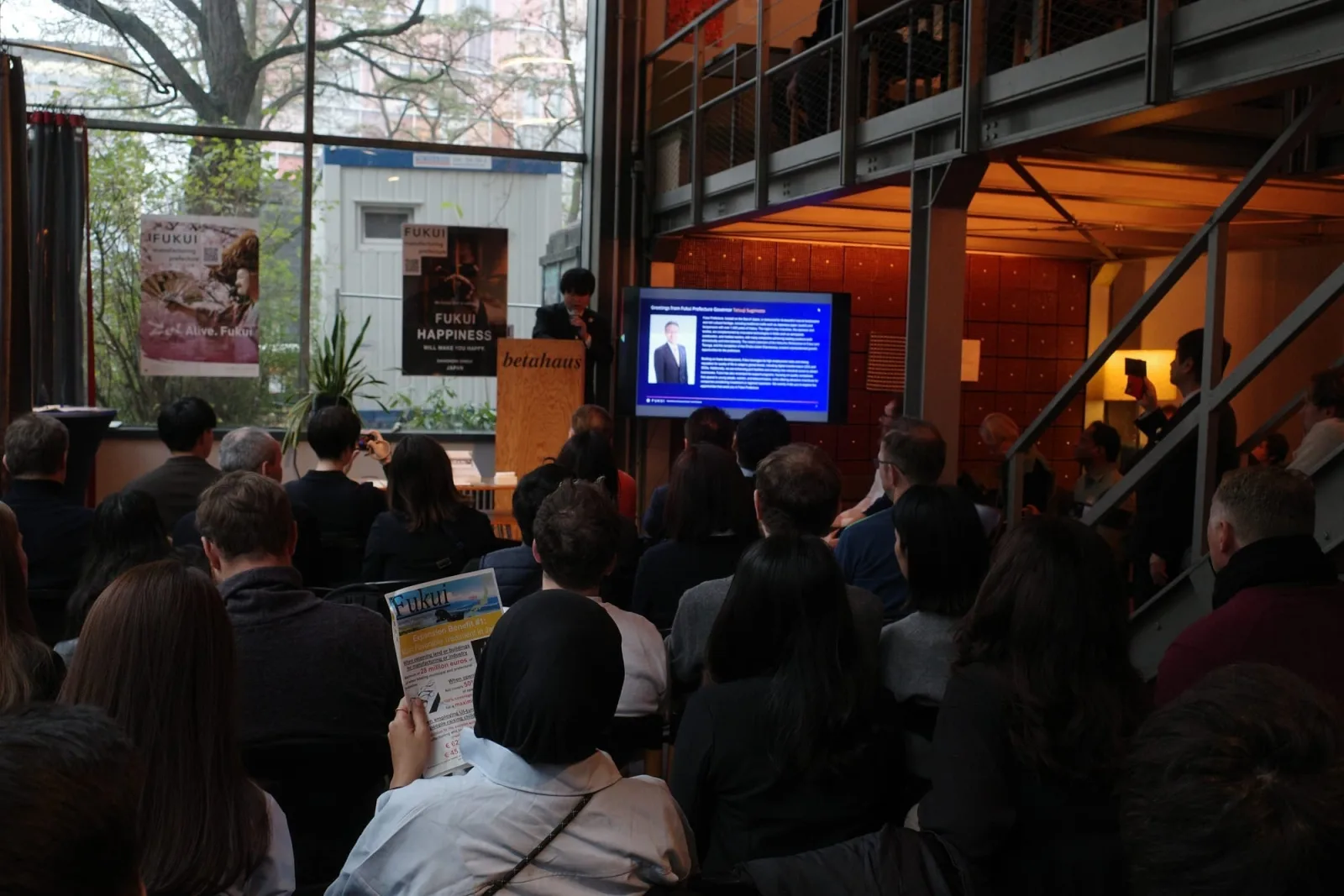
The initiative that best embodied this strategy was the breakfast networking event “betabreakfast: Berlin Meets Japan – Discover Fukui’s Potential,” held in the second half of the summit. betabreakfast is a popular breakfast meetup for Berlin creators and startup people, held every Thursday. In a special collaboration with this program, we hosted a session themed on Fukui Prefecture.
Advance registrations exceeded 71, and actual attendance was among the largest in the event’s history. Participants ranged from staff at global consulting firms and local venture capitalists to university students. Throughout the event, we could feel their strong interest in Japanese culture and their curiosity about the real appeal of regional Japan.
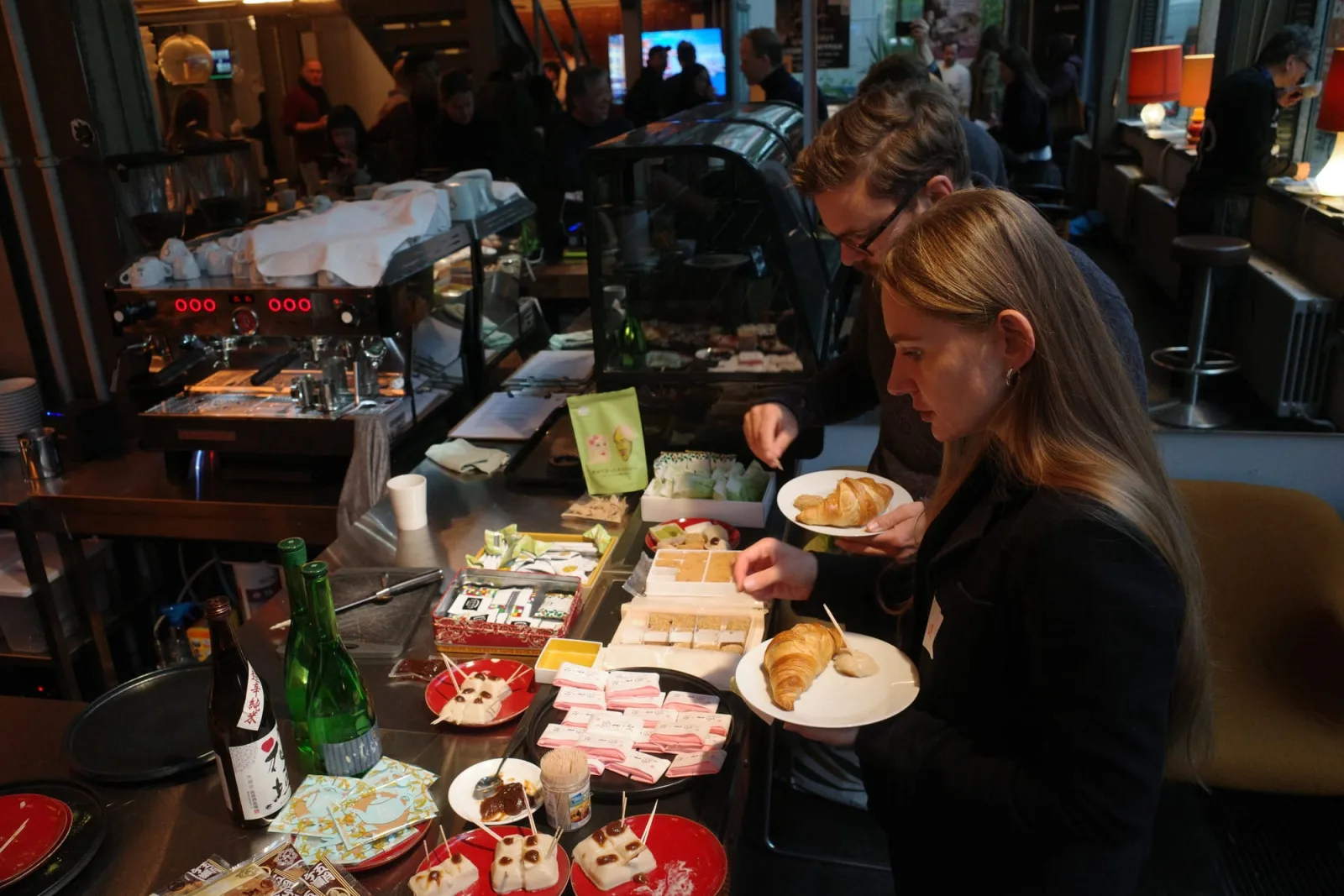
At the event, we served sesame tofu, Japanese sweets and Japanese tea from Fukui while introducing the stories, culture and values behind local industries. Conversations with attendees flowed naturally, creating a heart-to-heart connection that a presentation alone could never achieve.
For the presentation, rather than just explaining data and products, we proposed storytelling that clearly shows why Fukui wants to engage with Europe now: what makes Fukui Prefecture distinctive, what kinds of companies are there and what partnerships it is looking for. From there, we connected the story to opportunities to enter the Japanese market and the advantages of using Fukui Prefecture as a base for doing business in Japan.
Concrete Opportunities to Connect Fukui and Europe, Seen through Company Visits
Impact Hub Berlin: Not Just Coworking but an Ecosystem That Moves the Community
Impact Hub Berlin: a coworking space and innovation program hub that helps businesses reach their sustainability and inclusion goals.
Impact Hub Berlin is run not just as a coworking space but as an effective ecosystem where the community, society and startups create together. What stood out was that its membership screening is based not on how strong a business is but on what impact the member’s activities will have on the community as a whole. In other words, the focus is not on the value of the member’s business itself but on how much positive ripple effect that person can have on those around them.
This approach contrasted with many coworking spaces in Japan, which remain simply shared offices. At Impact Hub, collaboration among members, partnerships with the community and efforts to solve social issues happen every day. The emphasis is not on selling space but on nurturing context.
Fukui is also building coworking spaces for regional revitalization, and we believe this kind of redesign as an ecosystem will be needed. As an ideal model, Impact Hub offered very useful insights for regional businesses across Japan.
Made of Air: Combining Environmental Technology with Innovation in Fukui’s Manufacturing
Made of Air - Carbon-negative materials: a company that turns manufactured goods into engineered carbon sinks with carbon-negative materials.
On our visit to Made of Air, a cleantech company that develops environmental materials, we saw its technology for creating new carbon-negative materials from waste biomass. We found potential for innovative product development by combining it with Fukui’s high-precision manufacturing technology.
What is especially notable is that the company is not just a materials maker. It creates products together with a wide range of industries, including construction, automotive and apparel. Its material already has a track record with companies such as H&M and Audi, and we have high hopes that it could open new possibilities for Fukui’s traditional industries and high-performance materials development.
We also discussed future international collaboration, which marked a first step toward building a partnership. International collaboration with one-of-a-kind technologies like this shows a path for Fukui companies to evolve into a group of companies that deliver value on a global scale.
Roots Radicals: A Zero-Waste Pioneer Carrying the Spirit of Mottainai into Today
On our visit to Roots Radicals, a sustainable food company in Berlin, founder Monika Kisik personally gave us a detailed explanation of the company’s origins, philosophy and business model. We also toured its production facility and enjoyed a lunch tasting.
At the core of the company is the idea of upcycled food: a system that reduces food waste while making the most of its value by turning it into new products. This idea, which resonates with the Japanese spirit of mottainai (avoiding waste), is backed by practice aimed at a circular society across the community, working with local government and distributors, especially hotel chains and supermarkets. It struck a strong chord with us.
We felt that an upcycling restaurant business using Fukui’s abundant local ingredients and natural resources is entirely feasible. In particular, if such a restaurant opened in front of Fukui Station, prompted by the Hokuriku Shinkansen extension to Fukui, it could become not just a place to eat but a hub for a sustainable lifestyle that symbolizes Fukui’s future. We came away hopeful that it could be a highly effective model case that supports both tourism promotion and regional branding.
This initiative is not a superficial take on the SDGs. It can be seen as “future design rooted in the region” that cuts across regional economic revitalization, tourism policy, local production for local consumption and cultural heritage. Our dialogue with these three companies and our site visits were full of real potential to connect Fukui’s future with technologies, ideas and practices from around the world. They can be seen as a prototype of a “co-creative international expansion model” in which local government and the private sector work together.
International Partnerships Start with People: Personal Trust, Not Titles, Is the Key
What we felt most strongly in this outreach is that person-to-person trust and connection are far more effective than formal organization-to-organization relationships. Much of the communication happened not through business cards but on LinkedIn. That is why, to make international expansion succeed, it is essential to have key people who can respond quickly in English, keep communicating and negotiating, and serve as the face of Japan and of the region.
We believe this is an important theme shared by local governments and companies across Japan that are considering international expansion. Trust and relationships do not grow when the person in charge changes for every event. We believe the pillar of future international strategy is a system in which one individual keeps communicating and builds trust with overseas partners over time.
A Sustainable Future, from Local to Global
We believe the key to regional revitalization is not following in someone else’s footsteps but redefining one-of-a-kind technologies, services and cultural value in a form that works worldwide, and boldly taking on global markets rather than staying in the domestic market.
By re-examining our own qualities, services and products in light of challenges and values shared around the world, Japan’s unique strengths and aesthetics, and the latent competitiveness of its regions, come vividly into view. We are convinced that nurturing partnerships across borders based on this reassessment is an important foothold for building truly sustainable local communities.
One example of this in practice is EmbedSocial, an international project from the Republic of North Macedonia that began in 2018. At the time, the service was almost unknown worldwide. We built a relationship of trust with the developer and set out to grow it in the Japanese market from scratch. As of April 2025, it is used by more than 5,000 companies in Japan and more than 350,000 users worldwide.
Neither we nor the developer could have achieved this alone. It is a success that was possible only because of a partnership across borders. In 2022, we established the joint venture EmbedSocial Japan Co., Ltd. in Ohi Town, Fukui Prefecture, a town of fewer than 10,000 people, and we continue to offer the service from a rural base to global standards. We see this project as a model in which a region and the world grow together, and as an advanced reference case for regional revitalization.
In Europe, especially Germany and Eastern Europe, the economic structure differs from the consumption-driven economies of the United States and Asian countries, and many startups focus on creating value rooted in ideas and social issues. Building a sustainable society is no longer the responsibility of a few developed countries alone. It is a shared challenge that falls on each of us on a global scale. And this field holds great potential and business opportunities.
This perspective also offers important insights for the future of Japan’s traditional crafts and local resources. If we step away from the idea of simply selling products, reassess the history, culture and craftsmanship built into them, and redefine who we deliver what to and how, we should be able to see a path to creating new value. Such redefinition often comes from an outside perspective, in other words through international partnerships and co-creation.
Of course, results and initiatives like these do not happen overnight. But we believe that encountering international touchpoints like the AsiaBerlin Summit creates a first step of knowing and feeling, which eventually leads to taking on challenges and making things happen.
We want to extend this kind of international collaboration beyond Fukui Prefecture to local governments across Japan and to companies of every size. “We want to share our region’s strengths with the world.” “We want to explore collaboration with Europe.” For every region with these aspirations, taking on the international stage is not easy, because it requires adapting to an environment where everything is different, from language and culture to communication methods and networking etiquette.
We want to be the translator and the partner who supports these challenges. Working with overseas partners and local networks, we optimize and communicate a region’s appeal in a way that fits the local context abroad. To do this, we have a team that can support international expansion at every stage, from information design, copywriting and PR support to network building, event planning and operation, and negotiation support with local partners.
Q&AQuestions and answers
- What is the AsiaBerlin Summit?
- It is an international conference that connects startup ecosystems in Asian countries and Berlin. Policymakers, business leaders and investors gather to discuss new forms of collaboration. The 2024 edition was held in Berlin in late November.
- What did basicmath do at the summit?
- At the request of the International Economy Division of Fukui Prefecture's Industry and Labor Department, we worked with 36Chambers Venture Studio in Berlin to support networking on the ground, match Fukui with local companies and host an event showcasing Fukui Prefecture.
- What happened at betabreakfast?
- In a special collaboration with a popular breakfast meetup held in Berlin every Thursday, we hosted a Fukui-themed session. It drew more than 71 advance registrations, and we served sesame tofu, Japanese sweets and Japanese tea from Fukui while introducing the stories and culture behind local industries.
- What insights came from the company visits?
- Impact Hub Berlin showed coworking as an ecosystem run around its impact on the community. Made of Air pointed to combining Fukui's manufacturing technology with carbon-negative materials. Roots Radicals offered a model of a circular regional business built on upcycled food.
- What does it take to succeed in international expansion?
- Person-to-person trust matters more than formal organization-to-organization relationships. It is important to have key people who act as the face of the region, respond quickly in English and keep communicating and negotiating, building trust with overseas partners over time.