Japan Tourism Agency FY2023 Demonstration Project for Revitalizing Tourism and Local Economies through Data Integration Between Businesses and Regions
- basicmath joined the Japan Tourism Agency's FY2023 demonstration project for the second year in a row and provided hands-on support to develop digital marketing talent at 8 tourism businesses and areas in Fukui Prefecture.
- Our analysis of Google Business Profiles for 86 tourist facilities in the prefecture, which were viewed 10.73 million times on Google Maps, showed that optimizing GBP and businesses' own websites is key to attracting visitors.
- After introducing Embed Social, the Awara City Tourism Association cut the time spent selecting entries for its Instagram posting campaign by 40%.
- 8
- Tourism businesses and areas that received hands-on support
- 86
- Tourist facilities in the prefecture whose GBP data was analyzed
- 10.73M
- Google Maps views for the 86 facilities (PC + mobile)
- 40%
- Time saved selecting campaign entries (Awara City Tourism Association)
basicmath LLC took part in the Japan Tourism Agency’s FY2023 “Demonstration Project for Revitalizing Tourism and Local Economies through Data Integration Between Businesses and Regions” as a member of the Fukui Prefecture Tourism DX Promotion Marketing Data Consortium. Under the concept “Making travel and regions new by blending digital and analog,” the agency ran the “Tourism DX Promotion Project” to create leading cases from three perspectives: making travel more convenient and encouraging travelers to explore more widely, raising the productivity of the tourism industry, and advancing destination management. This is basicmath’s second consecutive year in the program since it began in FY2022.
In FY2022, we collected and analyzed data on tourists visiting Fukui Prefecture and published the results for tourism businesses, making a major contribution to “making data visible.”
FY2022 results report (PDF, Japanese)
At the same time, it became clear that tourism businesses lack people who can use this visualized data. Against this background, in the FY2023 demonstration project, basicmath aimed to help tourism businesses use tourism data themselves to achieve “tourism that earns.” We provided hands-on support to develop in-house digital marketing talent, analyzed Google Business Profiles for 86 sites in Fukui Prefecture, analyzed POS data (sales analysis) for five spots in the prefecture, and produced several white papers.
Goals and Activities
Goal Support government and organization staff involved in tourism policy planning in Fukui Prefecture, and tourism businesses, in adopting digital marketing, to advance destination management and raise the productivity of tourism businesses in Fukui Prefecture.
Activities
- Develop digital marketing talent at tourism businesses in Fukui Prefecture and create model cases of marketing activities
- Collect, analyze and visualize data on actual spending in Fukui Prefecture’s tourism sector
basicmath worked on both (1) and (2), creating cases of data visualization and data use and developing digital marketing talent. The details of each activity follow.
(1) Developing Digital Marketing Talent at Tourism Businesses in Fukui Prefecture and Creating Model Cases of Marketing Activities
Hands-On Support for Adopting Digital Marketing
In practice, few tourism businesses in Fukui Prefecture use digital marketing. Drawing on deep marketing expertise in tourism and retail, basicmath provided individual hands-on support to 8 tourism businesses and areas in the prefecture to develop digital marketing talent.
Steps 1 to 8 below describe the support process in detail.
1. Hearing the Current Situation and Organizing Issues
We held careful interviews with each business to understand its current situation. In the interviews, we organized issues from six perspectives: online advertising, social media, data use, website and e-commerce, operational DX, and inbound tourism. We then set the goals to work on within this demonstration project.
2. Setting Current and Target Levels
Based on the interview results for the six areas in step 1, we set a five-level rating scale for each area, rated each business’s current level and set a target level for each area, and charted the results.
3. Setting KGIs and KPIs
We set KGIs and KPIs for each business area and encouraged businesses to share them across the whole organization, including management, so that the importance of digital marketing would be understood.
4. SWOT, STP and 5W2H
After hearing the current situation, we ran analyses using the SWOT (note 1), STP (note 2) and 5W2H (note 3) frameworks so businesses could see their own characteristics objectively. These frameworks clarified three elements essential to getting the most from digital marketing: strategic direction, a narrowed target, and concrete actions.
After each business carried out its own self-analysis internally, we heard feedback such as “staff were looking at things from different viewpoints” and “we were able to turn what we thought were weaknesses into strengths.” The frameworks proved useful as input for deciding each business’s direction.
Note 1: SWOT
- S (Strengths): Positive factors inside the organization or project, such as a strong brand image, specialized skills or financial stability.
- W (Weaknesses): Negative internal factors, such as a lack of funds, missing skills or resources, or internal problems.
- O (Opportunities): Positive factors in the external environment, such as market growth, deregulation or new technology.
- T (Threats): Negative factors in the external environment, such as more competitors, a shrinking market or stricter regulation.
Note 2: STP
- S (Segmentation): Dividing the market by various criteria, such as geographic, demographic, behavioral or psychographic.
- T (Targeting): Choosing, from those segments, the customer group that is most valuable to the business or easiest to reach.
- P (Positioning): Positioning a product or service in a distinctive and attractive way within the target market.
Note 3: 5W2H
- What: The task or goal to be done.
- Why: The reason or purpose for the task or goal.
- Who: The person responsible for the task.
- Where: The place where the task is carried out.
- When: The timing or deadline for the task.
- How: The method or process for carrying out the task.
- How much: The budget or cost needed for the task.
5. Setup, Production and Operation
Based on the strengths and issues revealed by SWOT, STP and 5W2H, we explored specific themes for ad campaigns. To get the most from each campaign, we took a comprehensive approach to every marketing method, not only ads but also the business’s own website, social media and branding direction.
6. Planning Online Ads
The online ads in this demonstration project used social media ads (Instagram/Meta) and search ads (Google). We set the ad type, objective and metrics in detail for each campaign and shared the steps for placing ads with businesses. However, the businesses in the demonstration project had little experience placing online ads. With online ads, it is important to forecast results from the planning stage and set realistic goals with cost-effectiveness in mind. Repeating this makes ad placement more precise.
In this demonstration project, the goal was to first accumulate data and share analysis methods, and ultimately move to a stage where businesses can read the data themselves and plan their next strategy. We built the ad plans around running the cycle of planning, placing ads, reviewing performance and evaluating results several times.
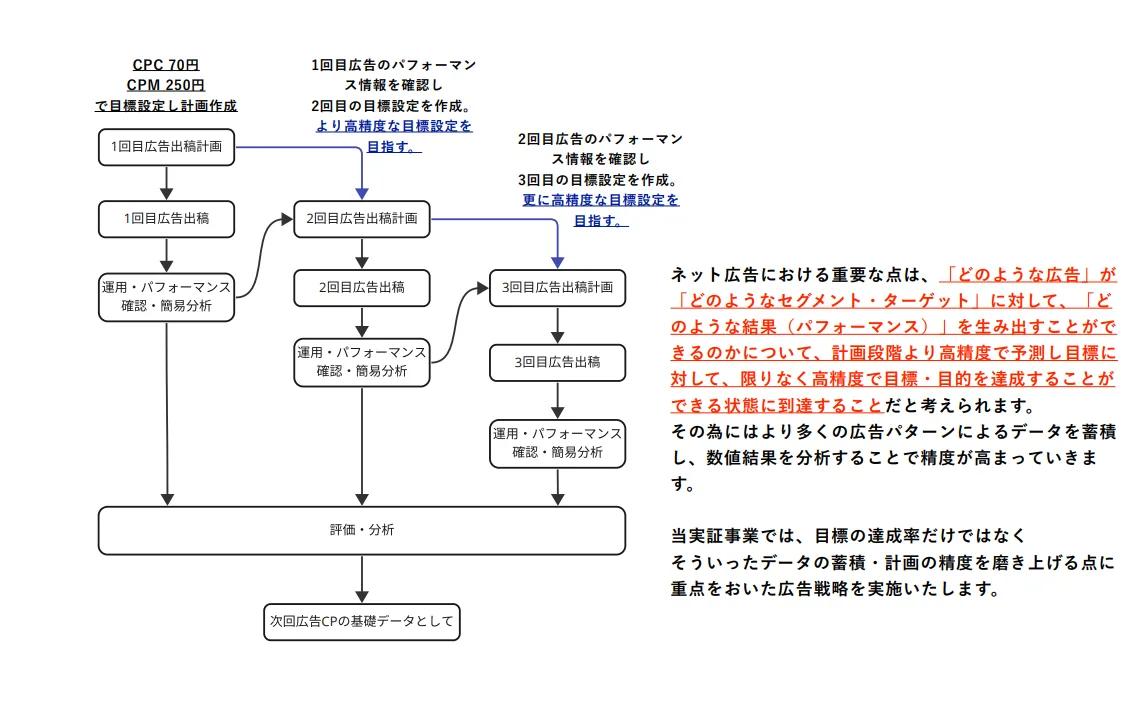
Online ad testing flow
7. Optimizing Ad Creative and Websites
When placing online ads, the business’s own website, which serves as the landing page, must have optimized UI/UX to prompt users to act. With this in mind, we aligned ads with landing page content and simplified site navigation to encourage users to act efficiently.
8. Reviewing Ad Performance
After ads ran, we shared how to retrieve data for each ad and which performance metrics to look at. Businesses then analyzed results themselves, which made a major contribution to their independence in digital marketing.
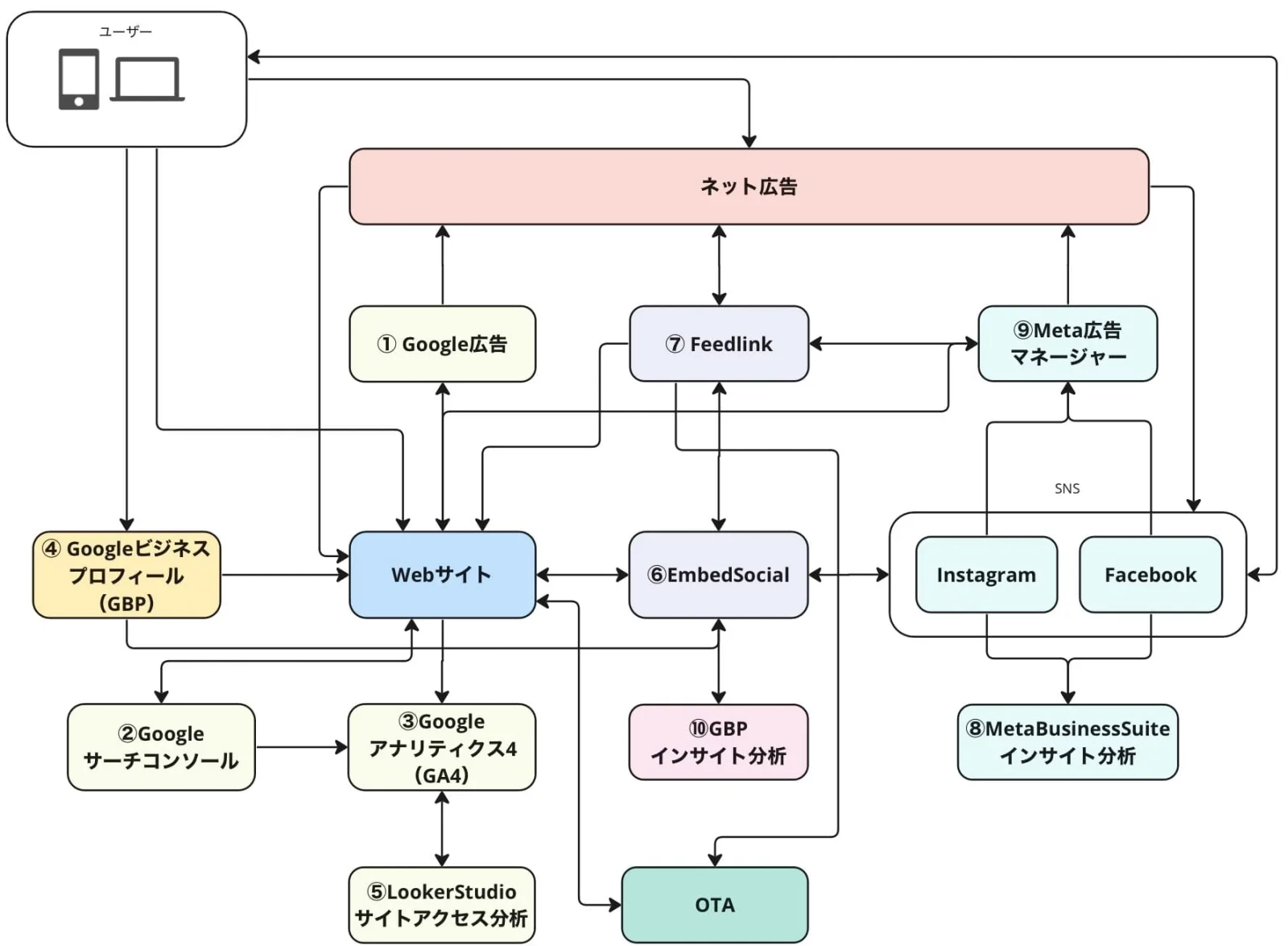
Data use framework in hands-on support
Businesses That Received Hands-On Support
basicmath provided hands-on marketing support to 8 tourism businesses and areas in Fukui Prefecture. Below is an overview of each business we supported. For TSUGI LLC, our strategic partner Misa Kitazawa also provided support.Misa Kitazawa is the head of MK Commerce&Communication. A retail marketing specialist, she led the marketing and PR department of UNIQLO for more than 10 years starting in the 1990s, when the brand was still unknown, and contributed to its rapid growth.
Awara City Tourism Association The association works to promote tourism in Awara City and contribute to attracting visitors, developing the local economy and promoting culture. Project report: KankoDX2023_あわら市観光協会.pdf
Fukui Prefecture Tourism Federation The Fukui Prefecture Tourism Federation aims to promote the sound development of tourism in Fukui Prefecture and thereby contribute to attracting visitors and developing industry and the economy. In March 2021, it was registered as a DMO (Destination Management/Marketing Organization), which steers destination development from the perspective of destination management while drawing out the region’s earning power, and it is working to strengthen Fukui’s tourism industry. Project report: KankoDX2023_福井県観光連盟.pdf
Machizukuri Obama Co., Ltd. Creating new value and new flows of people in Wakasa Obama, a port town where a way of life connected to the ancient capital lives on. By looking closely at the region, learning its background and creating new value suited to today, the company aims to give visitors to Obama new discoveries and to carry local life forward to the next generation through tourism. Project report: KankoDX2023_株式会社まちづくり小浜.pdf
Katsuyama City Tourism Machizukuri Co., Ltd. Registered as a destination management organization (DMO), the company promotes tourism-centered community development with a range of businesses, including restaurants, lodging and agriculture. It works to revitalize the local economy by developing tourism across the area. Project report: KankoDX2023_勝山市観光まちづくり株式会社.pdf
Hotel Yagi Concept: Relaxed and comfortable. An inn where guests spend their time as they like, relax and forget the time. With fine food, a comfortable space and attentive care, it offers luxurious moments to feel the season and Fukui, so that guests can unwind and feel at ease, as in a second home. It is a style of spending time “now,” proposed by a long-established traditional inn. Project report: KankoDX2023_ホテル八木.pdf
TSUGI LLC A souvenir shop filled with good products from Fukui with excellent design and stories. SAVA!STORE is a souvenir shop run by TSUGI, a design studio based in Sabae City, Fukui Prefecture, that carries products made in Fukui with strong design and stories. By carefully conveying the materials, manufacturing process, uses and makers’ thoughts, SAVA!STORE connects makers and users as a new place for communication that goes beyond a souvenir shop. Project report: KankoDX2023_合同会社TSUGI.pdf
Rewrite Oi Rewrite Oi Co., Ltd. was founded to create new jobs centered on Uminpia Ohi and to increase the number of visitors to Ohi Town by planning and running events. The commercial facility it manages, SEE SEA PARK, includes a challenge shop that supports people who want to start a business in the town and an office area that serves as a business base. Project report: KankoDX2023_株式会社リライトおおい.pdf
Rivage Akebono Hotel Rivage Akebono stands in Hamamachi, on the banks of the Asuwa River that runs through central Fukui, in an area that keeps the atmosphere of a traditional restaurant district. It offers a breakfast buffet of Fukui’s local and home-style dishes with 96% satisfaction, a rooftop bath that is the highest in Fukui, and views of the Asuwa River and Mt. Asuwa from the rooms. It is a 13-minute walk from Fukui Station and close to Katamachi, the entertainment district at the heart of central Fukui, which makes it popular with everyone from families to business travelers. Project report: KankoDX2023_リバージュアケボノ.pdf
Feedback from Participating Businesses
Eight tourism businesses and areas involved in tourism in Fukui Prefecture took part in this demonstration project. Below is the feedback each business gave after basicmath’s hands-on support.
Awara City Tourism Association
- We came to understand the overall process and key points of running digital marketing.
- Our gut feelings about social media and online ads could now be clearly backed up by analyzing the data in detail, which led to more active and objective discussions in internal meetings.
- For social media and website operations, we learned how data items relate to results: not only follower counts and total page views, but also reach, engagement such as likes and saves, page views for each page, and search keywords.
Fukui Prefecture Tourism Federation
- We gained comprehensive knowledge of digital marketing, which we had never done before, and reached a level where we can use data ourselves, for example by watching how page views change with ad cost.
- By sharing digital marketing knowledge within the organization, we can apply it not only during the demonstration project but also in future operations.
- Our resources make it difficult to do all marketing in-house, but we can now decide which work to keep in-house and which to outsource, and we can negotiate with outside vendors as equals.
Machizukuri Obama Co., Ltd.
- We learned that carefully deciding promotion periods and campaigns based on data leads to results.
- Working actively with local businesses, not just within our own organization, broadened our view of operations, improved the quality of existing services and let us launch new services.
- Using frameworks such as SWOT to analyze ourselves and our competitors made our differentiation more precise.
- We started with no ad knowledge, but by understanding the full PDCA process, we can now run ads ourselves.
Katsuyama City Tourism Machizukuri Co., Ltd.
- We identified the products that sell on our e-commerce site, added and optimized product pages, and then ran online ad campaigns, which brought record-high sales.
- We used UGC such as collaborative posts to share information more efficiently.
- We had used Yahoo’s own ads, but we learned Google Ads and Meta ads, which widened our options for placing ads.
- Understanding what to focus on in running an e-commerce site clarified our future operating policy.
- Starting to run ads led to a clear increase in sales, which raised staff performance evaluations and created a positive cycle in the organization.
Hotel Yagi
- The demonstration project delivered results beyond our expectations, and we felt our awareness grow. In the spirit of developing businesses, information was shared generously, and we could pinpoint our current issues. Even when results did not come, it was very valuable to notice our own issues and their root causes.
- Gaining marketing knowledge made us realize that shifting the payments we had relied on OTAs for into a budget for in-house work would improve profitability.
- We came to see marketing as necessary regardless of business size, essential to survive today, and something to build into management.
- We came to accept the premise that marketing is invisible and does not always succeed 100% of the time.
TSUGI LLC
- Marketing awareness, which had been completely absent in the company, grew, and management came to understand the need for marketing work, so the organization now runs smoothly.
- We realized with a sense of urgency that by focusing so much on the brand’s world, we had lacked a sales perspective, and our basic attitude toward marketing changed.
- We went from not knowing where to start to raise e-commerce sales to having clear priorities and being able to break them down into tasks ourselves.
- Running the PDCA cycle for online ads gave us a feel for placing ads.
Rewrite Oi
- The demonstration project brought notable changes and results in several areas.
- Understanding the importance of year-round scheduling for online promotion and of turning it into concrete plans and content greatly improved our overall marketing plan.
- In running and using social media, we learned efficient ways to spread content by optimizing post content and format. We also realized that collaborative posts and similar efforts lead to partnerships with other businesses.
- The content was very practical, with many points we could improve right away, such as how to write blog posts and structure the site.
- We now understand the basics of placing and running ads and can do it ourselves.
- The campaigns run in the demonstration project brought valuable opinions from many stakeholders, which will be a great reference for our future ad strategy.
Rivage Akebono
- Learning marketing thinking, theory and methods gave us perspectives we never had, and clarified our issues and what we should do.
- Learning data analysis methods lets us judge performance ourselves.
- Introducing DX tools greatly improved operational efficiency, and we now want to adopt new tools proactively, which we used to find a chore.
- Sharing the knowledge from the demonstration project with other staff led them to think for themselves and carry out social media analysis, collaborative posts and UGC use, which greatly improved operational efficiency.
Results of the Demonstration Project
Over about six months, basicmath provided individual hands-on digital marketing support to eight businesses involved in tourism in Fukui Prefecture. Based on each business’s feedback, the results of the demonstration project are as follows.
- Awareness of the importance of digital marketing in Fukui Prefecture’s tourism industry rose across the whole area.
- Decision-makers came to recognize that digital marketing leads to fundamental improvements in profitability and makes sustainable management possible.
- Tourism businesses not only gained knowledge of running online ads and improving websites, but can now carry them out themselves as part of daily work.
- Building a data use foundation for tourism businesses and rolling out marketing measures raised overall awareness.
Challenges Ahead
There Is No Right Answer in Online Advertising
Across businesses, a common question when reviewing ad performance was, “We don’t know whether this result is the right answer.” Digital marketing requires a comprehensive approach that considers many factors around the market, such as the behavior of the target audience, market trends and technological change. Ad success therefore depends heavily on goal setting, understanding the audience, ad content and timing, and constant trial and error and optimization are needed. It is important not to cling to a fixed “right answer” in online advertising, but to work flexibly and continuously according to the situation.
Chronic Lack of Resources
At many businesses, there is no dedicated marketing staff, and frontline staff handle marketing on the side. Even when staff gain knowledge and know-how, data use does not progress without time for marketing work. This requires the whole company, including management, to recognize the need for marketing, as well as reorganizing and dividing work between in-house and outsourced tasks.
Limited Marketing Budgets
Online ads do not deliver results right after they run. Understanding user trends takes time, repeating ad placements and performance analysis to find the answer that fits each business. Whether managers and finance staff understand this is therefore an important step in securing online ad budgets. For this challenge, we believe an environment where this is understood will develop if not only businesses but also governments and tourism associations take the lead and create model cases.
Reference: Introducing Tools for Operational Efficiency
In addition to hands-on marketing support, we introduced tools for operational efficiency at all businesses to ease chronic staff shortages on site. We used AI tools for writing and proofreading text, the social media widget tool Embed Social from our affiliate Embedsocial Japan Co., Ltd., and Meeting Point for meeting minutes.Embedsocial Japan Co., Ltd.: Established in July 2022 jointly by Embedsocial, a SaaS company from North Macedonia, and basicmath LLC, to expand sales further in the Japanese market and optimize for it.Embed Social: An all-in-one digital marketing SaaS tool. It collects and analyzes a business’s own posts and UGC (user-generated content) on social media (Instagram, Meta, X, YouTube, TikTok and others) and displays them on the business’s website. It also collects reviews from Google Business Profile and custom forms, replies to them automatically with AI and displays them on the website, and offers a simple website builder optimized for smartphones and email marketing features.Meeting Point: A meeting minutes tool that centralizes meeting information, from setting the agenda to writing minutes, and supports efficient facilitation.
We shared our own manuals on how to use these tools and the work procedures. By the end of the demonstration project, staff at every business had reached a level where they could use the tools in daily work. Below are examples of introducing Embed Social and Meeting Point in this demonstration project.
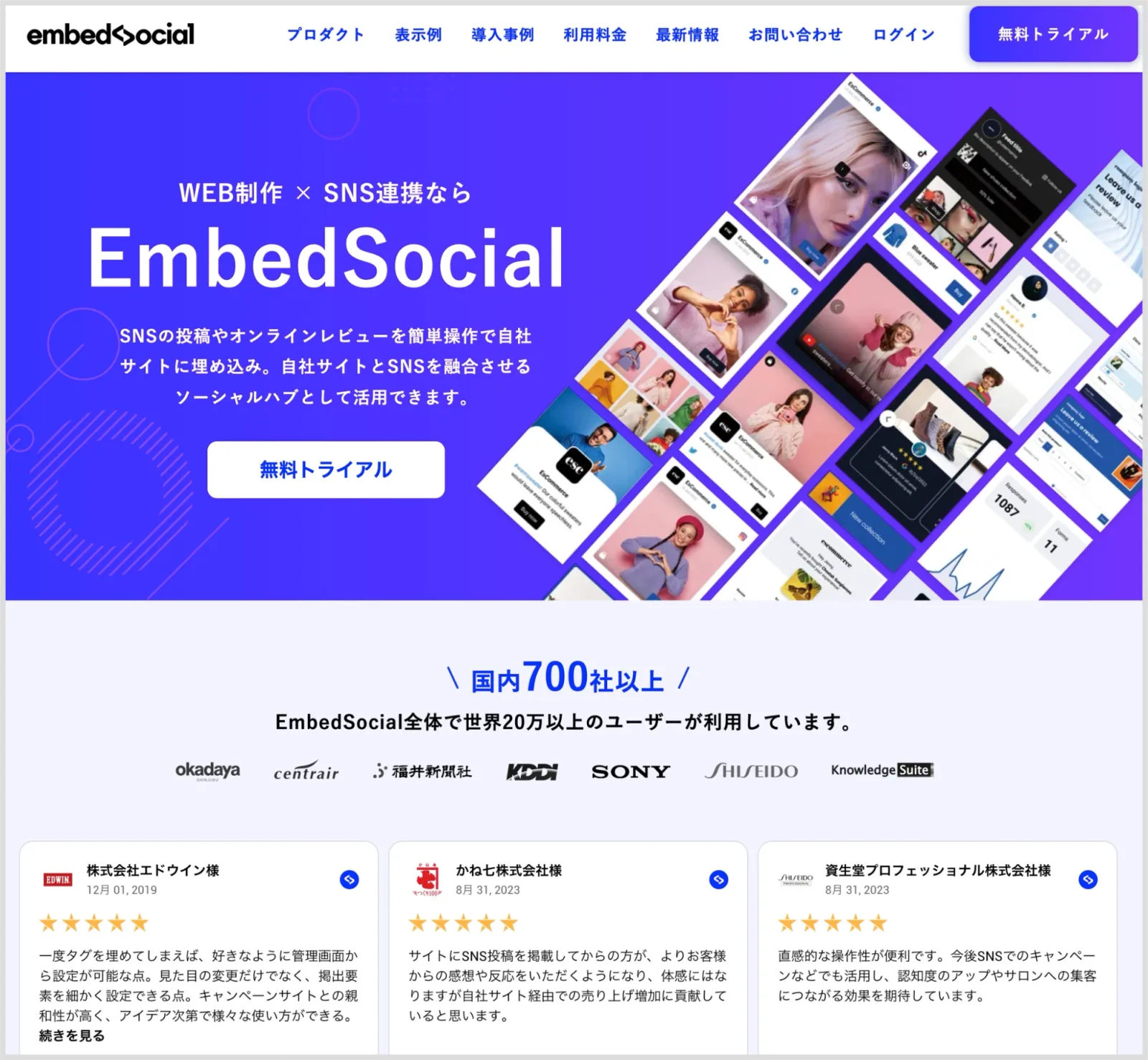
Embed Social Case 1: Awara City Tourism Association
“A first in Japan: AI makes scoring an Instagram posting campaign more efficient”
Challenge: Every year, the Awara City Tourism Association ran an Instagram posting campaign to raise awareness of Awara City. However, collecting and scoring hundreds of user posts took an enormous amount of time, and because of the organization’s chronic staff shortage, it urgently needed to make scoring more efficient.
Why they chose it:
- The barrier to adoption was low: connecting the website to Embed Social was quick and easy without any source code knowledge, and the simple UI was easy to operate
- Hundreds of user posts that had been collected by hand could be collected instantly
- The AI scoring feature resolved unclear scoring criteria
- Actual user posts could be embedded and displayed on the campaign site
What was introduced: Embed Social collected images that users uploaded to Instagram based on hashtags. Photogenic AI then scored the images received from Embed Social, and the scores were displayed in Embed Social. The social media widget feature also embedded user posts on the campaign site.Photogenic AI: An AI scoring feature provided by Dentsu Soken that rates how photogenic an image is as a number.
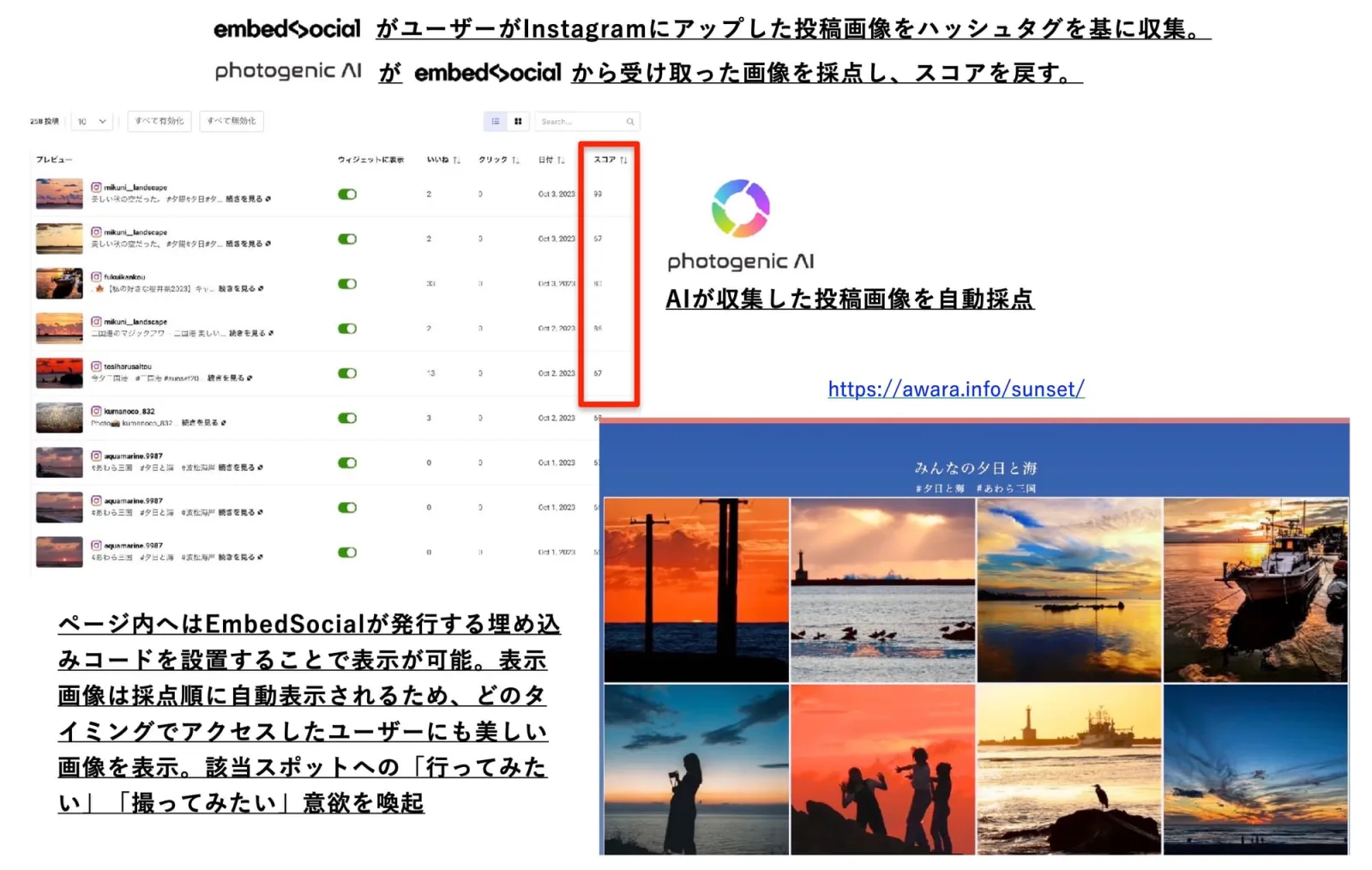
Results:
- The user post collection and AI scoring features cut the time spent on selection by 40%.
- AI scoring made it possible to score from a fair perspective.
- Embedding actual user posts on the campaign site helped spark people’s desire to “go there” and “take photos there.”
Embed Social Case 2: Hotel Yagi
“Taking Instagram further with UGC”
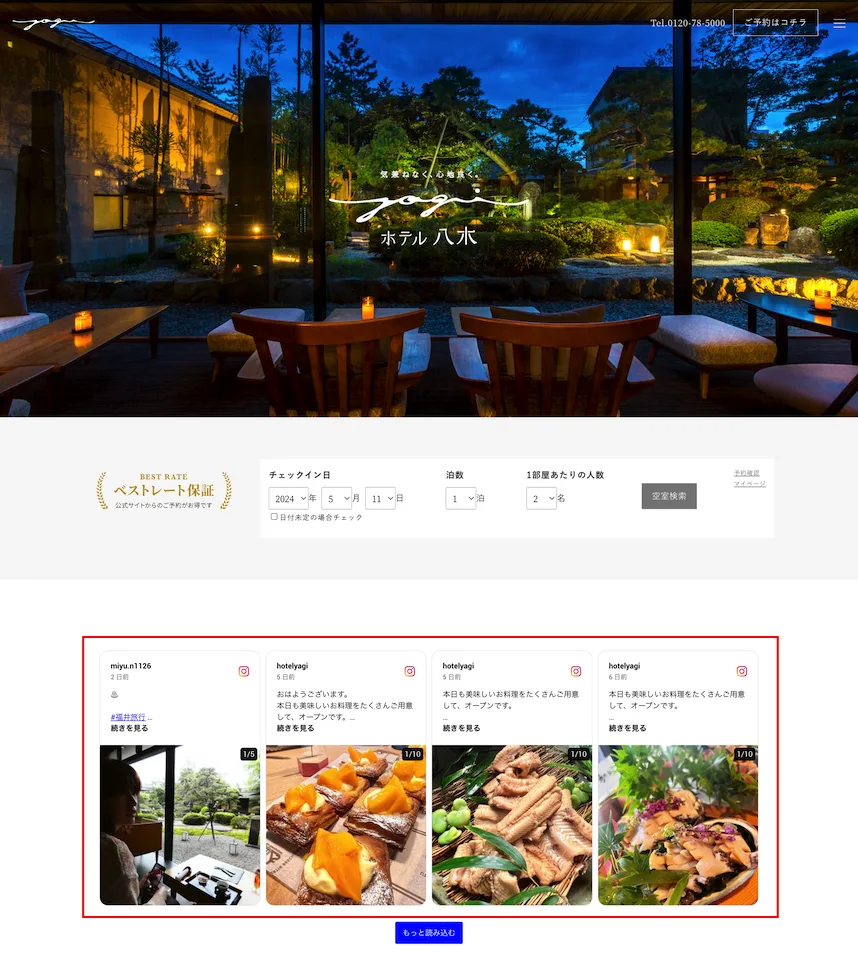
Challenge: Hotel Yagi frequently posted the hotel’s latest news and local news on Instagram, but this information was not on its website. It reached only Instagram followers, and the hotel was missing potential customers who came directly to its website. Bookings were also spread across several booking sites, including overseas OTAs as well as the hotel’s own site, so a more efficient path to booking was needed.
Why they chose it:
- The hotel runs Instagram posting campaigns on an ongoing basis, and user posts collected in those campaigns could now be used on its own website. This enabled review marketing (showing how other guests rate and review the hotel to win new bookings), and using content from the customer’s perspective reduced the workload of sharing information. Permission to use user content was obtained through the campaign’s entry terms.
- Connecting the website to Embed Social was quick and easy without any source code knowledge, and the simple UI let the hotel switch the posts shown for each season with a single click
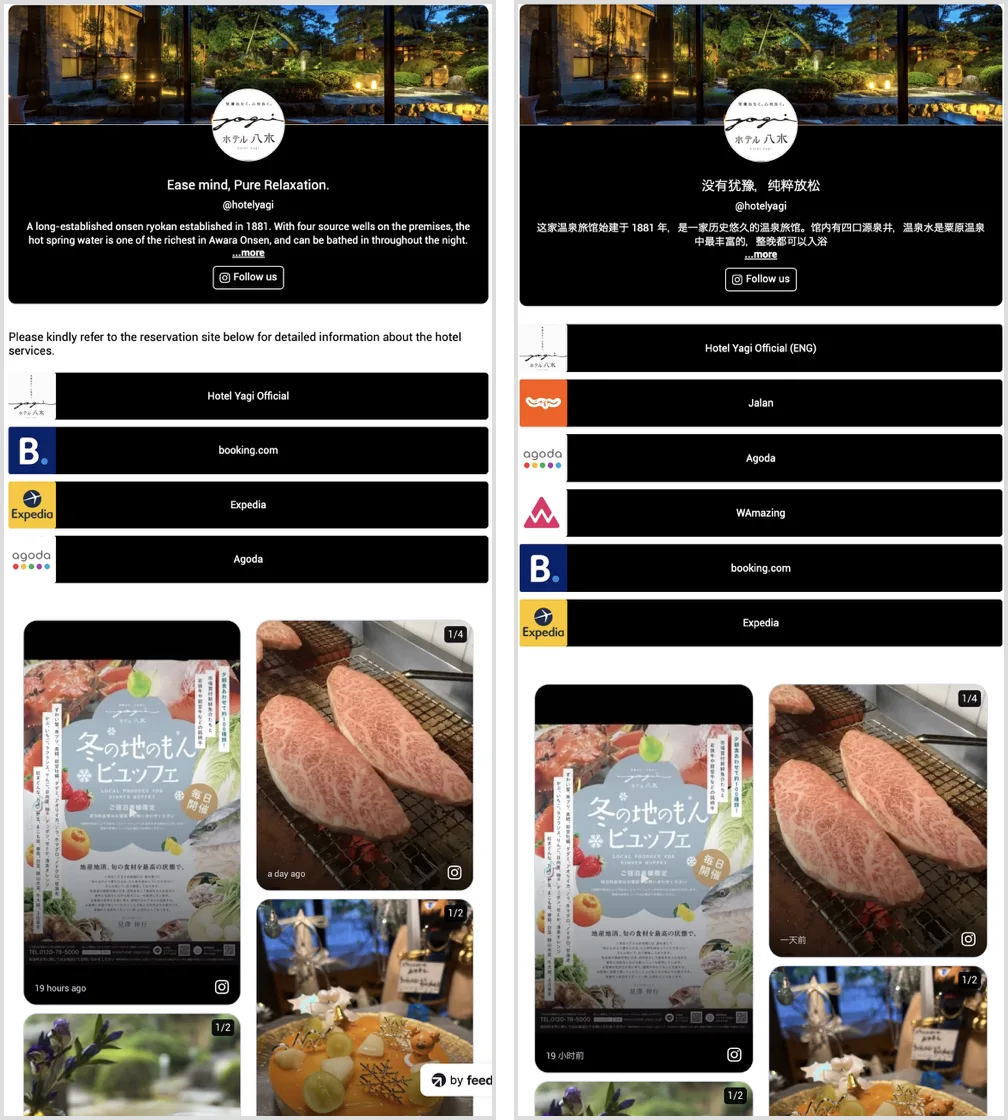
What was introduced: Embed Social displayed user posts on the campaign site. Using FeedLink, the hotel also set up a page in English and Taiwanese that gathers links to the official site and overseas OTAs, linked from its Instagram profile.FeedLink: A link-in-bio tool from EmbedSocial for creating a simple personal website that gathers links to various social media and websites. Because it can also display the Japanese text of Instagram posts in various languages, it can serve as a simple multilingual landing page.
Results:
- Showing the latest posts and sharing timely information made it possible to convey the services currently offered.
- Placing the social media widget on the top page and sharing objective information through user posts created a sense of familiarity for customers.
- Always showing the latest posts on the site made it possible both to share information efficiently and to keep the information on the site fresh.
- FeedLink established an efficient path to booking.
- Adding booking links in several languages optimized the site for inbound visitors.
Meeting Point Case
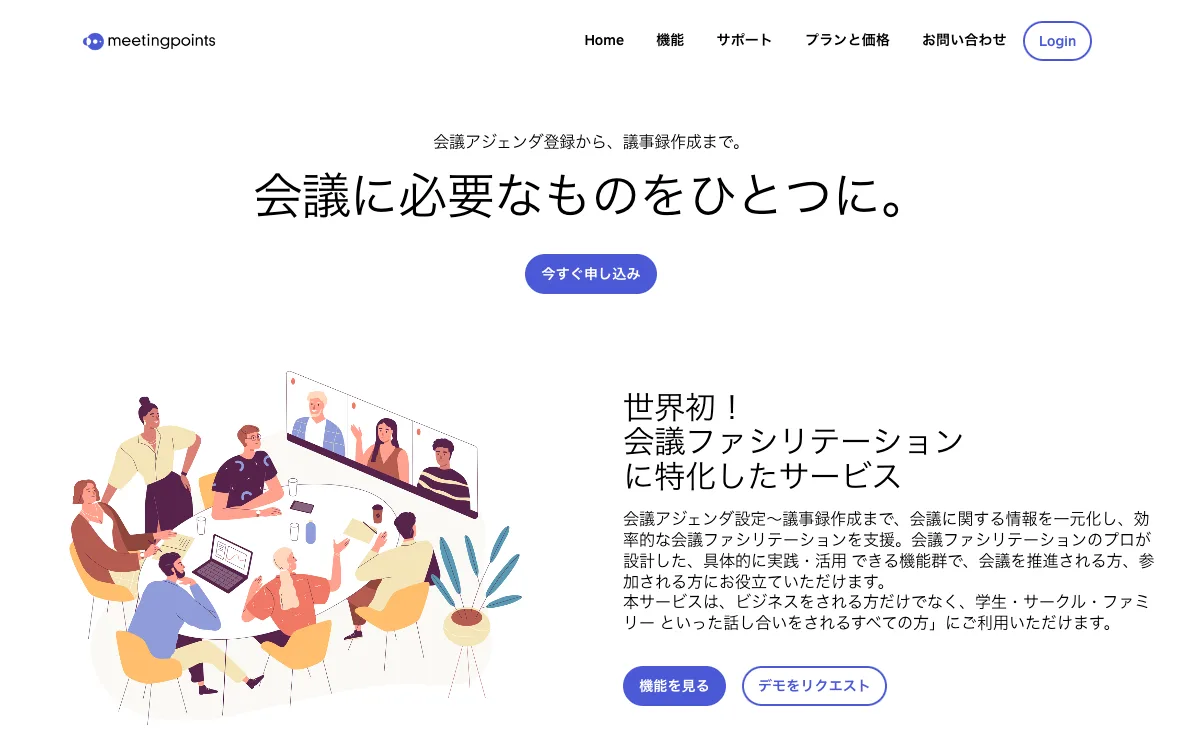
Challenge: A tool was needed to efficiently manage meeting content that differed for each of the 8 businesses.
Why we chose it:
- It creates and exports minutes in a set format with a single click
- The simple UI design is easy to use
What was introduced: basicmath introduced Meeting Point company-wide and shared minutes with each business promptly after creating them.
Results:
- Simplifying the creation of minutes saved a great deal of time.
- A unified format made information management efficient.
(2) Collecting, Analyzing and Visualizing Data on Actual Spending in Fukui Prefecture’s Tourism Sector
Studying Actual Spending with Google Business Profile Data
Using our strong network in Fukui Prefecture’s tourism sector, basicmath analyzed tourist behavior using data from the Google Business Profiles (GBP) of 86 tourist facilities. Below are the behavior patterns revealed by the GBP data analysis and our view.Google Business Profile: A free information management tool from Google. Registering lets a business manage the information about its facility that appears in Google Search and Google Maps results.
Tourist Behavior Seen in GBP Data
Optimizing GBP and websites is key The 86 tourist facilities were viewed 10.73 million times on Google Maps across PC and mobile, and 10.43 million times on Google Maps within Google Search, which shows they reach a very large number of users. In addition, about one in seven people set a route from mobile search, and about one in 18 of all views led to a website visit. This shows that managing GBP properly and optimizing businesses’ own websites are important.
Google Maps and Google Search are strongly correlated Impressions on Google Maps and Google Search tend to rise together. In particular, website clicks and route requests are strongly correlated, which makes it clear that many users check the website from Google Maps.
Therefore, in addition to managing location information on GBP properly, regularly providing users with up-to-date information for each facility, such as photos and menus, is likely to attract visitors. Likewise, continuous UI/UX improvement and regular updates are essential for businesses’ own websites, and because most access comes from mobile devices, optimizing for mobile display is important.
Our View
GBP data makes user behavior visible, such as route searches on Google Maps and website clicks. When this data is matched with visitor count data for destinations, it yields combined insights, such as how long it takes for route searches to affect visitor numbers and how publicity and promotion affect user behavior.
For these reasons, to attract visitors in the future, using GBP, which shows how marketing measures affect user behavior, is essential not only for destination management but also for individual tourism businesses.
Studying Actual Spending with POS Data from Souvenir Retailers
basicmath collected and analyzed POS data from souvenir retailers in Fukui Prefecture, divided into five areas: in front of Fukui Station, Katsuyama, Sabae, in front of Tsuruga Station, and Obama. It is usually difficult for a third party to see a business’s POS data; this was possible thanks to the consortium’s deep ties with tourism businesses in the prefecture.
Below are the behavior patterns revealed by the POS data analysis and our view.
Tourist Behavior Seen in POS Data
Fukui’s food culture is a strength In all five areas, food (sweets, foods and processed foods) had the highest share of sales, and this trend was especially strong in the areas in the southern part of the prefecture. Near stations, visitors tended to prefer well-known Fukui confections and items that are light and easy to carry, while in areas with little public transportation, Japanese and Western sweets made locally were preferred. This suggests that the characteristics of each area and each store’s location and environment strongly shape sales.
“Easy” souvenirs are popular depending on how people travel Near stations, drinks and alcoholic beverages of around 300 ml sold well. Compared with areas with roadside stores, where products of 500 ml or more were the main sellers, this suggests that users traveling by public transportation choose drinks that are easy to carry. The analysis also showed that drinks made with ingredients from Fukui Prefecture were more likely to be bought than ordinary drinks.
“Made here” adds value for tourists In the food section, sweets and processed foods were popular with consumers. For drinks in particular, purchases concentrated on products made locally or made with local ingredients. Likewise, for general goods, local specialties made in the area, both travel keepsakes and items for daily life, were preferred. This makes it clear that whether a product uses local ingredients is an important added value for consumers.
Our View
To analyze POS data efficiently, accurate categorization at the point when each business records the data is important. The POS data we analyzed had many gaps in category classification and product name registration, and aggregation took time. Given that businesses face chronic staff shortages, we recommend clear rules for recording POS data so that visitor trends can be understood efficiently in a short time.
It is also an important part of achieving “tourism that earns” for each business to recognize that its POS data is a valuable asset for understanding user trends, and to keep accumulating and analyzing it.
Results Briefing
At the demonstration project’s results briefing on January 12, 2024, basicmath shared its activities and results with the consortium, along with future challenges and outlook. By hearing again from businesses about their impressions and insights, we believe the stakeholder organizations also came to see the effort as close to home.
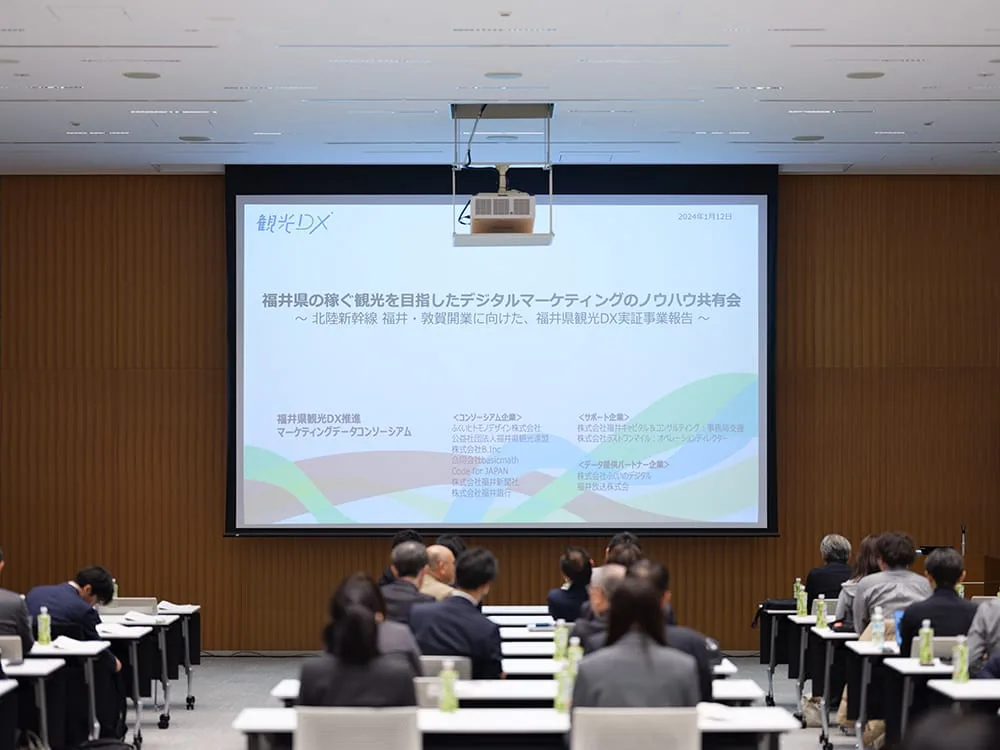
Results briefing held at the Fukui Bank head office
Talk by Misa Kitazawa: “Key Points for Making Digital Marketing More Effective”
In the hands-on support for this demonstration project, our partner Misa Kitazawa provided advice and guidance. Her explanation that “the role of digital ads is to bring customers to the e-commerce site” may have been different from what many businesses picture when they think of digital (online) ads.
She said, “Online ads don’t grow sales. Online ads grow the number of users on your site. Whether those users buy depends on your site and your products.” We feel this changed the thinking of every business that took part in the hands-on support. Like print ads, online ads are a way to let people know about an e-commerce site, for a store, or a destination, for a tourism business. Whether that site or destination is attractive is what moves tourists. We believe it was a very useful talk for tourism businesses.
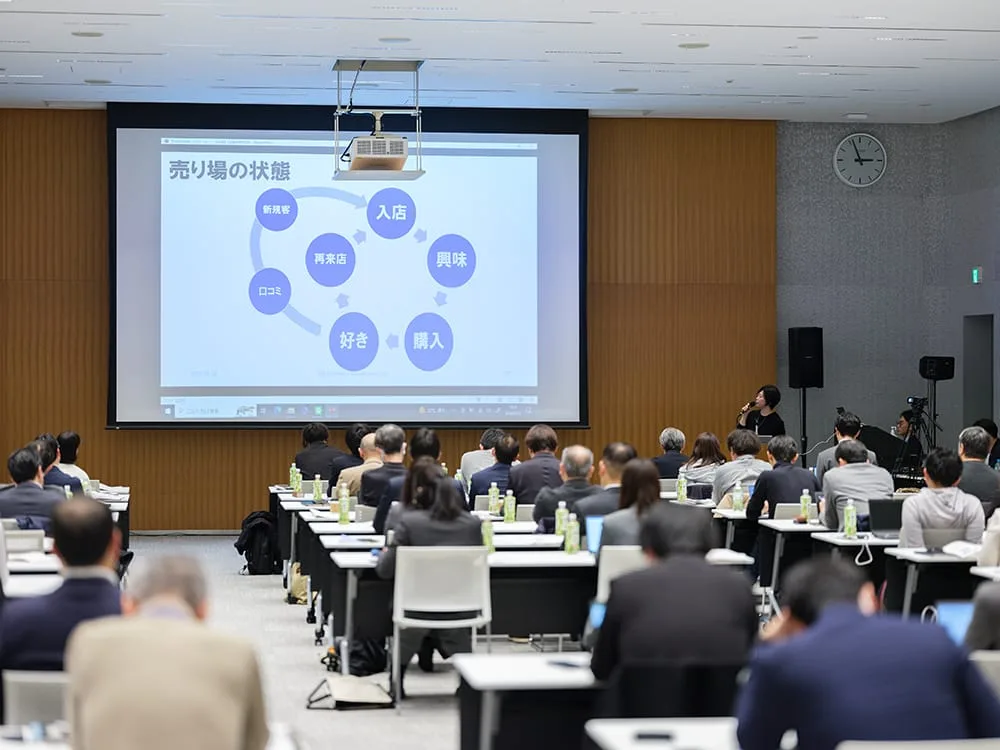
Talk by Misa Kitazawa
Summary
Through the “Demonstration Project for Revitalizing Tourism and Local Economies through Data Integration Between Businesses and Regions,” basicmath used its own data analysis tools, built on its system development expertise, to contribute to releasing Fukui Prefecture’s tourism data as open data in the FY2022 program. At the same time, it became clear that tourism businesses lack people who can use this visualized data.
In the FY2023 demonstration project, we analyzed business data such as GBP and POS data and, through the issues we shared, helped businesses widely recognize the importance and potential of data use. By providing support tailored to each business, we shared digital marketing expertise and skills and contributed significantly to developing talent. We also published these efforts as model cases and succeeded in raising awareness of digital marketing not only among businesses but across the region.
In our hands-on support program, with the goal of making each business independent in digital marketing, we focused on hearing the current situation and self-analysis in the early stages, when basic knowledge of digital marketing was limited. This process accelerated the integration of traditional business methods with digital ad strategy. Toward the end of the demonstration project, staff asked questions actively, and we saw their motivation rise with visible results.
Through this work, we recognized again the importance of spreading to local businesses not only the importance of digital marketing, but also the know-how to secure the budget and time needed to carry it out. For businesses in Fukui Prefecture to understand and use this knowledge, continuous information from related organizations, starting with the Fukui Prefecture Tourism Federation, will continue to play an important role.
Through this demonstration project, we created several model cases in one specific region, Fukui Prefecture, and by listening to the questions and issues of frontline staff, we ourselves gained many insights and lessons. We will continue to accurately understand the needs of tourism businesses and local communities and strategically advance comprehensive marketing solutions that support them.
Related Links
- Embed Social official site
- Japan Tourism Agency DX program official site
- Results briefing materials (PDF, Japanese)
About Misa Kitazawa
Head of MK Commerce&Communication. Born in Tokyo. Graduated from the First School of Letters at Waseda University. Lives in Nihonbashi.
After working in marketing at a manufacturer and as a TV producer, she joined Fast Retailing Co., Ltd. in 1999. In charge of marketing and PR for UNIQLO, she traveled every week between the head office in Yamaguchi Prefecture and the press room in Harajuku, Tokyo, led the UNIQLO boom, and raised awareness of the then-unknown brand from 10% to 90%. Over the next 11 years, she contributed to UNIQLO’s rapid growth in domestic sales from 80 billion yen to 600 billion yen, then took charge of e-commerce and web marketing at group company PLST. At PLST, over eight years, she grew e-commerce from launch to 2 billion yen in sales, and brand sales from 1.5 billion yen to 20 billion yen.
After leaving the company in 2018, she has held advisory contracts with several companies, mainly in retail and apparel, and supports business growth in both marketing and PR and e-commerce. She writes the series “Sustainability Lessons from UNIQLO” for Diamond Chain Store Online, a retail media outlet affiliated with Diamond, Inc.
“Sustainability Lessons from UNIQLO” (Diamond Chain Store Online, Japanese)
Q&AQuestions and answers
- What did basicmath do in the FY2023 demonstration project?
- basicmath provided hands-on support to develop in-house digital marketing talent, analyzed Google Business Profiles for 86 sites in Fukui Prefecture, analyzed POS data from souvenir retailers in five areas of the prefecture, and produced several white papers.
- How was the hands-on support structured?
- It followed eight steps. Hearing the current situation and organizing issues, setting current and target levels, setting KGIs and KPIs, self-analysis with SWOT, STP and 5W2H, setup, production and operation, planning online ads, optimizing ad creative and websites, and reviewing ad performance.
- What did the Google Business Profile analysis show?
- The 86 tourist facilities were viewed 10.73 million times on Google Maps across PC and mobile. About one in seven people set a route from mobile search and about one in 18 visited the website, which shows that managing GBP properly and optimizing businesses' own websites matter.
- What trends did souvenir POS data reveal?
- In all five areas, food had the highest share of sales, and drinks of around 300 ml sold well near stations. Purchases also concentrated on products made locally or made with local ingredients.
- What challenges remain?
- Three challenges remain. Online advertising has no single right answer, many businesses lack dedicated marketing staff, and it is hard to secure budget for online ads because results take time.